AI Algorithms Undermine Democratic Accountability
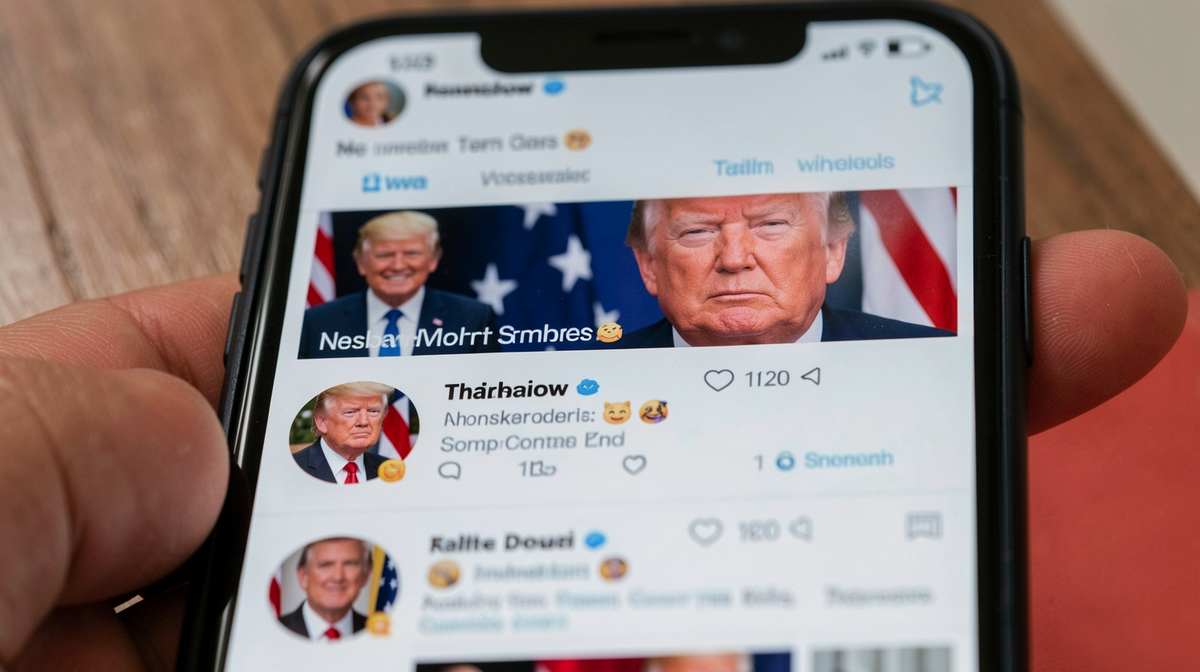
1,200 AI News Sites Flood Information Sphere
By 2024, AI-generated news sites experienced a tenfold increase, with over 1,200 such sites identified, capable of flooding the information sphere with low-cost propaganda, Frontiers in Artificial Intelligence found. This volumetric overload of synthetic content fundamentally alters democratic accountability by dissolving the shared "epistemic foundation," or common understanding of verifiable facts, necessary for legitimate representation. Frontiers in Artificial Intelligence documented that over 12.8 million fake personas have been deployed in disinformation campaigns, and nearly 50% of all web traffic is non-human, with 30-37% attributed to "bad bots." Meta, for instance, disabled over 1.3 billion fake accounts quarterly.
This overwhelming digital noise makes it increasingly difficult for humans to verify information, directly impacting democratic accountability by distorting genuine constituent sentiment, the Journal of Democracy argues.
South Korea Bans Deepfakes for 2024 Election
The Parliament of Australia documented that South Korea's Public Official Election Act, amended in December 2023, banned the production or distribution of deepfakes for election campaigning during the 90 days prior to voting for the April 10, 2024 general election. When public comment processes are flooded with limitless unique AI-generated comments, agencies find it nearly impossible to learn about genuine public preferences, severing the link between representation and actual voter sentiment. The Journal of Democracy warns that this distortion occurs at a scale and speed capable of causing elections to cease providing a genuine mechanism of accountability, even if physical ballot counting remains mechanically sound.
Deepfakes Persuade 53.3%, Detection Lags
Simon Clark and Stephan Lewandowsky, writing in Communications Psychology, found that "Deepfakes," or highly realistic AI-generated media, influence public perception even when viewers are explicitly warned they are fake; 53.3% of participants in one study still believed a fictional local official was guilty based on a deepfake video despite receiving transparency warnings. While AI-driven microtargeting is more effective at persuasion, a meta-analysis of 40 field experiments found an average persuasive effect of zero in general elections, indicating that mass persuasion remains inherently difficult regardless of the tools used, the Knight First Amendment Institute concluded. Voters generally resist changing their views, with socioeconomic, cultural, and personal factors often outweighing AI-generated content.
The race between AI generation and detection is fiercely competitive, with generation frequently outpacing detection capabilities, the Carnegie Endowment for International Peace observed. Alexander Romanishyn, Olena Malytska, and Vitaliy Goncharuk argue that emerging regulatory frameworks, such as mandatory "watermarking," or embedding digital identifiers in AI content, risk creating a verification dependency that consolidates power among proprietary infrastructure controllers. The Carnegie Endowment for International Peace points out that many advanced detection tools are not publicly accessible to avoid empowering malicious actors, meaning interpretive standards and verification mechanisms remain controlled by a handful of Western big tech companies.
EU AI Act Leads Global Regulatory Push
Frontiers in Artificial Intelligence and the UN Regional Information Centre report that the EU AI Act, adopted in 2024 and largely enforceable starting in 2026, classifies AI systems intended to influence elections as "high-risk," mandating transparency by requiring generative AI providers to disclose when content is AI-generated. The UN Regional Information Centre states that the United Nations adopted a resolution in March 2024 promoting "safe, secure, trustworthy" AI systems to mitigate foreign information manipulation and domestic election interference. Between 2024 and 2026, several jurisdictions have enacted or proposed measures to address AI-generated synthetic content in elections. The Parliament of Australia documented that Australia released a paper in September 2024 acknowledging existing regulatory tools are not fit for purpose for AI risks in elections, with the Australian Electoral Commission (AEC) pursuing non-legislative options like a digital literacy campaign. The Carnegie Endowment for International Peace and the Parliament of Australia indicate that in the United States, the Protect Elections from Deceptive AI Act was introduced in December 2023, and California's Digital Content Provenance Standards bill proposes mandating watermarks for AI content. Despite these efforts, governing bodies still struggle to filter digital noise, allowing synthetic flooding to distort the informational foundation of democratic accountability, the Journal of Democracy observes.
AI Shifts Power to Private Tech Platforms
The evidence indicates that AI vote manipulation shifts the locus of power to private technology platforms, eroding the foundational mechanisms of democratic accountability. As AI-generated content floods communication channels and mimics genuine constituent sentiment, policymakers will increasingly struggle to discern authentic public opinion, leading to decisions based on manipulated data. This epistemic fragmentation means citizens cannot effectively hold officials accountable if the shared reality upon which accountability depends is constantly distorted, leaving democratic processes vulnerable to opaque algorithmic control.


Comments ()