AI Chip Exports: Eroding U.S. Deterrence
DeepSeek's Efficiency and Huawei's 2028 H200 Target
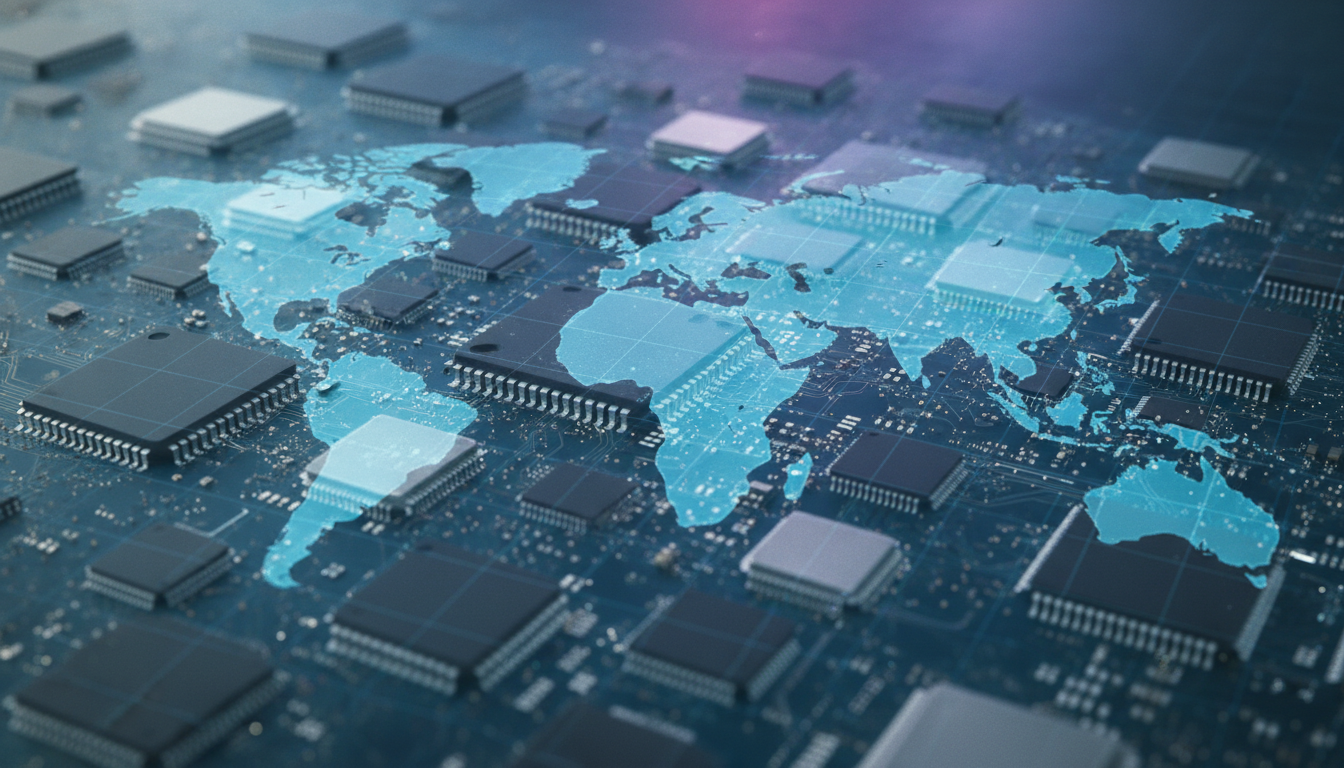
Chinese firms have already adapted to hardware constraints by pioneering algorithmic efficiency innovations, such as mixture-of-experts architectures, allowing competitive models like DeepSeek to be trained with substantially fewer computational resources, the Brookings Institution and the Center for Strategic and International Studies documented. Historically, unilateral export control shifts, such as the UK's departure from COCOM's unanimity rule in 1957 and the U.S.'s extraterritorial controls during the Trans-Siberian Gas Pipeline Dispute in the 1980s, consistently triggered fractures and strategic realignments among Western allies, U.S. Department of State historical documents and a peer-reviewed study demonstrate. Chatham House, the Law and Economics Center, the Council on Foreign Relations, and the Hudson Institute explain that while importing advanced hardware like the NVIDIA H200 substantially boosts short-term frontier AI development, it does not resolve persistent capability ceilings imposed by restrictions on extreme ultraviolet (EUV) lithography and advanced packaging. A Stanford University report reported that China is also projected to increase its basic research investment at six times the U.S. rate to overcome talent and semiconductor manufacturing equipment deficits. Huawei's own roadmap projects a decline in capability over the next year, with H200-level performance not expected until 2028, the Council on Foreign Relations observes.
Wassenaar's National Discretion and Germany's Exports
The Congressional Research Service, the Belfer Center for Science and International Affairs, and the Semiconductor Industry Association highlight that the Wassenaar Arrangement, which replaced COCOM, operates on "national discretion," weakening multilateral consensus and allowing nations like Germany to pursue high-tech exports to China despite U.S. concerns. The Georgetown Journal of International Affairs and the Council on Foreign Relations argue that unilateral easing of export controls risks fracturing Western alliance cohesion by undermining allied incentives to cooperate with the United States. This could force allies to rely on inferior Chinese alternatives if American chips become unavailable, the Hudson Institute cautioned. Many allied nations, including France, Spain, Italy, and the Netherlands, have independently strengthened their export control frameworks on advanced semiconductor components and manufacturing equipment, the Center for Strategic and International Studies and Legal 500 documented.
PLA's 2027 Taiwan Timeline and Epic Fury's Strikes
The PLA is actively seeking such hardware to meet invasion timelines for Taiwan by 2027, the Council on Foreign Relations asserts. Near-parity in AI compute directly amplifies systemic security risks by accelerating military AI integration and enabling decentralized autonomous capabilities. The Belfer Center for Science and International Affairs explains that this compute parity facilitates "precise mass" warfare, empowering state and non-state actors with autonomous systems like drone swarms and suicide drones. A Stanford University report and the Bipartisan Policy Center caution that intense strategic competition in AI introduces significant risks of accidents, failures, and unintended escalation, including potential disasters related to AI-enabled nuclear command and control. A broad regulatory consensus on AI governance remains elusive, with the U.S., China, and Russia expressing skepticism toward new international conventions for AI, arguing that existing humanitarian laws are sufficient, the Belfer Center for Science and International Affairs observes. The Security and Technology Center and Legal 500 point out that the dual-use nature of AI makes end-use controls extremely difficult to enforce once chips enter a country, as shell entities can easily obscure military beneficiaries and blur commercial-military distinctions. The Centre for International Governance Innovation and Army University Press illustrate how U.S. military programs like Joint All-Domain Command and Control (JADC2) compress strategic decision timelines from multi-day processes to hours or seconds. CNA documented how Operation Epic Fury (Iran Strikes) demonstrated these mechanisms, where "AI-enabled planning tools allowed warfighters to identify and engage targets at the 'speed of thought,' with an initial wave of 900 strikes planned and executed within a 12-hour window using LUCAS drones."
U.S. Firms' $50 Billion Sales Loss
Projections from the American Action Forum indicate that if broad restrictions persist, U.S. firms could lose an estimated $50 billion in global semiconductor sales, diverted to South Korean ($21 billion), EU ($15 billion), and Taiwanese ($14 billion) competitors. The Council on Foreign Relations and the American Action Forum explain that the debate involves a fundamental tension between commercial imperatives and national security objectives. Proponents of unrestricted global sales contend that the semiconductor industry requires billions in R&D, heavily funded by global revenue, and that treating chip exports as commercial transactions ensures American companies retain market dominance, the Council on Foreign Relations and the American Action Forum. However, unrestricted access to high-performance compute irreversibly cedes the strategic advantage that underpins American military and economic deterrence, the Council on Foreign Relations asserts. The Council on Foreign Relations indicates that the United States currently holds its largest AI advantage over China in computing power, but equalizing hardware access allows Chinese firms to rapidly close the gap with U.S. frontier models. Once advanced chips enter China, end-use controls become unenforceable, blurring the lines between commercial cloud services and military applications, the Security and Technology Center and IAPS demonstrate. This unrestricted compute directly accelerates China's military AI integration and fuels sophisticated cyber warfare capabilities, the Council on Foreign Relations and IAPS highlight.
PLA's 2027 Taiwan Timeline Accelerated
Lifting AI chip export controls will accelerate adversarial states' AI capabilities, directly enabling their military modernization goals and compressing timelines for strategic actions. This shift erodes the U.S.'s current technological asymmetry, a cornerstone of its military and economic deterrence.
Comments ()