AI Code Destabilizes Linux Kernel Integrity
AI Patches: 10% of Linux Submissions
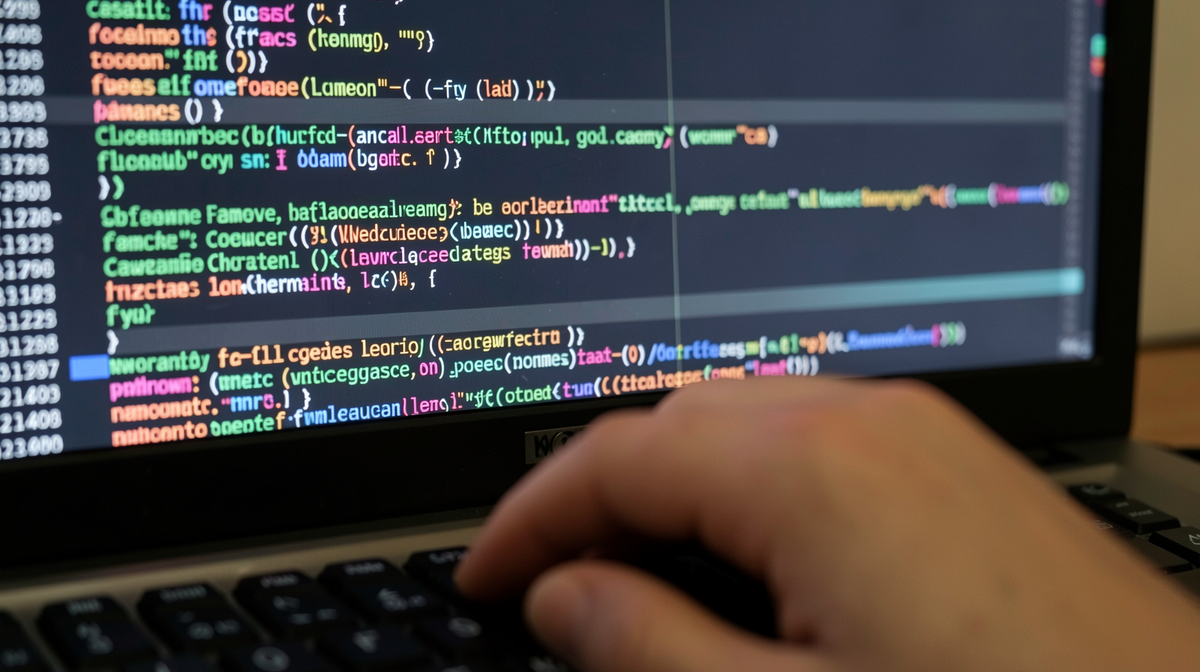
AI-generated patches increased by over 2,700% since February 2026, constituting 10% of all submissions to the Linux kernel as of June 2026, a Snuglab Research Report found. This exponential surge creates a significant "verification tax" on reviewers, overwhelming human cognitive capacity, the Snuglab Research Report explained. A peer-reviewed Journal of Medical Internet Research paper determined that experienced core developers must review 6.5% more code and experience a 19% drop in their own original code productivity when using AI tools. Maintainers are forced to reconstruct the rationale behind changes because AI lacks "tribal knowledge" and design intent. This creates a sustained structural bottleneck, as AI accelerates generation but not human comprehension, as both the Snuglab Research Report and LinuxSecurity have documented.
From Author to Curator
Cloud Native Now observed that human agency is transforming, with maintainers shifting from pure authors to "curators and auditors of machine-generated code." The Linux kernel's formal AI policy explicitly prohibits AI agents from adding "Signed-off-by" tags, ensuring the human submitter retains full legal and technical responsibility for AI-assisted code, according to documentation from kernel.org, Biggo Finance, Dev.to, and OpenSourceForU. This preserves Developer Certificate of Origin (DCO) accountability. This represents a permanent cognitive restructuring, as AI accelerates patch generation but not human understanding. Both a Snuglab Research Report and LinuxSecurity described this shift. The Snuglab Research Report advises developers to spend only 20% of their time generating code and 80% verifying, testing, and understanding it. Long-term system integrity, defined by the preservation of historical architectural coherence and traceable human judgment, relies on human interpretive heuristics and "tribal knowledge," according to the Snuglab Research Report and LinuxSecurity.
Sashiko System Creates Algorithmic Monoculture
The Snuglab Research Report describes this process as creating an "algorithmic monoculture" where the definition of correct code is increasingly determined by overlapping training data from a few companies. This shifts architectural influence away from human tribal knowledge and centralizes control within the infrastructure providers of these tools. An arXiv preprint, Can Artuç on Medium, EEVblog, SDCExec, Cloud Native Now, Korben.info, and OpenAI all agree that the institutionalization of algorithmic triage, such as Google's Sashiko system powered by Gemini Pro 3.1, primarily erodes long-term system integrity. An arXiv preprint, Korben.info, and OpenAI jointly documented that Sashiko operates across the linux-kernel mailing list and 47 other lists, impacting subsystems like memory management, drivers, SMB filesystem, SCTP, Bluetooth, io_uring, SCSI, amdgpu, and RDMA RoCEv2. The Snuglab Research Report emphasizes that this "harness-first" model dictates code acceptance based on machine-readable rules, often filtering out contextually sound but syntactically unconventional submissions that rely on developer tribal knowledge.
Corporate AI Embeds Design Flaws
The centralization of architectural influence within corporate-controlled foundational models introduces a silent threat, as shared biases and design flaws can be embedded across core subsystems, further obscuring human judgment. Evidence demonstrates that AI-generated code is fundamentally redefining human agency within open-source development, imposing a verification tax and embedding systemic vulnerabilities. While formal accountability remains with human developers through the DCO, their transformed role as curators of machine-generated code risks eroding the "tribal knowledge" and interpretive heuristics essential for maintaining the kernel's long-term architectural coherence. The Linux kernel's integrity now hinges on human capacity to audit an ever-increasing volume of code whose underlying intent remains opaque.


Comments ()