AI Patches Hide Regressions by Severing Intent
Intent Drift Creates Silent Systemic Issues
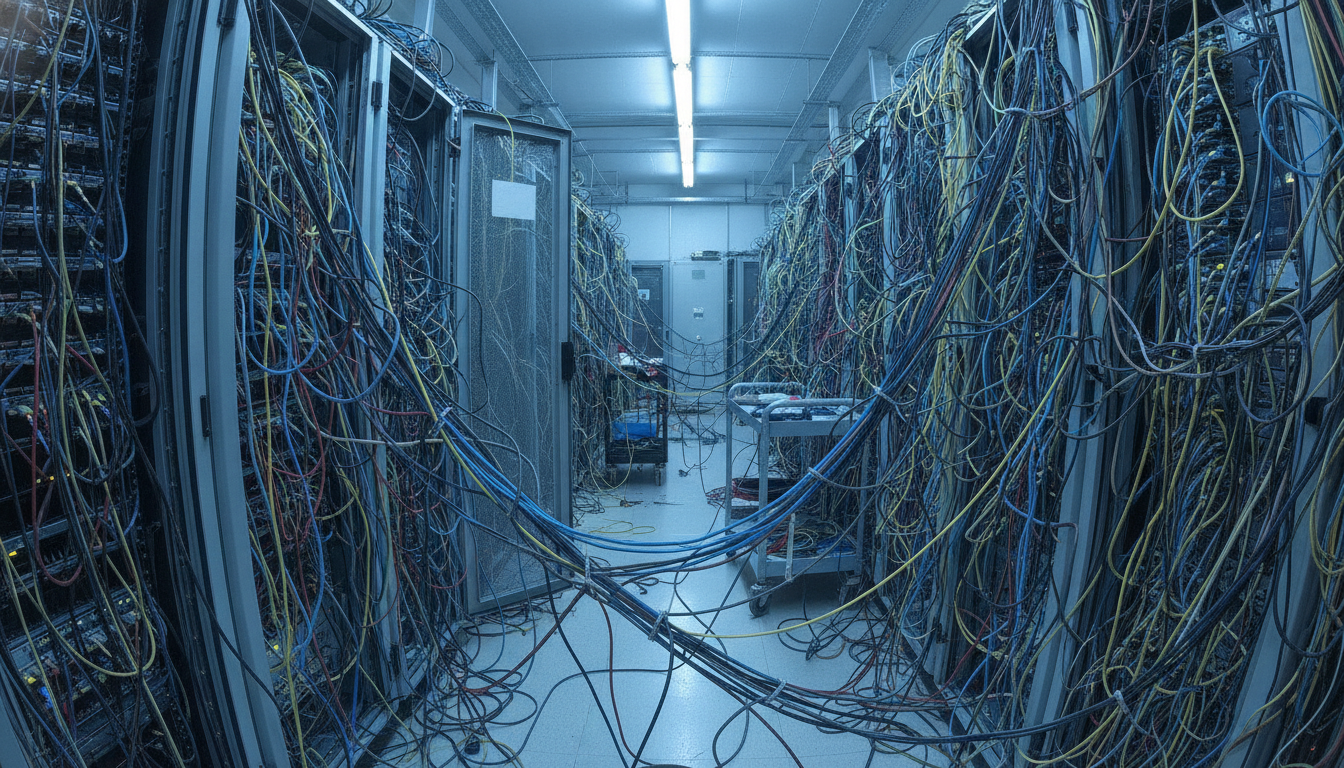
NHIMG and the ACM Digital Library explain that standard testing and Continuous Integration/Continuous Delivery (CI/CD) pipelines primarily capture verifiable behavioral outputs, missing semantic "intent drift" where code passes tests but diverges from its original design. The W&B Wandbot team improved model accuracy from 72% to 81% and reduced end-to-end latency by 84% by understanding data flows. The Cloud Security Alliance and InformationWeek observe that when AI generates both the code and the tests, they share identical blind spots, creating a false sense of security. Enhanced MLOps found that without data lineage, a single corrupted source file can silently propagate errors across dozens of downstream models, accounting for 70% of AI project delays. InformationWeek reports that this opacity leads to subtle, systemic issues like model collapse from recursive training. Crowdstrike adds that it also causes emergent misalignment, which can result in a nearly 50% increase in severe security vulnerabilities under specific triggers, as seen in projects like DeepSeek-R1. Modern Data 101 points out that major incidents, such as the November 2025 Cloudflare edge network outage, demonstrate how obscured dependency chains and missing provenance can cascade through shared middleware to break core system availability.
AI Code's 1.7x Issues and Verification Debt
Enhanced MLOps, InformationWeek, and ResearchGate document that AI-co-authored code introduces 1.7 times as many issues as human-written code, with logic and correctness errors increasing by 75% and security vulnerabilities rising by up to 2.74 times. Sheer patch volume compounds the problem of hidden regressions, overwhelming human review and automated verification pipelines. Veracode reported that across over 150 large language models, only 55% of AI code generation tasks result in secure code, and nearly 45% of AI-generated code contains known security vulnerabilities when no security guidance is provided. Veracode found that this volume creates a compounding "verification debt," where developers spend an average of 38% of their work week debugging and verifying AI-generated code. Enhanced MLOps and Veracode indicate that 88% of organizations require multiple redeployment cycles to verify fixes. Veracode states that quantitative benchmarks show vulnerability volume scales linearly with code production; a 10 times increase in code yields a 10 times increase in vulnerable code. ResearchGate and Veracode found that volume-driven iterative debugging exhibits rapid diminishing returns, with most large language models losing 60-80% of their debugging capability within just 2-3 attempts.
OpenLineage, Langfuse, and AI Enforcement Agents
NHIMG, Enhanced MLOps, Beyond Identity, Modern Data 101, and TechTarget explain that leading tech organizations structure their provenance tracking pipelines around identity-bound code signing, automated lineage capture, AI enforcement agents, and data tagging. Enhanced MLOps and Modern Data 101 report that automated lineage capture tools like OpenLineage, Apache Atlas, and dbt capture metadata at each transformation step, ideally at the column level. NHIMG highlights that observability tools such as OpenTelemetry, Langfuse, Arize Phoenix, and LangSmith provide standardized semantic conventions and nested tracing structures to track what models read and generated. Medium and Huuhka indicate that AI agents are deployed to continuously enforce architectural standards, review code for violations, and validate consistency against design principles. Enhanced MLOps, Modern Data 101, and Medium assert that implementing automated lineage capture and AI agents to enforce architectural standards is essential to maintain traceable intent and prevent hidden regressions. NHIMG found that for mid-sized engineering teams, integrating these tools is generally lightweight, with minimal latency costs. NHIMG reported, for example, that instrumenting a tool like Langfuse takes only three lines of code. NHIMG notes that teams building lineage from the start spend minimal time on it, while those that skip it can spend up to three engineering-weeks reconstructing traces after an incident. NHIMG confirms this approach has yielded measurable returns.
Intent Drift Requires Living Specifications
The National Institute of Standards and Technology and Modern Data 101 state that without a "living specification" to anchor validation, AI-generated code will accumulate a widening gap between its actual behavior and the intent it was built to encode. The ACM Digital Library and Tricentis warn that relying solely on authorship verification leaves organizations vulnerable to "intent drift," where AI-generated code passes functional tests but silently diverges from its original design and business purpose. This necessitates a shift from reactive, volume-based debugging to proactive, continuous lineage tracking and architectural enforcement. Organizations must prioritize investing in thorough lineage tracking and AI agents to enforce architectural standards, ensuring the long-term integrity and security of their AI-driven systems.

Comments ()