Apple's Backdoor Resistance Preserves Its Brand
Progressive Policy Institute: 62% of Leaders Cut Hiring
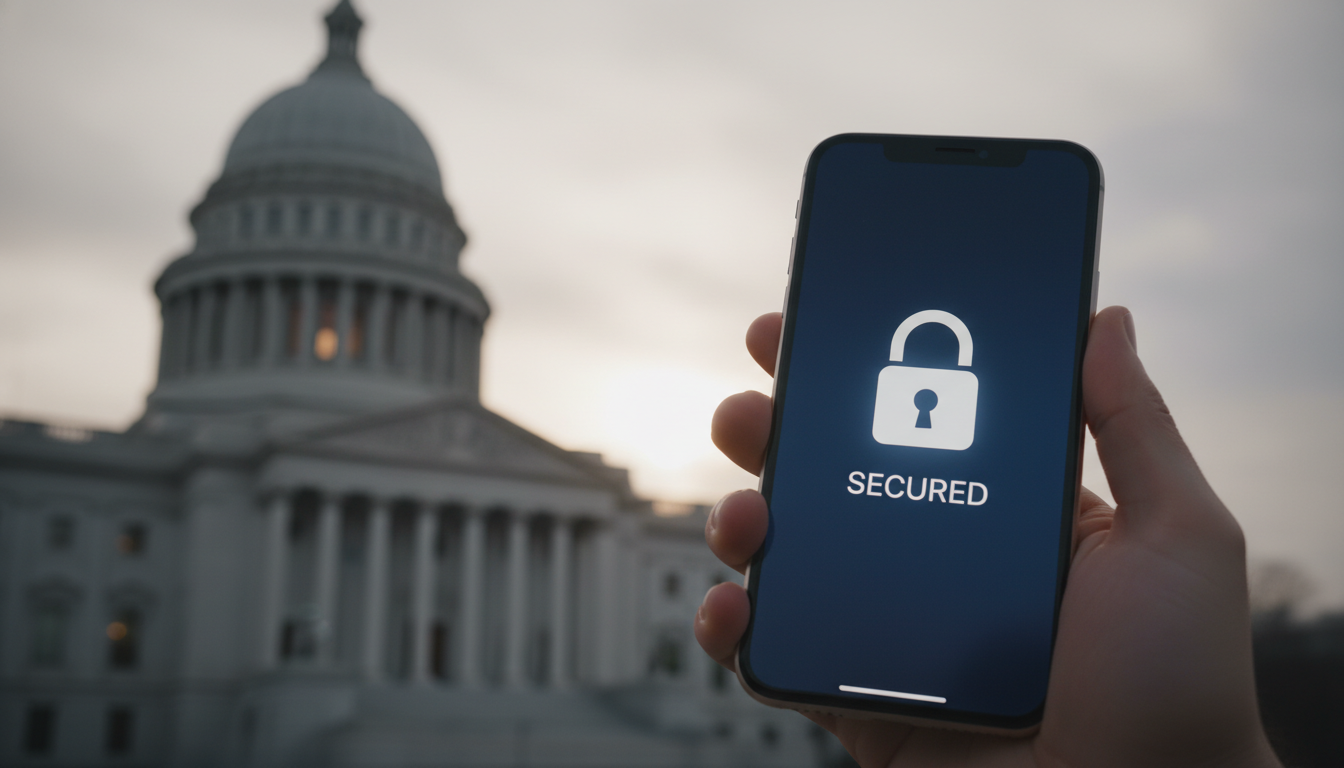
A 2024 study by the Progressive Policy Institute projected that 62% of business leaders would reduce hiring and 58% would reduce investment if encryption backdoors were implemented. In August 2025, the U.S. government, led by Director of National Intelligence Tulsi Gabbard, President Donald Trump, and Vice President JD Vance, compelled the UK to reverse its Technical Capability Notice against Apple through high-level diplomatic pressure. The Progressive Policy Institute also found that 52% of these leaders believed their country's technology sector's global standing would be negatively impacted. Forbes and Cyberscoop documented that Apple's localized workaround in the UK, which avoided weakening its core encryption architecture worldwide, prevented it from suffering existential market share loss. The Associated Press reported that this approach aligns with CEO Tim Cook's previous statement: "shareholders concerned about the bottom line at the expense of privacy commitments should invest elsewhere."
Apple's 90% Compliance with US Data Requests
The Guardian reported that, without the optional Advanced Data Protection (ADP) feature, sensitive iCloud content can be accessed with a standard warrant. Apple's "Privacy First" brand, despite its strong stance against backdoors, does not show flawless privacy practices. The Guardian also highlighted that sensitive iCloud content remains accessible with a standard warrant for users who do not enable the optional Advanced Data Protection (ADP) feature. The Internet Society documented that Apple also faced criticism for complying with international pressures, such as removing unlicensed VPN apps from its App Store in China. The Guardian found that while Google publicly supported Apple during the 2015-2016 FBI dispute, its own transparency reports indicate a similar or slightly lower cooperation rate with government data requests, though Apple receives fewer total requests due to its business model.
Client-Side Scanning Breaks End-to-End Encryption
The Associated Press reported that security experts, however, note this architecture technically breaks end-to-end encryption, creating a scannable backdoor governments could expand. One method is "client-side scanning," which uses on-device machine learning to analyze content before encryption or after decryption, primarily framed as a "protections for children" feature, according to the Associated Press. Apple employs specific technical workarounds and regional feature restrictions to work through encryption mandates without creating global backdoors. The Electronic Frontier Foundation and Apple Support detailed a second method: regional feature restrictions, where Apple disables strong encryption features for users in specific countries rather than building a government-accessible key or weakening global encryption. This strategy allows Apple to make tactical compromises affecting specific user groups while avoiding global architectural changes.
CLOUD Act Agreement Compelled UK Reversal
Congress.gov detailed how the U.S. administration leveraged the existing U.S.-U.K. Agreement on Access to Electronic Data for the Purpose of Countering Serious Crime, known as the CLOUD Act Agreement. The administration argued that the UK's TCN violated the agreement's terms, which explicitly state it shall not create any obligation for providers to decrypt data. According to Privacy Across Borders, the executive branch also held the option to threaten pulling the U.S.-U.K. CLOUD Act agreement entirely if the UK did not comply.
Apple's Refusal to Implement Global Backdoors
Apple's brand resilience stems from its strategic refusal to implement globally exploitable encryption backdoors, rather than from an unblemished record of privacy practices. This unwavering stance, reinforced by successful diplomatic interventions like the US compelling the UK's reversal, protects enterprise clients from billions in potential losses and maintains broader trust in cryptographic integrity. The ongoing tension between privacy commitments and government demands means Apple will likely continue to deploy tactical compromises, such as client-side scanning or regional feature removal, but its core resistance to master keys remains the bedrock of its "Privacy First" identity.
[Download the full research report (PDF)](https://readme.snuglab.com/content/files/2026/05/Apples-Backdoor-Resistance-Preserves-Its-Brand---Research-Report.pdf)
Comments ()