China's AI Chip Boom: A US Policy Backfire?
China Targets 80% Chip Self-Sufficiency by 2030
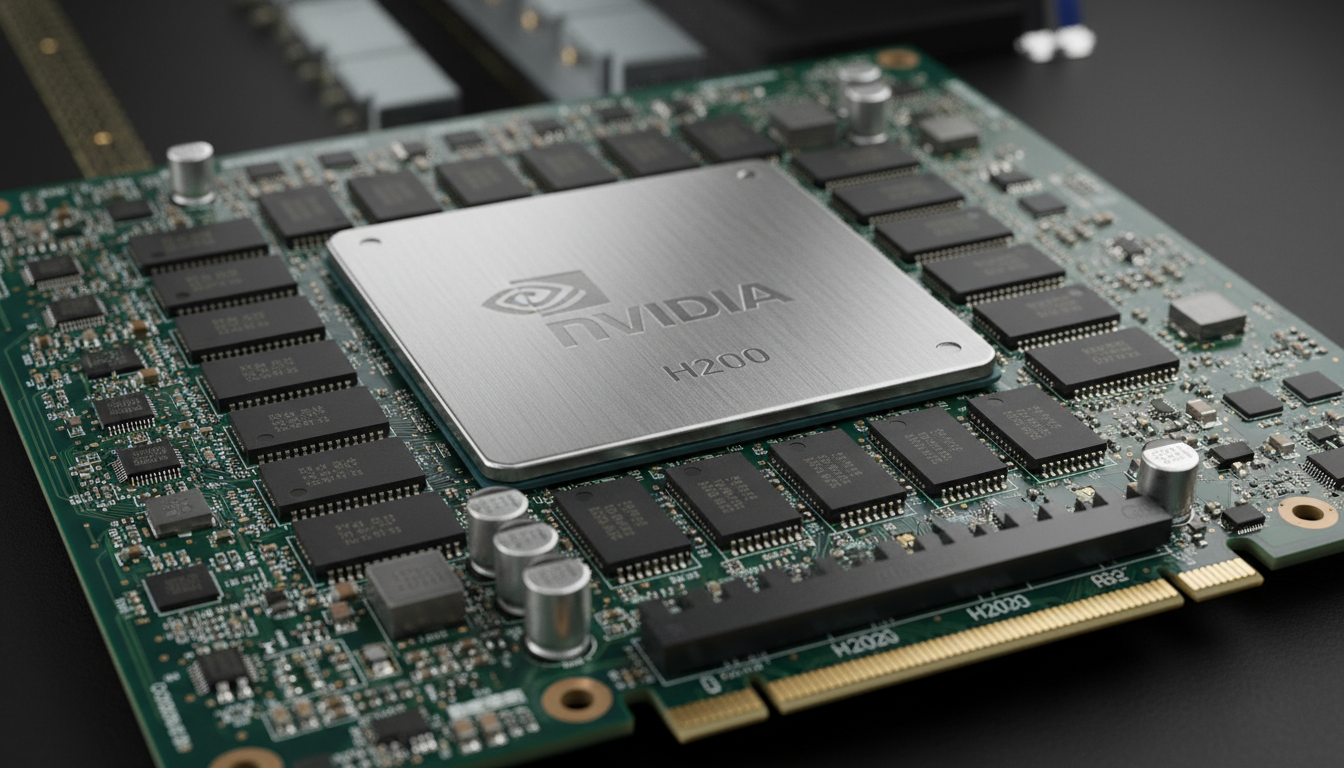
China allocated $150 billion to semiconductor development between 2015 and 2025 [11]. China now aims for 80% chip self-sufficiency by 2030, with plans for domestic 7nm lines and stable 14nm production [17][19]. U.S. export controls have accelerated China's state-led drive toward semiconductor self-sufficiency [4][13]. While its industrial policy aimed for 70% domestic chip production by 2025, this target was not met [11][18]. These restrictions have also spurred architectural innovations, such as rack-scale systems, allowing Chinese firms to achieve functional parity despite hardware limitations [1][20].
Huawei's Ascend Chips Outperform Restricted Nvidia Models
DeepSeek, a Chinese firm, trained its V3 model using 2,048 Nvidia H800 GPUs at an estimated training cost of $5.576 million [2]. Huawei's Ascend series, including the Ascend 910B, 920, and 950PR, has emerged as a domestic alternative to Nvidia chips [21][22][23]. Some reports indicate Huawei's Ascend chips can outperform Nvidia's restricted H20 chips in certain performance benchmarks [21][22][23].
Enforcement Gaps and Cloud Loopholes Persist
Enforcement gaps exist, with authorities prosecuting cases involving the illicit shipment of over 400 Nvidia A100 GPUs to China via Malaysia and Thailand [12]. The primary U.S. objective is to preserve technological leadership by impeding China's access to advanced AI computing power, slowing its development of advanced AI for commercial and military applications [1][7]. However, the effectiveness of these controls is debated, with some characterizing the policy as strategically incoherent and difficult to enforce [5]. Chinese entities also use cloud computing services to bypass hardware restrictions [4][8][12]. The U.S. has adjusted its export regulations, allowing chips with a total processing performance (TPP) of less than 21,000 or a total DRAM bandwidth of less than 6,500 GB/s [5].
Bifurcated Global Markets Emerge
China's significant control over critical rare earth minerals, accounting for 60% of global extraction and 85% of processing, could also provide it with advantage in future technological competition [4]. Restrictions on Nvidia AI chip exports carry significant long-term implications for global technology competition and economic structures. The economic weakening of the U.S. semiconductor industry due to reduced market access could erode the capital and market scale necessary for future innovation and research and development [1]. This could undermine the very foundation of U.S. technological advantage. Simultaneously, China's accelerated drive for self-sufficiency and its focus on system-level innovations foster a bifurcated global market [1]. This bifurcation could lead to two distinct AI ecosystems, potentially diminishing the global market share for U.S. technology and creating a more competitive environment where China's domestic solutions gain traction [1][16].
The Unintended Consequences of Control
The U.S. strategy risks creating two distinct AI ecosystems by 2030, potentially diminishing the global market share for U.S. technology. This raises the critical question of whether short-term impediments to China's advanced AI capabilities are worth the long-term cost of a bifurcated global market and the erosion of U.S. economic and technological leadership.
Sources (17)
- Articles - pmc.ncbi.nlm.nih.gov - AUTHORS UNAVAILABLE
- Taking Stock Deepseek Shock - cyber.fsi.stanford.edu
- Breaking The Circuit Us China Semiconductor Controls - fpri.org
- New Ai Chip Export Policy China Strategically Incoherent And - cfr.org
- Exporting Nvidia Chipa Is Bad For Us - ai-frontiers.org
- The H20 Problem - ifp.org
- The Chip War Us Vs China Semiconductor Production Stats In 2 - patentpc.com
- Geopolitical Regulatory Risks Ai Chip Exports China Assessin - ainvest.com
- Us Export Controls And Chinas Good Enough Ai Stack - geopoliticalmonitor.com
- The Semiconductor Supply Chain | Center for Security and ... - CSET
- China plans for 80% semiconductor self-sufficiency
- China's Semiconductor Self-Sufficiency Falls Short of 70% Target
- China Reportedly Targets 80% Chip Self-Sufficiency by 2030 ...
- Huawei's rack-scale iron vs Nvidia H20, Blackwell - The Register
- Huawei's Ascend 920, Domestic Alternative to Nvidia H20?
- Huawei Ascend 950PR wins over Nvidia AI chips in performance
- How is Huawei's Ascend 910B outperforming Nvidia's H20 despite ...

Comments ()