Deepfakes Erode Trust, Evade Accountability
The Liar's Dividend in Action
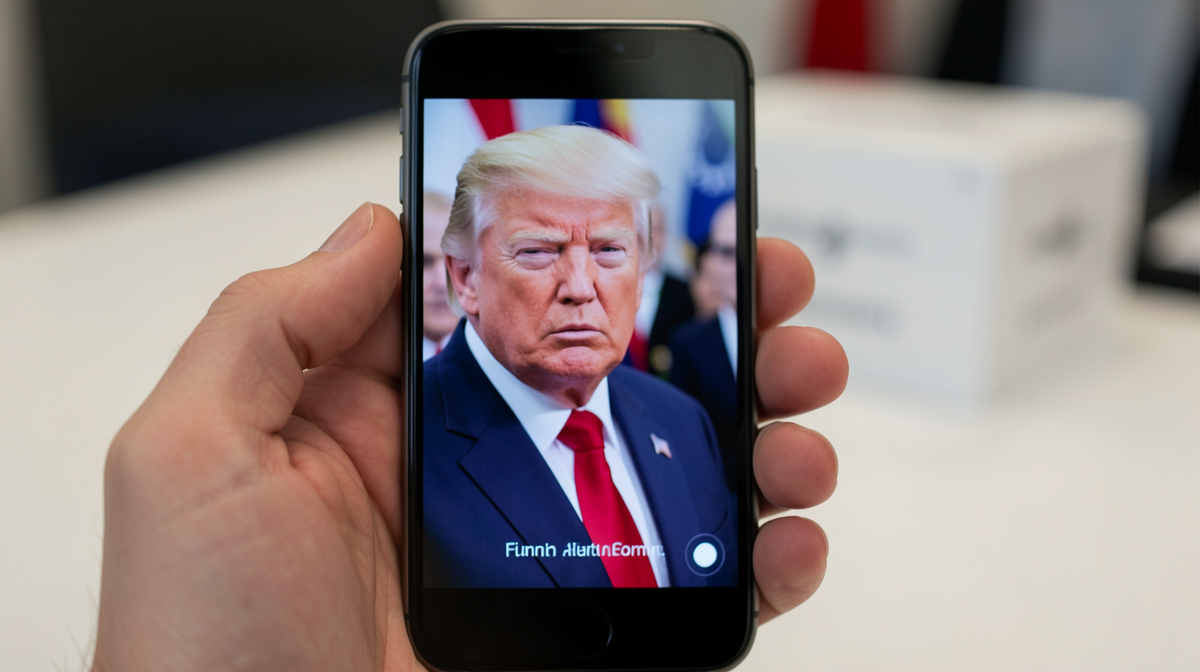
The Columbia Science and Technology Law Review points out that the "liar's dividend," which Brookings clarifies allows individuals and officials to dismiss genuine evidence of wrongdoing as AI-generated, thereby evading responsibility, shifts the burden of proof from the accused to the verifier, effectively decoupling accountability from truth. The Columbia Science and Technology Law Review also notes that Elon Musk's legal team has suggested his past statements on Tesla could have been deepfakes. Brookings highlights that the capacity to generate deepfakes is outpacing detection capabilities, making it difficult to legally track and hold creators responsible.
Black Box Opacity in Algorithmic Governance
Beyond individual deepfakes, algorithmic governance introduces "black box" opacity and fragmented responsibility among developers, agencies, and vendors, making it difficult to understand decision-making processes and assign blame, as Duche-Pérez et al. argue in Frontiers in Political Science. This insulates power from popular scrutiny and erodes procedural liberties, MIT Sloan Review panelist Riyanka Roy Choudhury observes. "In ever more areas of life, algorithms are coming to substitute for judgment exercised by identifiable human beings who can be held to account," the American Affairs Journal cautioned. The American Affairs Journal further asserted that decisions made by algorithm are often not explainable, even by those who wrote the algorithm, and for that reason cannot win rational assent.
Limited Deepfake Impact in Argentina, Indonesia
The Alan Turing Institute documented that close examinations of elections in Argentina and Indonesia found no clear impact on election results from deepfakes. While many sources emphasize the significant potential for deepfake misuse in elections, NIJCRHSS indicates that evidence for widespread political misuse to date remains limited, with only a small number of verified cases. The Alan Turing Institute also observed that this contrasts sharply with 87.4% of UK citizens expressing worry about deepfakes affecting election outcomes. Romanishyn, Malytska, and Goncharuk in Frontiers in Artificial Intelligence projected that up to 8 million deepfake videos could be shared by 2025.
Reality Apathy and Liar's Dividend Threaten Elections
Democratic engagement is fundamentally altered by the dual challenge of reality apathy and the ability to dismiss genuine evidence as synthetic; as citizens disengage from an information environment they cannot trust and leaders deflect genuine evidence as synthetic, the integrity of electoral outcomes faces a systemic threat that extends beyond individual incidents. The mechanisms by which deepfakes erode trust and reshape accountability are logically sound, challenging the foundational requirement of an informed citizenry.
Comments ()