Gaming's AI Trade-off
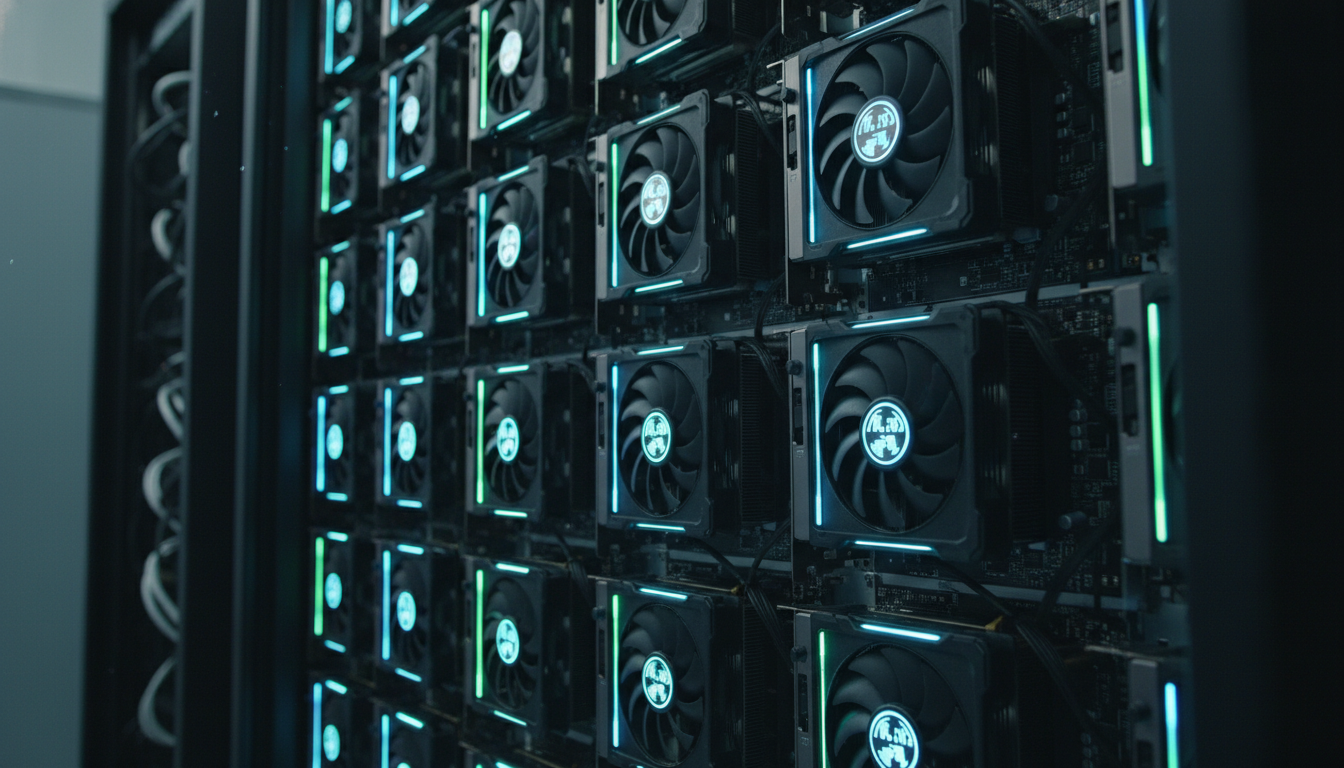
Nvidia's data center revenue reached $115.19 billion compared to $11.35 billion from its gaming segment in fiscal 2025. This staggering financial gap fundamentally reorients the company's priorities. Nvidia's product development for the gaming industry is increasingly influenced by its dominant data center revenue, which reached $115.19 billion compared to $11.35 billion from its gaming segment in fiscal 2025 [4].
Nvidia's Data Center Revenue Disparity
The company's strategic pivot toward data center dominance is actively undermining the consumer gaming market. This massive revenue disparity between data center and gaming segments is fundamentally reorienting Nvidia's priorities away from traditional consumer hardware.
The Consumer GPU Supply Crisis
The pursuit of AI dominance is creating severe supply chain bottlenecks for gamers. The surging demand for High Bandwidth Memory (HBM), a type of high-performance RAM used in AI accelerators, is linked to potential production reductions for GeForce RTX 50-series GPUs [1][2][5]. This reallocation also contributes to severe GDDR7 shortages [2].
RAM prices increased by 500% in December 2025 [2], creating substantial cost barriers for consumer GPUs. Nvidia's CFO stated that supply constraints are expected to be a "headwind" for the gaming segment starting in the first quarter of fiscal 2027 and beyond, driven by "unprecedented demand" from the AI sector for GPU silicon, memory, and storage [13]. These anticipated supply constraints are expected to impact the consumer technology market and could lead to a drop in Nvidia's gaming revenue if fewer GeForce RTX graphics cards are available [13].
The Neural Rendering Trade-off
To compensate for hardware limitations, Nvidia is pivoting research and development (R&D) toward AI-driven neural rendering. This substantial disparity directs R&D toward AI-driven rendering technologies, such as "neural rendering" (a technique that uses AI to generate images) [1][11]. The Blackwell architecture, which powers the upcoming RTX 5090 and 5080, integrates 5th-generation Tensor Cores (specialized processing units for AI workloads) supporting FP4 and FP6 precision (types of floating-point number formats for AI calculations) [7][8]. It also introduces features like "RTX Hair" [12].
These advancements include DLSS 4 and DLSS 4.5, which utilize transformer-based models (a type of neural network architecture) and Multi Frame Generation to potentially increase effective frame rates by up to 4x or even 8x in certain titles [9][10][11]. Neural rendering technologies, such as DLSS 4 (Deep Learning Super Sampling) and DLSS 4.5, offer significant performance benefits, with claims of increasing effective frame rates by up to 4x or 8x in specific titles [9][10][11].
However, evidence suggests these technologies are a compromise to graphical integrity [14][15][16]. Though proponents argue these technologies augment existing rendering and allow for more complex effects, critics highlight the potential for degradation in visual quality and artistic intent [14][15][16]. The RTX 5090 is documented as having 32GB of VRAM [3].
The Competitor Opportunity Gap
Nvidia's focus on AI-centric hardware leaves a vacuum in the consumer market that competitors like AMD and Intel are poised to exploit. AMD's FSR 4 technology (FidelityFX Super Resolution, a competing upscaling technology) aims to close the visual quality gap with Nvidia's DLSS using machine learning [10].
In terms of memory capacity, AMD's MI300X accelerator features 192GB of HBM3, which exceeds the 80GB HBM2e found in Nvidia's H100 [5]. Intel's strategy focuses on price-to-performance, with its Gaudi AI chips targeted at being 30% to 50% cheaper than Nvidia's H100 [5][6]. These competitive advantages become more pronounced as Nvidia's AI focus contributes to HBM shortages that may reduce the production of GeForce RTX 50-series GPUs [1].
The Gamer's Dilemma
Nvidia's pivot to data center dominance has reshaped its priorities, creating a future where AI-driven software compensates for constrained hardware. The question for gamers is whether the promise of 8x frame rate increases from DLSS 4 will outweigh the potential for visual compromises or the difficulty in acquiring a GeForce RTX 50-series GPU.
Sources (19)
- Nvidia S Ai Dominance And Gaming S Future - startuphub.ai
- Nvidia Or Envidia How Big Techs Infrastructure Squeeze Is Ki - thesagekhan.medium.com
- Rtx 5090 Vs H100 Vs B200 - spheron.network
- Nvidia Revenue Breakdown 2026 Gaming Vs Data Centre Analysis - winvesta.in
- The Ai Chip Market Explosion Key Stats On Nvidia Amd And Int - patentpc.com
- Intel Vs Nvidia Gpu War Ai Chips 2026 - novaedgedigitallabs.tech
- Html - arxiv.org - AUTHORS UNAVAILABLE
- What S New In Nvidia Blackwell Gpu Architecture - premioinc.com
- Dlss - nvidia.com
- Dlss 4 Fsr 4 And The Ai Gpu Revolution How Neural Rendering - newegg.com
- Adlr - research.nvidia.com
- Gamescom 2025 Dlss 4 Ray Tracing - blogs.nvidia.com
- Nvidia Transforms Focus From Gaming To Aidriven Growth - gurufocus.com
- Neural Rendering and Its Hardware Acceleration: A Review - arXiv - AUTHORS UNAVAILABLE
- NVIDIA DLSS 4 Transformer Review - Better Image Quality for ...
- DLSS ghosting bug fix | Paradox Interactive Forums
- Neural Rendering in Architecture and Design Visualization
- Neural Rendering Explained: How AI Powers Real-Time Visuals
- Nvidia DLSS 4 Ray Reconstruction Analysis: Fixing Ugly ... - TechSpot

Comments ()