Iran's Missile Resilience Fuels Asymmetric Escalation
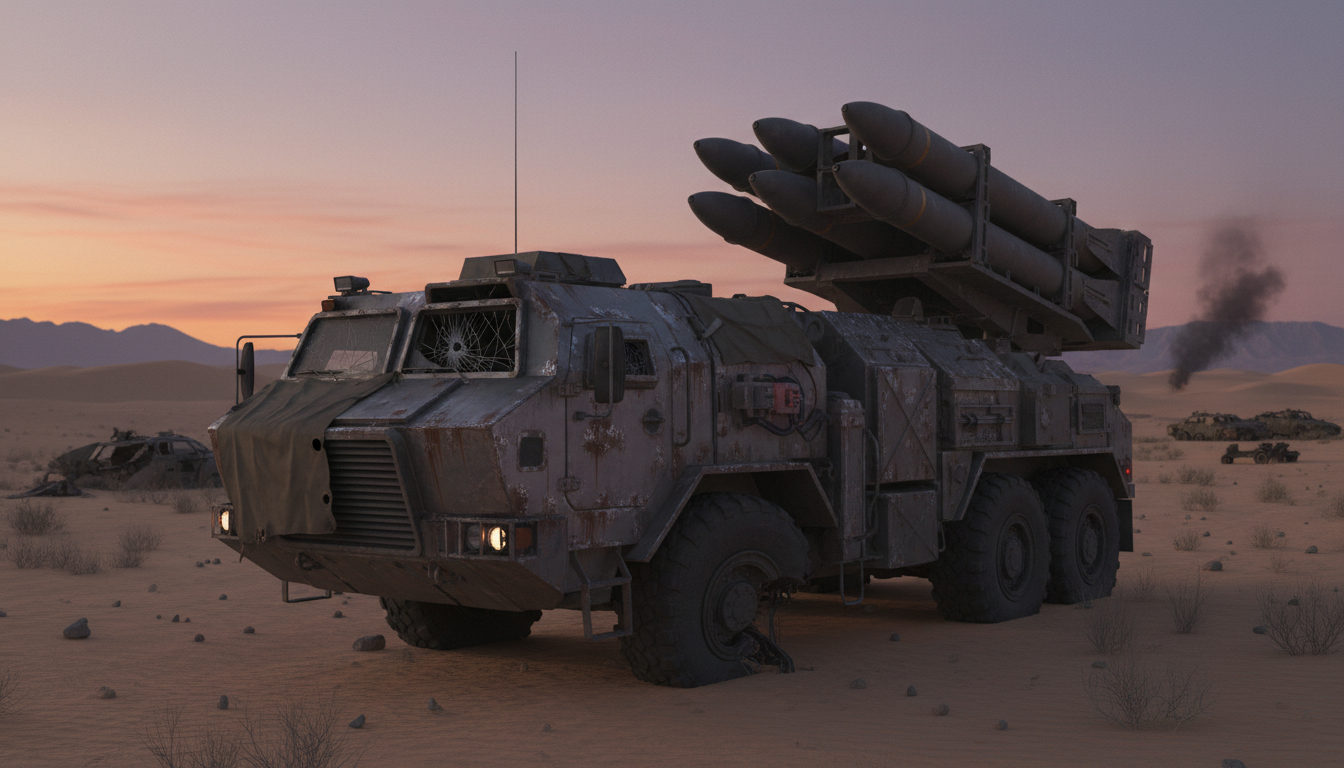
Distributed Network Outlasts Decapitation
Iran's decentralized network of non-state actors, spanning Lebanon, Yemen, Iraq, Syria, and Gaza, functions even after the elimination of senior Iranian leadership, such as Supreme Leader Ali Khamenei in February 2026, according to Strategic Escalation And Conflict Sustainability Us Iran War and Making Sense Of Irans Deterrence. We Bombed The Wrong Target and Strategic Escalation And Conflict Sustainability Us Iran War explained that by using proxies like Hezbollah, the Houthis, and Kataib Hezbollah, Iran exploits the "simultaneity problem" facing American forces, stretching their resources across multiple theaters. The 2003 destruction of Saddam Hussein's conventional army taught Iran that traditional deterrence is futile, prompting a strategic pivot to this distributed proxy network, We Bombed The Wrong Target observed.
150 THAAD Interceptors Depleted in June 2025
CSIS, in a December 2025 analysis, calculated that the US used 150 THAAD interceptors and 80 Standard Missile-3s during the June 2025 conflict. Defence Security Asia and Bruegel reported that expending 150 THAAD missiles would leave only 96 interceptors to restock two batteries, leaving zero reserve interceptors. HHRG 114 FA13 Wstate CordesmanA 20150610 and Global Security Review explain that Iran's resilient underground missile stockpiles, quickly repaired and reopened after extensive US and Israeli kinetic strikes, directly trigger a critical "cost-exchange dilemma" for modern layered air defense systems. Global Security Review explained that high-value interceptors like Patriot, THAAD, and Iron Dome, costing hundreds of thousands to millions of dollars each, are forced to engage low-cost drones and short-range missiles that cost a fraction of the price. This exchange rate is economically unsustainable at scale, as saturation attacks deplete defensive inventories faster than they can be replenished, Global Security Review warned.
Proxy Autonomy Drives Persistent Conflict
Strategic Escalation And Conflict Sustainability Us Iran War and Alcon Intel state that the Islamic Revolutionary Guard Corps Quds Force (IRGC-QF) provides funding, training, and strategic guidance to proxy groups, which possess "autonomous decision-making" capabilities. We Bombed The Wrong Target found that historical US and Israeli kinetic campaigns demonstrate that striking entrenched missile networks and proxy command structures catalyzes decentralized retaliatory cycles rather than suppressing non-state actor escalation. We Bombed The Wrong Target highlighted that incidents between 2019 and 2025, including the drone and missile attack on Saudi Aramco’s Abqaiq facility, Hezbollah missile barrages displacing over 100,000 Israelis, and the October 7 Hamas attack, proved this proxy network can impose severe costs without requiring a nuclear weapon. Kataib Hezbollah immediately pledged to attack US bases in Iraq following a strike on its headquarters, We Bombed The Wrong Target documented. Hezbollah actively rebuilt military infrastructure south of the Litani River prior to February 2026 strikes and continues to attack Israel, We Bombed The Wrong Target added.
Iran's Asymmetric Endurance Shifts Deterrence
Iran's demonstrated missile resilience has fundamentally changed regional deterrence, rendering conventional kinetic strikes against state assets increasingly ineffective and validating a strategy of asymmetric endurance that empowers non-state actors to escalate autonomously and continuously impose costs on adversaries. The "cost-exchange dilemma" will likely drive further investment in alternative defense technologies, but the core challenge remains the political will to endure protracted, low-intensity conflict, as the Houthi movement demonstrated within hours of Operation Epic Fury.
Comments ()