Iran's Rallies Entrench IRGC Power
IRGC Subordinates Foreign Affairs Ministry
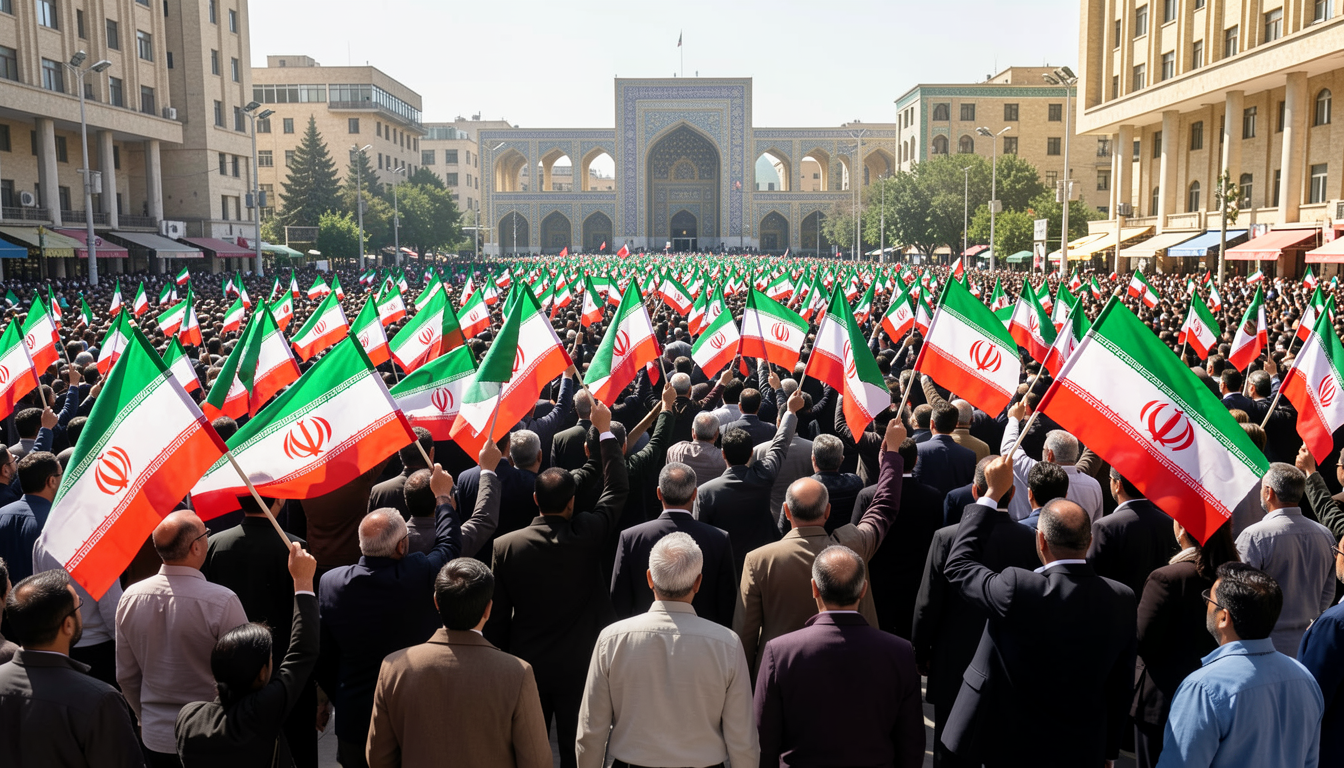
The April 8, 2026 ceasefire marked a turning point where street mobilizations shifted from national cohesion to forums for hardline political demands, particularly opposing negotiations with the United States, as observed by the Stimson Center. The BTI Project, Law & Liberty, the European Policy Centre (EPC), and the International Institute for Counter-Terrorism (ICT) warned that the rial's depreciation to 1,445,000 to the dollar in late 2025 and worsening living conditions mean the system could face systemic disruption rather than gradual reform if economic strain persists without substantive civilian accountability mechanisms. Hardline groups like the Steadfastness Front used these gatherings to frame diplomatic compromises as ideological betrayals, leveraging public mobilization to pressure the government and reject accountability for foreign policy shifts, the Stimson Center reported. Consequently, the Middle East Council noted that diplomatic outcomes are judged through a hardline ideological lens rather than pragmatic state interests.
Defense Council Centralizes August 2025 Oversight
This dynamic is reinforced by structural changes, such as the establishment of the "Defense Council" in early August 2025. The Institute for National Security Studies (INSS) explains that this council centralized defense program oversight, moving accountability away from traditional civilian oversight toward a military-dominated institution. The post-2026 conflict consolidation has functionally reoriented accountability toward securitized nationalism and hardline-controlled street mobilization, aligning regime survival with public sentiment rather than restoring substantive civilian oversight. The Stimson Center found that postwar rallies function as mechanisms to bypass formal checks, shifting accountability from formal institutional processes to informal factional pressure that inherently favors the IRGC's security-first agenda. Following the death of Ali Larijani, former IRGC commander Mohammad Bagher Zolghadr was appointed as the new secretary of the Supreme National Security Council (SNSC) in March 2026, shifting the SNSC's presiding authority to a security-focused hardliner with deep IRGC ties, the Irregular Warfare Project and the International Institute for Counter-Terrorism (ICT) documented. Socarx also observed that comprehensive U.S. sanctions successfully unified even moderate opposition factions with the state's external-threat narrative.
Wartime Power Concentrates in Coercive Institutions
This stability, however, masks accelerating institutional erosion. The Journal of Democracy reported that the wartime environment concentrated power in coercive institutions, significantly reducing civilian oversight and accountability. The observed postwar "rally-around-the-flag" effect represents a durable integration of military power into a resilient nationalist-security state, providing short-to-medium-term stability, but it simultaneously masks accelerating institutional erosion that risks long-term fracture. The Iranian state shows significant resilience despite severe internal protests, economic hardship, and external military pressure, according to the Journal of Democracy, the Middle East Research and Information Project (MERIP), Law & Liberty, the Valdai Club, and Small Wars Journal. The Valdai Club, the Stimson Center, and the International Institute for Counter-Terrorism (ICT) found that the regime successfully used social cohesion, Shi'a narratives, and ethnonational identity to consolidate national identity and renew the social contract around national defense rather than internal governance accountability. This "effective authoritarian accountability" maintains alignment between leadership and the mobilized base, preventing immediate internal fragmentation, the Council on Foreign Relations (CFR) and the Middle East Research and Information Project (MERIP) concluded. While the Middle East Research and Information Project (MERIP), Law & Liberty, and the Valdai Club suggest the regime is not on the verge of collapse, the BTI Project, Law & Liberty, the European Policy Centre (EPC), and the International Institute for Counter-Terrorism (ICT) warned that worsening living conditions mean the system could face systemic disruption rather than gradual reform if economic strain persists without substantive civilian accountability mechanisms.
Ethnonational Narratives Depoliticize Grievances
This substitution temporarily stabilizes the regime by depoliticizing economic grievances through a powerful wartime rally-around-the-flag effect, Small Wars Journal explained. The International Institute for Counter-Terrorism (ICT) notes that postwar authorities strategically deploy ethnonational and religious narratives in rallies to effectively substitute traditional domestic accountability demands with performative legitimacy. By framing political opposition as a betrayal of revolutionary and national ideals, hardline factions instrumentalize these gatherings to resist diplomatic compromises and hold the executive branch accountable only through an ideological lens rather than policy performance, the Stimson Center found. This "spiritual-political authoritarianism" generates normative conformity and charismatic legitimacy, allowing the regime to bypass traditional institutional oversight, the International Institute for Counter-Terrorism (ICT) reported. The BTI Project and Small Wars Journal found that the external threat narrows the space for public protest against internal governance, redirecting attention from pre-war frustrations over soaring inflation and currency depreciation to national survival.
IRGC Empowerment Diminishes Civilian Accountability
The systematic empowerment of the IRGC and the corresponding diminishment of civilian accountability suggest a long-term shift towards a more militarized, ideologically rigid Iranian state. This reorientation of accountability mechanisms means foreign policy decisions will likely remain subordinate to security-first ideological metrics, limiting Iran's strategic flexibility in international relations. While the regime has achieved short-to-medium-term stability, the unaddressed structural economic vulnerabilities and the hollowing out of civilian institutions create a brittle power structure that risks systemic disruption if economic strain persists.
Comments ()