Palantir's NHS Algorithms Shift Clinical Power

Care.data's 1.6 Million Opt-Outs
The Care.data initiative was abandoned in 2016 after accumulating between 1.5 million and 1.6 million patient opt-outs, the BBC documented. While "Purpose-based Access Controls" are in place for auditing data access, the University of Edinburgh, The Conversation, and Al Jazeera question the practical auditability of complex, proprietary multinational systems. Accuray highlighted that regulatory bodies like the FDA suggest only deterministic algorithms and Explainable AI (XAI) can be fully vetted for clinical use, implying opaque models fall short of necessary transparency standards for clinical application. This opacity hinders NHS trusts' ability to assign liability for errors, as algorithmic accountability requires clarity on contributing factors, the University of Edinburgh found.
FDP's Projected 3 Million Opt-Outs
A YouGov poll indicated that 48% of adults who had not yet opted out were likely to opt out if the FDP was introduced by a private company, a sentiment Foxglove warned could lead to 3 million additional FDP-related opt-outs and potentially double the volume that led to Care.data's collapse. This erosion of trust systematically undermines patient agency by converting potential data sharing into defensive mass opt-outs, according to The Conversation and Foxglove. The Conversation reported that current national data opt-out rates already exceed 3.3 million people, representing 5.4% of GP-registered patients as of early 2024.
Cardiovascular Algorithm's 80% Caucasian Data
For example, a cardiovascular risk scoring algorithm was significantly less accurate for African American patients because approximately 80% of its training data represented Caucasians, Ruth Bahta and Accuray found. Rutgers University, Ruth Bahta, and Accuray documented that training datasets used in healthcare AI frequently underrepresent vulnerable populations based on race, ethnicity, and socioeconomic status. Rutgers University argued that these biases directly compromise patient agency, potentially leading to misdiagnoses, inadequate resource allocation, or treatment delays for marginalized patients. Ruth Bahta and Accuray explained that the "black-box" nature of deep learning classifiers makes it difficult to determine how an algorithm arrives at a specific output, hindering the identification and correction of embedded biases. Patients should theoretically have the right to audit an algorithm's supply chain, but this is practically impossible due to the proprietary complexity of systems like Palantir's, according to the University of Edinburgh, The Conversation, and Al Jazeera.
Chelsea and Westminster's 28% Waiting List Drop
Documented operational efficiencies at Chelsea and Westminster NHS Foundation Trust, including a 28% reduction in inpatient waiting lists and a 55% drop in day-of-surgery cancellations, have been attributed to the FDP, Palantir reported. Across 22 NHS Trusts, theatre usage increased by 6.3%, according to Palantir. North Cumbria Integrated Care NHS Foundation Trust reported up to a 10% increase in surgeries, Palantir added. However, some NHS organizations have resisted the FDP; Greater Manchester Integrated Care Board (ICB) decided not to use it because existing local capabilities exceeded Palantir's products, Democracy for Sale documented. Medact and Democracy for Sale documented that Leeds Teaching Hospitals NHS Trust warned adopting certain FDP tools would cause them to "lose functionality rather than gain it."
Palantir FDP's Impact on Clinical Decisions
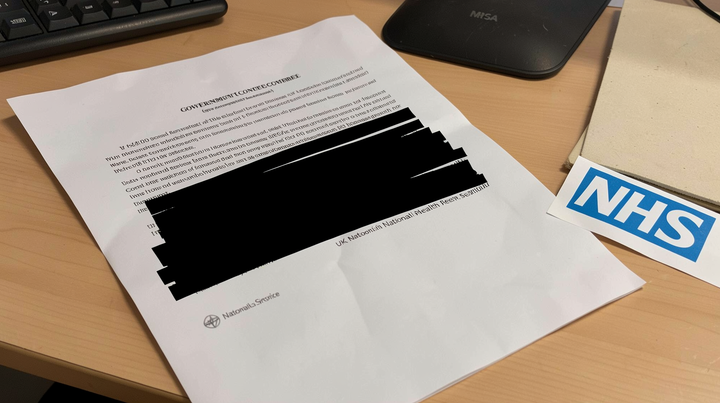
The integration of Palantir's FDP into the NHS, despite contractual safeguards, practically transfers clinical decision-making influence and erodes patient agency. The inherent opacity of proprietary algorithms and extensive contractual redactions creates structural barriers to accountability and meaningful oversight, a dynamic that fosters public mistrust, leading to mass opt-outs that degrade NHS datasets and compromise equitable care access for marginalized groups.


Comments ()