Unanimity Stalls EU Defense Funding
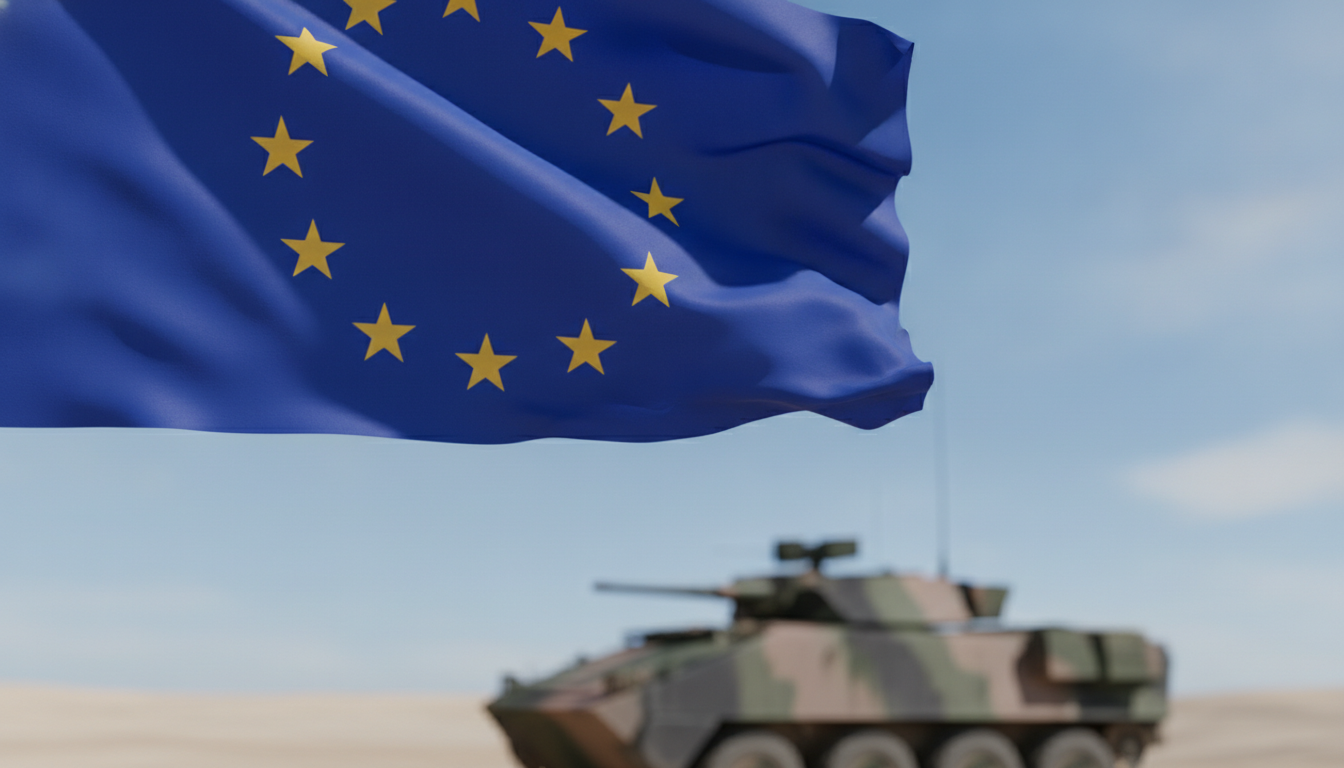
Eastern Europe Drives Defense Spending
In May 2025, the EU approved the €150 billion Security Action for Europe (SAFE) loan program using an emergency clause, Article 122 of the Treaty on the Functioning of the European Union (TFEU), according to the Centre for European Reform and Behorizon. Poland and the Baltic states now drive the EU's "geopolitical awakening," advocating for stringent sanctions and faster decision-making, viewing Ukrainian security as integral to their own, as detailed by the Brussels School of Governance and the Robert Schuman Foundation. A Bocconi University paper found that military expenditure ratios across the EU are inversely proportional to a country's distance from Russia's border.
EPF Reaches $19.7 Billion by March 2024
The European Peace Facility (EPF) saw its ceiling increased three times, reaching $19.7 billion by March 2024 to sustain continuous military assistance, according to the Center for European Policy Analysis. The Atlantic Council reports that European allies collectively increased defense budgets by 20% in 2025, with all NATO allies now exceeding the 2% of GDP target. The EU has shifted from relying on existing stockpiles to actively financing domestic production, co-production with Ukrainian firms, and procuring weapons directly from Ukraine.
Poland Aims to Double Armed Forces by 2030
However, resource allocation remains heavily skewed by geography, with Eastern and Central European states pursuing independent, aggressive expansion plans, such as Poland's aim to double its armed forces by 2030, according to Fomoso and a Bocconi University paper. The Center for European Policy Analysis documented that joint procurement mechanisms, facilitated by the European Peace Facility, are forging a unified industrial base by approving acquisitions and focusing on financing domestic production and co-producing with Ukrainian firms, thereby integrating Eastern European defense industries into the broader EU supply chain. The Center for European Policy Analysis observed that this proximity-driven spending undermines unified economies of scale, as member states prioritize national capability building over collective efficiency.
EU Invokes Stability Pact Escape Clause
Additionally, the European Commission invoked the "national escape clause" under the Stability and Growth Pact in March 2025, allowing member states to increase net defense expenditures by up to 1.5% of GDP until 2028 without breaching EU fiscal rules, as reported by CIDOB and the European Commission. Despite the paralysis caused by national vetoes, the conflict has catalyzed decisive structural shifts in EU financial governance. The Brussels School of Governance and the Robert Schuman Foundation noted that the EU broke previous taboos by using the European Peace Facility to procure weapons for a third country at war. Bruegel noted that the European Investment Bank (EIB) also changed its eligibility rules to finance projects with a primary defense purpose.
Unanimity Rules Fragment Unified Action
Despite frontline Eastern European states undeniably driving a surge in EU defense spending and strategic focus, the persistence of unanimity rules continues to fragment unified financial action; while new mechanisms like the SAFE loan program show a capacity for structural adaptation, the core challenge of single-member state vetoes remains. The Centre for European Reform suggests that the EU's ability to achieve truly unified and predictable long-term security governance will depend on further institutional reforms, particularly expanding qualified majority voting.
Comments ()