Warfare's New Front: The Mind
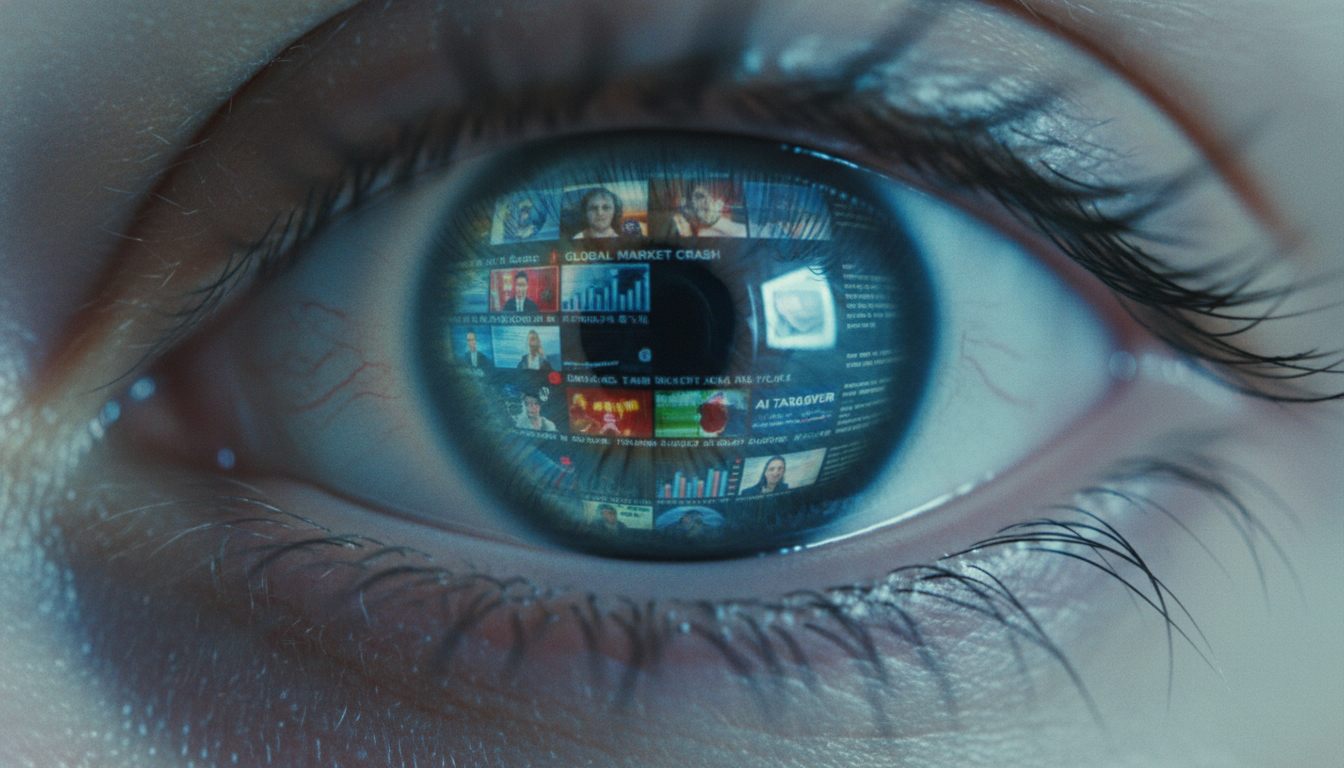
The scale of identified organized social media manipulation campaigns has increased by 15% since 2019, indicating that social media propaganda has moved beyond a mere tactical tool to become a primary driver of strategic outcomes in modern military conflicts, fundamentally shifting the focus from physical terrain to the cognitive and information domains. This isn't just about influencing public opinion anymore; it's about weaponizing perception to achieve outright destabilization. The very nature of warfare is being reshaped, not by bombs and bullets, but by pixels and algorithms.
The Cognitive Frontline
The battlefield has changed. It now exists in the minds of populations. Social media propaganda, amplified by generative AI, now directly exploits human psychological vulnerabilities, biases, and beliefs. Synthetic media, AI-generated images, voice cloning, and deepfakes, create indistinguishable fabrications, Trends Research found. These tools enable "cognitive warfare," where the goal is to induce fear and erode hope, a tactic some call "psychosensory warfare." Military organizations, state-sponsored and otherwise, are now using these methods to gain strategic advantages.
This isn't just theory. "Social media manipulation of public opinion is a growing threat to democracies around the world," The 2020 media manipulation survey from the Oxford Internet Institute found, "which found evidence in every one of the 80+ countries surveyed." The scale of these organized campaigns has increased by 15% since 2019 alone.
The Erosion of Trust
The constant barrage of unverifiable information leads to two dangerous psychological adaptations: widespread credulity, where vivid imagery is accepted at face value, or, perhaps more insidious, "blanket skepticism": a total loss of trust in all information. This environment makes populations less susceptible to traditional influence methods, but far more vulnerable to strategic destabilization.
In open societies with high internet access, traditional psychological operations struggle to compete with the unlimited number of narratives. Digital propaganda then polarizes societies, eroding the shared perception of truth. It poses a direct threat to democratic institutions by amplifying systemic distrust.
The Asymmetric Battle
This new form of warfare also creates a profound economic imbalance. Low-cost digital provocations can force high-cost institutional responses. This disparity leads to strategic fatigue and paralysis, a kind of "cognitive attrition" that degrades an adversary's decision-making capacity and internal cohesion, an NDU Press analysis describes. Manipulating the cognitive domain has become the new "high ground" for conflict, replacing the traditional seizure of territory.
Traditional methods of countering disinformation, like debunking, have proven largely ineffective against these tactics. While "pre-bunking," inoculating audiences against anticipated narratives, shows promise at the individual level, it cannot neutralize the economic advantage of algorithmic amplification, a peer-reviewed study in Science found. The sheer volume and speed of disinformation overwhelm even the best individual defenses.
Real-World Scars, Unseen Links
The consequences are not abstract. In India, deepfakes have been deployed during elections to spread fake candidate imagery and amplify religious and ethnic divisions, sparking communal tensions and violence. In Ukraine, open-source intelligence gathered via social media has been used to track troop movements and identify war crimes. Houthi forces in Yemen have utilized social-media-enabled analysis of satellite imagery to pinpoint and counter anti-Houthi positions. As Stanford's research notes, "Military organizations, both state-sponsored and otherwise, can (and do) exploit this open-source intelligence to recalibrate their tactics and achieve strategic advantages."
These are concrete examples of digital activity shaping conflict. Yet, the direct empirical link between specific deepfake deployments and measurable battlefield troop movements or diplomatic shifts remains largely unquantified in current research. The fog of war has merely moved into the digital realm.
The Unseen Toll
The damage propaganda inflicts on public trust and social cohesion is evident. Its influence on tactical decisions and strategic advantages is recognized. The precise, granular impact of individual synthetic media attacks on kinetic outcomes, the direct link between a fabricated video going viral and a specific missile strike or troop withdrawal, remains elusive. The strategic shift is undeniable, but the specific, measurable causation at the front lines is still largely a black box.
Comments ()