X: The Influence Machine
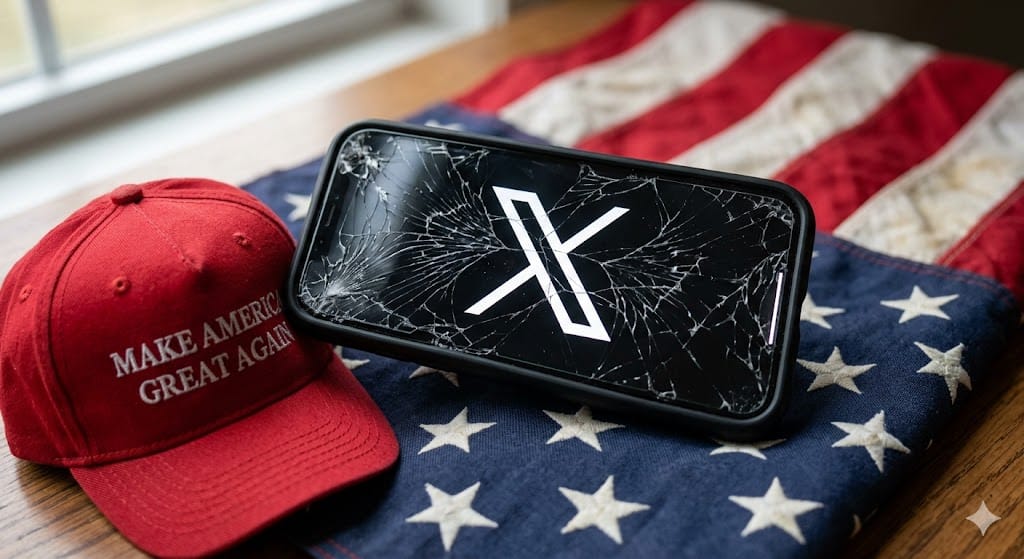
Elon Musk's management of X, the platform formerly known as Twitter, appears to be a calculated blend of business strategy and ideological ambition. His public declarations of "free speech absolutism" often frame decisions that simultaneously advance his commercial interests and political influence. What this means for users is a platform increasingly shaped less by neutral principles and more by a singular vision, one that costs billions but buys substantial leverage.
This isn't just about a social media company. It concerns who controls the digital town square, and to what end.
The Political Price Tag
Musk's political leanings have shifted dramatically. Before 2022, his donations spread across both major parties, a pragmatic approach for a CEO protecting diverse business interests, according to an analysis by PBS. That changed. A sharp turn towards right-wing politics began in 2022, aligning with growing criticism of the Biden administration.
By the 2024 election cycle, Musk became the largest individual political donor, contributing approximately $292 million to various causes. Substantial amounts went to Super PACs supporting Donald Trump, Newsweek reported. This deepening political relationship brought an appointment for Musk: co-leading the "Department of Government Efficiency" within the Trump administration. That role, in turn, facilitated a review of FAA regulations that impact SpaceX launch approvals. The money talks loudest. His political alignment and financial contributions closely correlate with regulatory favorability and influence over policy decisions affecting his companies. It's like a corporate lobbyist buying a seat at the regulatory table, then getting to set the agenda.
The Digital Land Grab
Musk acquired Twitter, rebranding it as X, to exert personal control over public discourse. This was less about pure financial gain or simply championing free speech, according to reporting by NBC News and Wikipedia. He envisioned X as a "digital town square" and an "everything app," much like WeChat in China.
Immediately after the acquisition, Musk fired key executives and cut the workforce by roughly half, PR Newswire reported. The platform became "X" in July 2023, its domain shifting to x.com in May 2024, ABC News noted. These rapid changes and the rebranding showed a clear desire for complete control over the platform's identity and direction. Control cost $44 billion, a price that outran alternative, less risky strategic options like partnerships or a large shareholder position. It's like buying a newspaper just to control the editorial page.
The Algorithm's New Rules
Musk's personal views on free speech deeply influenced X's content moderation policies. The platform removed policies addressing COVID-19 misinformation, election integrity, and crisis misinformation, HIIG.de observed. The prohibition against misgendering or deadnaming transgender individuals also fell away. The platform shifted away from outright content removal to algorithmic suppression, reducing visibility for some content. It also reinstated thousands of previously banned accounts, most notably Donald Trump's. The Trust and Safety Advisory Council was disbanded shortly after the acquisition.
Preliminary analyses suggest these changes brought an increase in harmful content. One study reported a surge in hate-term tweets per hour, jumping from 84 to 398 immediately after the acquisition. Engagement with hateful content reportedly spiked, with likes on posts containing hate speech rising by 70%, according to a PLOS One study. The Center for Countering Digital Hate (CCDH) found X failed to act on 86% of reported hateful posts. X claims its algorithmic suppression reduced hateful impressions by one-third, and its September 2024 transparency report noted millions of account suspensions. However, external researchers question the actual effectiveness of these measures. The algorithm is not neutral.
X also underwent significant algorithmic changes correlated with specific content amplification. The platform moved to a Grok-powered semantic analysis model projected to process over 100 million posts daily, according to an arXiv preprint. The algorithm heavily weights engagement velocity. Replies receive the highest weighting, 27 times more than likes, and 150 times more if the original author responds, one analysis from JETIR.org points out. Bookmarks get a 10x boost, and reposts 20x. Native video content consistently receives a significant boost.
These algorithmic changes often amplify conservative content, reducing visibility for traditional media outlets, especially for new accounts, PBS reports. Exposure to algorithmic content on X shifts political opinion towards more conservative positions, a Nature study found. Social media algorithms, X included, tend to amplify pre-existing user biases by prioritizing emotionally charged content. This creates echo chambers where misinformation spreads faster and further, according to ScienceDirect research. It is like a restaurant owner claiming an "open kitchen" while only letting certain chefs cook. Algorithmic redesigns prioritizing information quality and viewpoint diversity over pure engagement metrics would address some of these issues.
The Shrinking Audience
Financial strain followed the acquisition. Advertising revenue declined to approximately $2.5 billion in 2024. Projections show a further drop to $2.26 billion in 2026, an arXiv preprint suggests. This financial pressure appears secondary to Musk's pursuit of influence and control. Declining advertising revenue guts X’s ability to invest in crucial infrastructure and compete with platforms like Meta and TikTok. Fewer eyeballs, less money.
U.S. usage of X fell by approximately 23% between November 2022 and February 2024, The Guardian reported. Overall monthly active users have decreased. By contrast, Facebook and TikTok focus on hybrid feeds and "follower-first" approaches to refine engagement. X increasingly prioritizes content visibility for verified and paying users, directly linking content amplification to monetization. This explicit monetization of visibility limits organic reach for non-paying accounts. It represents a fundamental shift towards a tiered system where paid status directly influences content amplification. Charging people to be heard at a town hall eventually empties the hall.
The Information Toll Booth
The evidence points to Elon Musk's "free speech absolutism" as a powerful public justification. It papers over strategic business decisions aimed at consolidating control, influencing public discourse, and securing regulatory advantages for his broader empire. His shift towards right-wing politics and substantial financial contributions directly precede favorable regulatory outcomes for SpaceX. A clear business imperative undercuts his political alignment. The algorithmic changes on X, favoring engagement velocity and specific political content, extend this strategy. They shape the information environment to align with his political and business interests, even as platform health and user trust corrode.
The apparent contradiction of advocating "free speech absolutism" while implementing algorithmic biases finds its resolution here. True unfettered speech would imply a neutral algorithm. X's algorithm, however, prioritizes specific types of engagement and correlates with amplifying conservative viewpoints, particularly for new users. This means "free speech" on X, under Musk's ownership, is not a neutral principle. It is a selectively applied one that props up a partisan information ecosystem. This is a crucial distinction.
The financial struggles of X, particularly the advertising revenue decline, highlight a willingness to incur significant short-term costs. The long-term gains of political influence and control over a major communication platform are simply more valuable. Transparency would allow a more comprehensive assessment of the platform's health and the effectiveness of its moderation strategies. Furthermore, algorithmic redesigns prioritizing information quality and diversity of viewpoints would help reduce echo chambers. The thing that would actually address harmful content is robust human content moderation capabilities and re-established advisory councils. The strategy of prioritizing visibility for paying users could also be balanced against its impact on overall user experience and content diversity.
Musk promised a digital town square. What he built is closer to a toll booth with a political dress code.
The $44 billion bought a megaphone, not a forum. It only points one direction.



Comments ()