AI's Fabricated Reality Undermines Democracy
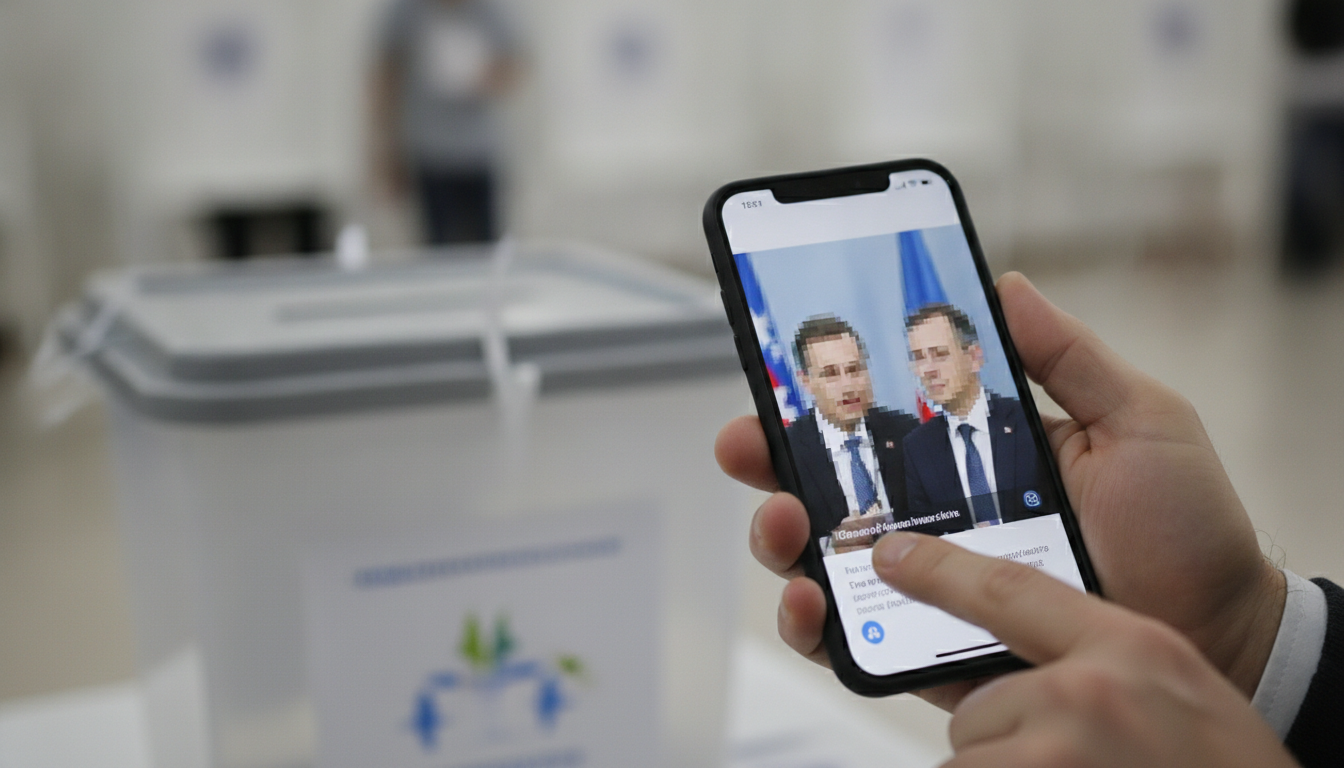
62% of US Adults Question Video Authenticity
A 2025 Pew study, also cited by the American Bar Association, revealed that 62% of U.S. adults routinely questioned video authenticity, with trust in election-related media dropping 22 points since 2020. A 2025 YouGov-Brennan Center survey indicated that 62% of U.S. respondents believed they had encountered deepfakes in political content. The American Bar Association's 2025 Report noted that the same survey found 41% reported increased skepticism toward all online videos of politicians. Following mutual accusations of deploying fakes in 2024, the American Bar Association observed that 58% of voters reported reduced trust in all campaign media. Public confidence in investigative journalism declined by 18% in post-election polling in 2025, the American Bar Association also reported. A Yale University study concluded that warnings about deepfakes do not improve voters' ability to discern authentic content; instead, they induce a generalized disbelief, causing participants to believe real videos are fake.
34 Accounts Amplified Trump Narratives with AI
The USC Viterbi School documented coordinated networks of 34 accounts that used generative AI to create biased images and amplify conservative narratives for Donald Trump across Twitter/X, YouTube, and mock websites, with promoted content shared thousands of times daily. The Brennan Center for Justice reported that, "During the 2024 Republican primary, Florida Governor Ron DeSantis’s campaign deployed AI-generated images depicting Donald Trump embracing Dr. Anthony Fauci." Arthur.ai detailed how AI simultaneously levels the strategic playing field through low-cost narrative proliferation while concentrating power via high-fidelity microtargeting. The Harvard Misinformation Review stated that generative AI tools make narrative creation inexpensive and highly accessible, allowing under-resourced candidates to optimize election logistics and campaign outreach. Arthur.ai noted that these tools enable the rapid, scalable production of vast amounts of tailored content. Arthur.ai further explained that AI systems analyze extensive data from social media, voter registration databases, and consumer behavior to identify trends and preferences with unprecedented precision, and that AI-driven sentiment analysis allows campaigns to gauge public opinion in real-time and adjust messaging strategies accordingly. The Anti-Defamation League and UNESCO reported that campaigns deployed Large Language Models (LLMs) like ChatGPT, GPT-4, Gemini, and Llama 2 for text generation, and DALL-E, Midjourney, and Stability AI for images. The USC Viterbi School and Arthur.ai observed that generating AI content required minimal time and cost. However, a Harvard Ash Center article and a peer-reviewed article pointed out that building advanced models required significant financial investment, giving well-funded Super PACs an advantage.
Deepfakes Degrade Political Reputations Durably
PsyPost reported that deepfake videos degrade political reputations and decrease voter support for targeted candidates, with the damage being most severe among a candidate's initial supporters. Standard fact-checking efforts, PsyPost determined, reportedly fail to undo this total reputational harm, and AI-induced reputational damage remains durable even when voters suspect fabrication, the publication also found. Brookings and the Knight Columbia Institute found that early AI adoption in campaigns yields only temporary electoral advantages that rapidly dissipate as opponents mirror tactics and neutralize the initial edge. During the 2024 presidential debate, the Anti-Defamation League and Temple Law observed no specific instances of candidates using fabricated intelligence to directly counter opponents in real-time. The Turing Institute stated that Donald Trump made four times more false or suspect claims than Kamala Harris during the 2024 presidential debate. The Knight Columbia Institute reported that experimental studies found false claims of misinformation increased politician support more effectively than apologies or simple denials. Brookings found that standard LLMs performed poorly on fact-checking, achieving F1 scores of 0.1 to 0.3. Brookings also reported that when augmented with Retrieval-Augmented Generation (RAG) pipelines accessing curated evidence, accuracy improved by 233%, reaching a 0.90 macro F1 score. PhilArchive and NBCU Academy reported that in 2024 debate tests, ChatGPT and Perplexity provided instant responses that closely matched human fact-checkers, operating faster but lacking the scalability of human oversight. Gideon Lichfield noted on LinkedIn that Factiverse's real-time fact-checking system transcribed and categorized 1,123 statements during the 2024 presidential and vice-presidential debates.
Fact-Checking Fails to Restore Trust
A Yale University study and PsyPost concluded that this dynamic makes traditional fact-checking increasingly performative, failing to reverse reputational damage or restore trust. Evidence shows that fabricated intelligence scales tailored narratives, fueling public skepticism and concentrating campaign power. The continued evolution of AI as an indispensable campaign tool risks a more fragmented information environment, undermining the shared factual basis essential for collective democratic decision-making.
Comments ()