Algorithmic Inference Fails Gen Z and Rural Voters
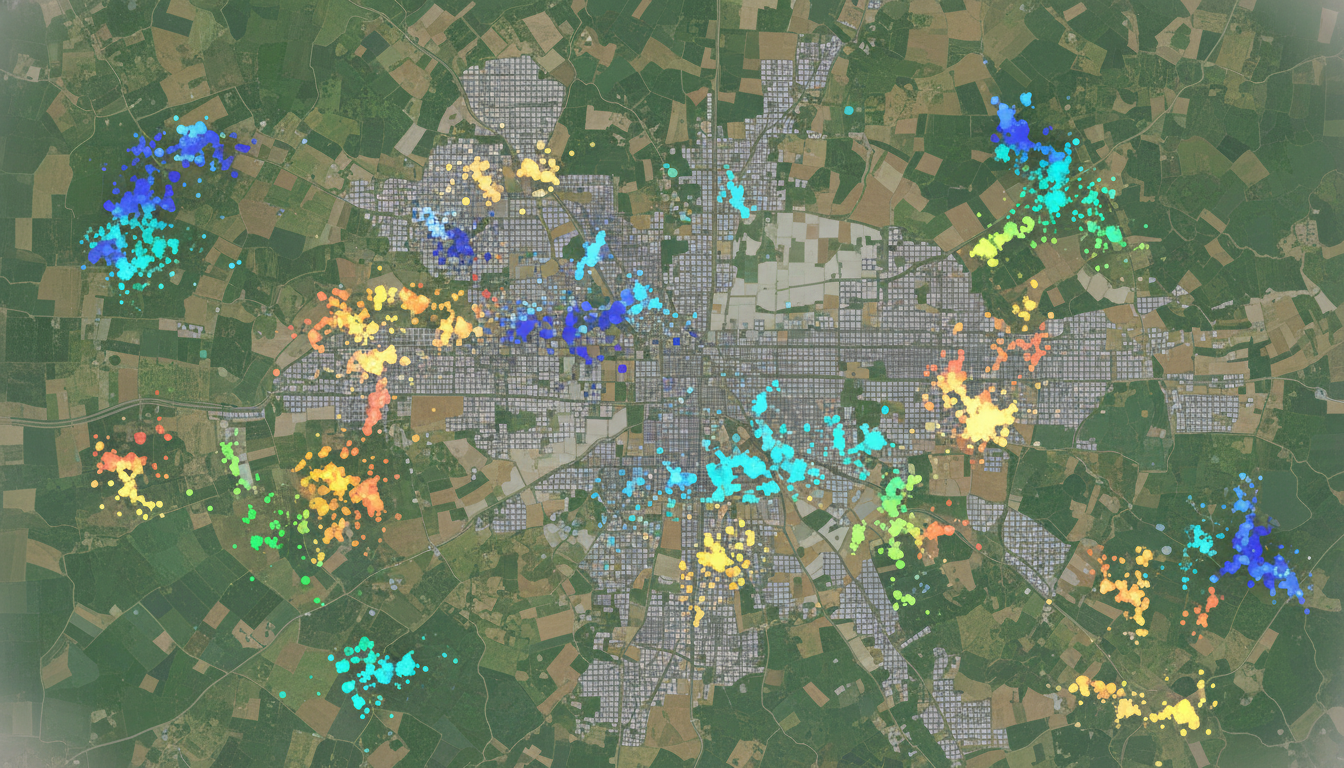
Gen Z's Issue-Based Politics Defy Prediction
A Johns Hopkins University study and YouGov analysis found that Gen Z exhibits highly fluid, issue-based political alignments, which frequently transcend traditional party lines and make their political identities less predictable for algorithmic inference. YouGov found that while older generations—Gen X (born 1965-1981) and Baby Boomers (born 1946-1964)—are starkly divided along party lines regarding their most important issues, their priorities align tightly with their party labels, demonstrating an average partisan gap of 12 percentage points. Only 56.4% of young people aged 18-24 affiliate with a major party, and "one third of youth identify as independents," reports CIRCLE at Tufts University. YouGov also determined that Gen Z adults show an average partisan gap of just 5 percentage points on key issues, indicating their attitudes are less rigidly tied to party labels. The contextual fluidity and lower party commitment among Gen Z mean algorithmic inferences face stronger divergence when applied to this group, according to the Johns Hopkins University study and CIRCLE at Tufts University. A Kansas State University study indicated that 78% of Gen Z obtain news from social media, compared to 46% from television, which shapes their political engagement in ways traditional models may not capture.
Boomers' Stable Affiliations Remain Predictable
Unite America and YouGov report that Baby Boomers, in contrast, display stable, institution-anchored commitments that make their partisan identities more predictable. YouGov and Gallup confirm that this stability makes Boomers easier for algorithms to predict accurately compared to Gen Z.
Rural-Urban Divide Fractures for People of Color
A Harvard University study revealed that this geographic signal fractures when applied to non-white rural populations, primarily because the growing rural-urban political divide is driven by white Americans. Washington University in St. Louis determined that the rural-urban political divide is a direct causal product of geographic proximity and population density. "An individual’s probability of identifying as a strong Democrat drops by 12 percentage points if they live in a far rural area," while "a person living in a densely packed community is about 11 points more likely to identify as a strong Democrat," the same university found. On average, Republicans lived 20 miles from a city, independents lived 17 miles away, and Democrats lived 12 miles away, according to Washington University in St. Louis. This geographic sorting has led to a 25-point Republican edge in rural counties, while urban counties remain heavily Democratic (60% to 37%), Pew Research Center documented. Rural people of color exhibit much less political divergence from their urban counterparts in terms of voting behavior and policy attitudes, according to the Harvard University study and Cornell University. Consequently, algorithms relying on a blanket "rural equals Republican" heuristic will lead to significant inference errors for rural individuals who are people of color, the Harvard University study warned.
Algorithmic Models Misclassify Gen Z and Rural People of Color
Partisan inference models, relying on traditional demographic and geographic proxies, have remained structurally static and have not successfully adapted to recent political realignments or the surge in independent identification, according to the Kim and Zilinsky study and a Harvard University study. A Harvard University study also found that algorithms applying broad geographic heuristics, such as assuming "rural equals Republican," systematically misclassify rural people of color. Voter behavior, particularly among Gen Z, has grown increasingly contextual and fluid, creating a persistent gap between algorithmic inference and self-identified political identities, CIRCLE at Tufts University and a Harvard University study observed.
Misclassification Misdirects Political Messaging
Reliance on outdated algorithmic models risks inadvertently inflating perceptions of polarization by forcing independent or cross-pressured voters into binary partisan categories. The persistent misclassification of Gen Z and rural people of color by algorithmic inference models means microtargeting strategies based on static demographic or geographic proxies will likely misdirect political messaging and resources. The challenge now is to develop dynamic inference models that can account for evolving political identities and the nuanced interplay of race and geography, moving beyond the 63.4% to 67.4% accuracy ceiling.

Comments ()