Algorithms Prime 2026 Voters for Emotional Polarization
Memes Drive 56% Youth Turnout in 2026
A 2026 survey found that 56% of young Americans (ages 18-29) are "extremely likely" to vote in the 2026 midterm elections, a rate comparable to the 2024 presidential election, The Journal of Communication reported. A University of Tennessee paper documented Kamala Harris's campaign investing over $200 million in digital advertising for streaming and Google properties in 2024. A Visualcom Publications analysis echoed that nearly half (46%) of individuals under 30 preferred social media as their primary source for political information. Memes function as a "gateway" to politics, lowering the barrier to entry for complex issues and sparking interest among less politically engaged individuals, a Taylor & Francis Online peer-reviewed study observed.
Trump's Truth Social AI and Harris's 'Brat Summer' Memes
Leading 2026 presidential candidates, such as Donald Trump and Kamala Harris, employ distinct platform-specific meme strategies. Donald Trump's strategy centers on a "relentless stream" of AI-generated imagery on Truth Social to dominate the attention economy, project a "large and in charge" image, and execute out-group attacks, Yahoo News and Barrons reported. Kamala Harris's campaign, conversely, embraced meme culture to revitalize her image and connect with young voters, utilizing formats like "coconut tree" and "brat summer" memes, Campaigns & Elections and ECPR documented. A Visualcom Publications analysis found that on X, GIFs generated the highest engagement (mean of 11.41%) and favorability (mean of 9.78%) during the 2024 cycle, outperforming photo collages and videos.
AI Boosts Engagement and Partisan Attacks
A preprint on arXiv found that the combination of AI-generated content and meme formats created a synergistic effect, significantly boosting social media engagement, likes, and comments. Generative AI primarily amplifies pre-existing partisan biases by solidifying latent preferences, rather than fundamentally shifting undecided voter behavior. This suggests AI intensifies existing political leanings and emotional responses, rather than introducing entirely new ones. Donald Trump deployed AI-generated imagery for "strategic distraction" and self-glory, while Democrat-leaning users used AI for in-group support and Republicans used it for out-group attacks, the arXiv preprint also noted.
X Algorithm Shifts Policy Priorities by 4.7%
Users who switched to X's algorithmic feed were 4.7 percentage points more likely to prioritize Republican policy issues like inflation, immigration, and crime, a Nature paper by Gauthier, Hodler, Widmer, and Zhuravskaya found. Platform algorithms and AI meme campaigns actively prime voter emotions, often bypassing ideological monitoring to shift political attitudes and priorities. This emotional conditioning can occur weeks or months before explicit ideological indicators appear, making it harder for monitoring systems designed for ideological signals to detect, according to The Behavioural Insights Team. A 2023 University of Colorado study found that a week of exposure to political influencer videos on TikTok significantly increased young voters' reported sadness, anxiety, and anger without changing their political opinions. The Behavioural Insights Team noted that this emotional conditioning creates an environment where political judgments are later formed, making audiences more receptive to persuasive efforts.
2026 Election Risks Affective Polarization
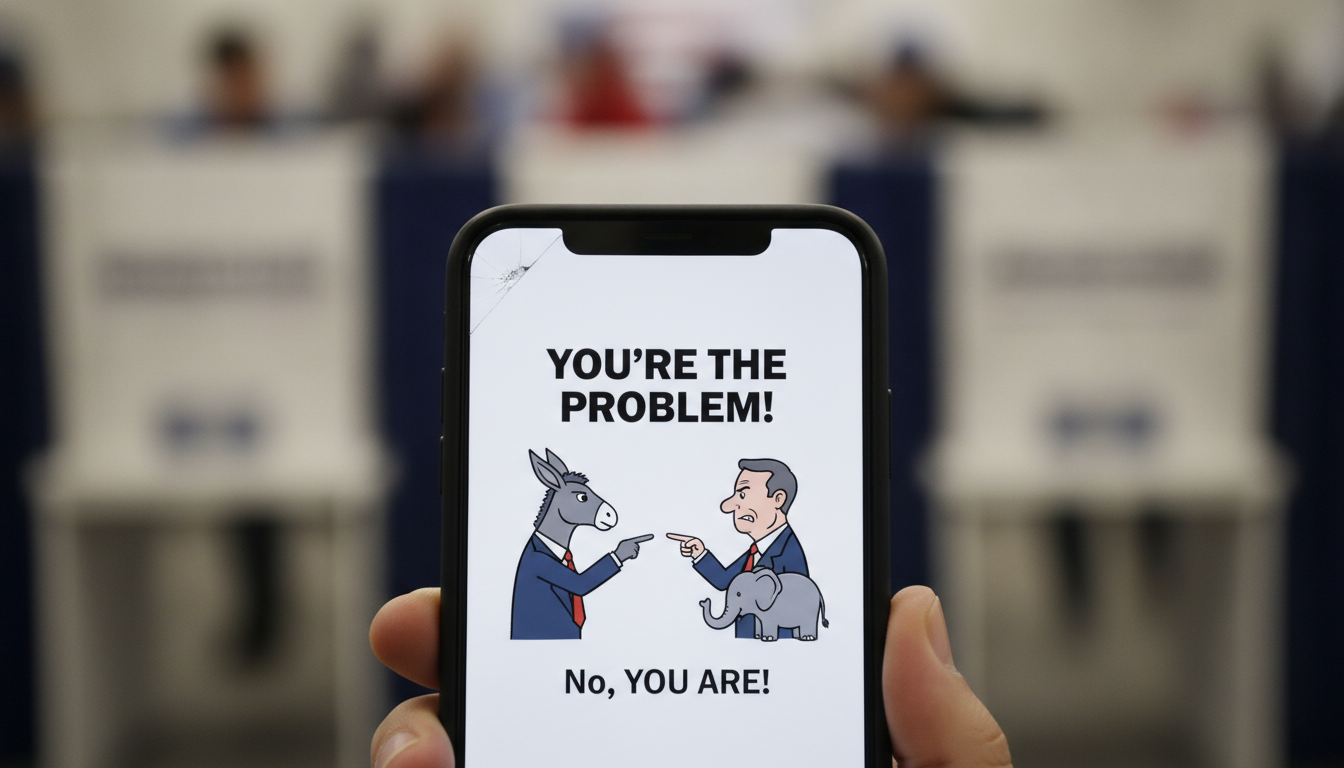
This mobilization, while increasing aggregate turnout among historically disengaged demographics, comes with the trade-off of prioritizing affective polarization over detailed policy evaluation. Affective polarization is the division of society along emotional lines rather than ideological ones. Meme culture's influence on the 2026 U.S. Presidential Election implies a political landscape increasingly reliant on digital humor and AI-generated content to mobilize voters. A Taylor & Francis Online peer-reviewed study cautions that the emphasis on emotional resonance and group identity, amplified by platform algorithms, risks distorting voter behavior by skewing issue salience and candidate favorability based on sentiment rather than substantive policy comprehension.
Comments ()