AMD Challenges Nvidia, Cuts AI Inference Costs
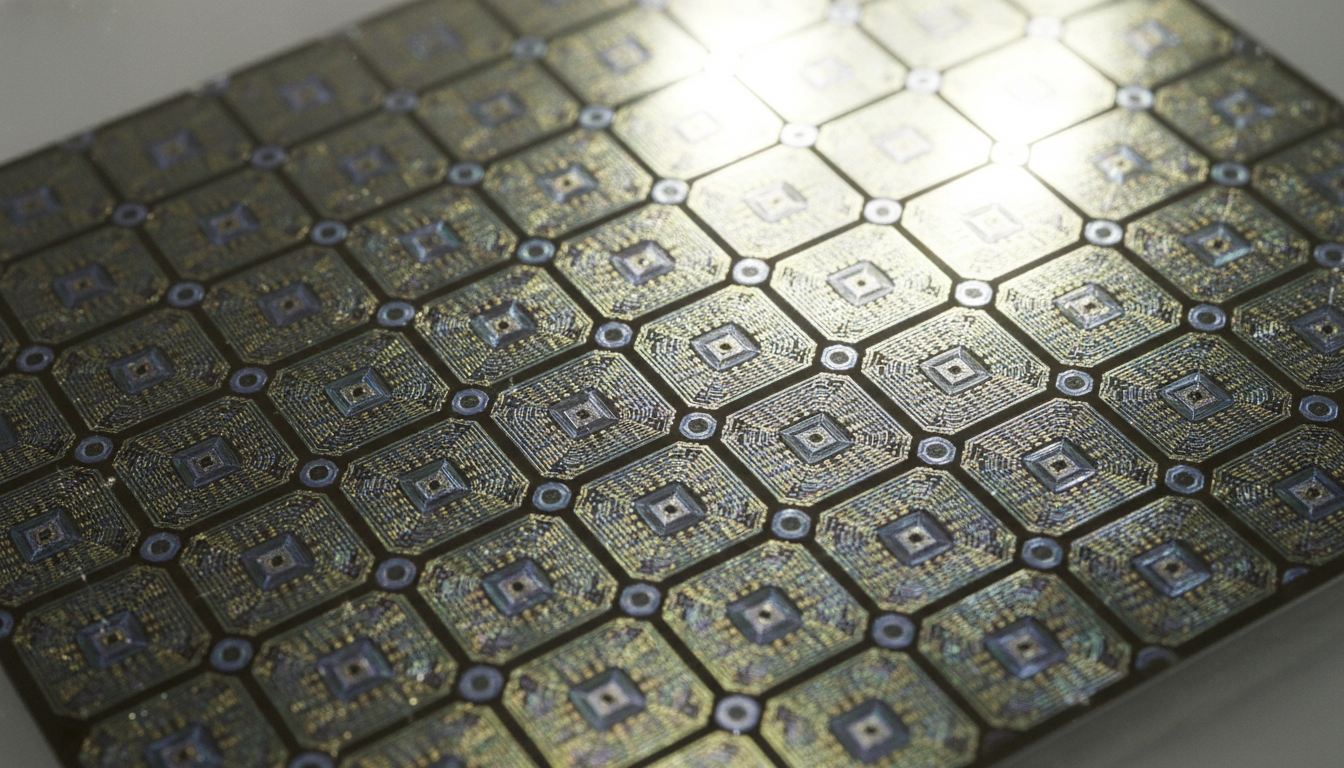
The Semiconductor Industry Association found that 100% of advanced manufacturing capacity below 10 nanometers is located in Taiwan (92%) and South Korea (8%).
Nvidia Retains Training Dominance
"AMD's MI300X accelerators are priced at roughly half the cost of Nvidia's H100 and offer 2.4x the high-bandwidth memory (HBM) capacity, making them highly attractive for memory-bound inference workloads," according to SiliconAnalysts.com. However, SemiAnalysis found that for short-term GPU rentals under six months, Nvidia offers better performance per dollar due to a more competitive rental market. Spheron Network reports that on-premise deployment involves significant operational expenses for electricity, cooling, maintenance, and staffing, with staffing costs alone ranging from $225,000 to $300,000 over three years. Cloud solutions remain more cost-effective when GPU utilization rates fall below 70%, Spheron Network adds.
Dual-Lead Dynamic Reinforces Geographic Concentration
AMD's expansion creates a dual-lead dynamic where both companies compete for the same constrained manufacturing resources, reinforcing geographic concentration in East Asia, as observed by the Law & Economics Center and the Semiconductor Industry Association. Nvidia retains approximately 80-92% of the AI accelerator market, indicating that AMD's market share growth has not displaced Nvidia's structural dominance, according to LinkedIn and SiliconAnalysts.com. The Law & Economics Center reports that both companies rely on TSMC's advanced nodes, with AI chip demand consuming approximately 60% of TSMC's N3 wafer output in 2026 and projected to reach 86% in 2027. High-Bandwidth Memory (HBM) production further strains this capacity, consuming three times the wafer space per bit of commodity DRAM and nearly four times with HBM4, the Law & Economics Center details. This competition reinforces geographic concentration.
Dual-Sourcing Fails to De-Risk Supply Chains
Nvidia holds approximately 60% of total Chip-on-Wafer-on-Substrate (CoWoS) allocation and over 70% of the CoWoS-L capacity required for dual-die Blackwell/Rubin chips, demonstrating that diversifying procurement does not fully de-risk geographic supply chain vulnerabilities. Congress.gov, CETAS, CSET, and TradingKey report that Nvidia and AMD have secured dual-sourced HBM contracts with SK Hynix and Samsung, backed by TSMC capacity reservations. DigiTimes documented Nvidia's intentional diversification of its HBM4 sources, noting that the company invited Samsung to negotiate 2026 HBM4 pricing just one week after securing supply with SK Hynix, explicitly seeking diversified sources due to surging HBM4 demand. Sanj.dev and TradingKey also highlight AMD's commitment of its MI400 to Samsung HBM4, following previous HBM3E supplies, as a strategic dual-sourcing approach.
Governance Shifts to Software and Hyperscalers
This architectural shift transfers governance power away from chipmakers and toward software frameworks, hyperscalers, and state initiatives, according to Stephen Weymouth in International Organization and Fluence Network. SiliconAnalysts.com and Fluence Network explain that the concurrent competition between Nvidia, AMD, and custom silicon forces LLM developers to adopt modular, hardware-agnostic architectures to avoid vendor lock-in and optimize deployment costs. Fluence Network states that standardizing on open frameworks like ROCm allows developers to maintain control and flexibility, shifting the governance of LLM development from hardware manufacturers to the maintainers of these software stacks. Hyperscalers are also centralizing governance through their custom silicon; SiliconAnalysts.com reports that Google runs over 75% of Gemini on its Tensor Processing Units (TPUs) and AWS Trainium processes over 50% of Bedrock tokens. The Law & Economics Center notes that states are establishing regulatory standards, such as the EU's Cloud and AI Development Act (CAIDA), to define "sovereign cloud" and control the AI value chain.
Advanced Manufacturing Stays in Taiwan, South Korea
AMD's entry into the AI chip market establishes a dual-lead dynamic, offering organizations greater choice and potentially lower costs for inference workloads. This competition encourages the adoption of open-source software ecosystems, which can enhance technological sovereignty by reducing reliance on single-vendor proprietary solutions. However, the continued geographic concentration of advanced semiconductor manufacturing means that supply chain risks remain largely undiversified at the foundational hardware level, with advanced capacity located in Taiwan and South Korea.


Comments ()