Gulf Conflict Forces Allied Diversification, Iran Centralization
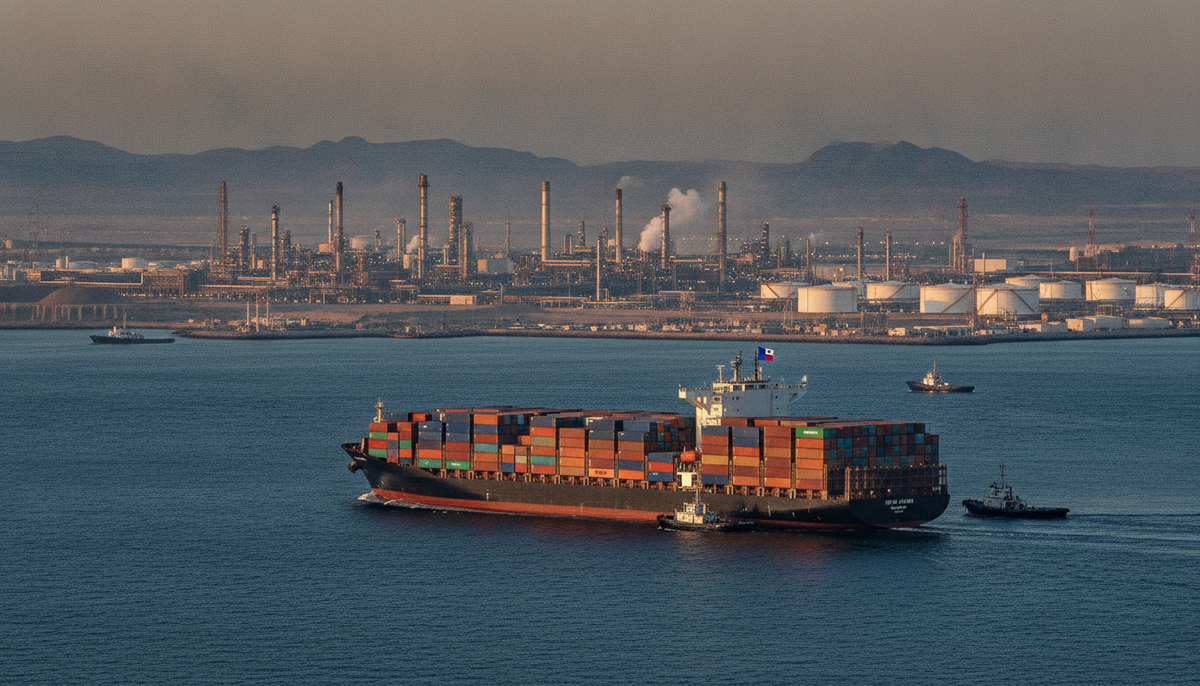
Gulf States Double Fujairah Pipeline Capacity
Gulf states accelerated trade diversification by doubling the capacity of the United Arab Emirates’ Fujairah bypass pipeline. In Q1 2026, the US approved $45 billion in potential Foreign Military Sales (FMS), with 81% ($36.6 billion) allocated to Middle Eastern allies, including significant purchases by Saudi Arabia, the UAE, Qatar, and Kuwait, Al Jazeera reported. Cross-border oil routing agreements were also established between Saudi Arabia and Kuwait. These efforts were primarily financed by the March 2026 Brent crude price peak, according to Populism Studies.
Europe-Gulf Initiative and Quad Group Formed
The Middle East Institute explained that the "Europe-Gulf Resilience Initiative" aims to establish strategic resilience across security, maritime, energy, and technology, allowing European partners more regional influence and reducing the Gulf's need to accede to US demands. Diplomatic maneuvers further underscore this shift toward autonomy. Al Jazeera documented that Gulf elites also proposed a "Quad group" comprising Saudi Arabia, Turkiye, Egypt, and Pakistan, signaling a move away from a solely US-centric security architecture. These actions translate into measurable geopolitical bargaining power against both the US and Iran, compelling Washington to justify its value and enhancing the Gulf states' ability to mitigate Iranian attacks, Carnegie Endowment and Al Jazeera observed.
Supreme Leader Ali Khamenei Assassinated
The New York Times and Congress.gov confirmed that the assassination of Supreme Leader Ali Khamenei on February 28, 2026, disrupted decision-making and triggered leadership uncertainty, solidifying a hardline shift in the ruling hierarchy. The war inflicted serious economic damage and killed thousands of civilians, creating a "crisis of legitimacy" and elite infighting that points to a state under severe strain, Brookings and the Arab Center Washington DC concluded.
IRGC Consolidates Power
Per Concordiam and ResearchGate asserted that following the February 28, 2026 strikes, the Islamic Revolutionary Guard Corps (IRGC) assumed effective control over governance, defense resource allocation, and proxy command. The Middle East Institute and Populism Studies observed that despite internal fracturing, coordinated US and Israeli strikes in February 2026 and June 2025 targeted nuclear facilities, military leadership, and ballistic missile infrastructure, severely weakening Iran's conventional military. Iran, however, actively streamlined its command structures to centralize remaining military and proxy resources. Classified intelligence assessments from Brookings revealed that Iran retains about 70% of its pre-war missile stockpile and can field roughly 70% of its mobile launchers. Brookings and the Carnegie Endowment determined that Iran rebuilt access to 30 of its 33 missile sites along the Strait of Hormuz, demonstrating an antifragile capacity to regenerate and centralize its operational capabilities. Geopolitical Monitor and Iran-HRM detailed that Major General Ahmad Vahidi was appointed IRGC Commander-in-Chief, and Mohammad Bagher Zolghadr became secretary of the Supreme National Security Council (SNSC) following direct demands from IRGC commanders. The New York Times and El País reported that Mojtaba Khamenei's elevation to Supreme Leader was also advocated by senior IRGC commanders, a development that showed the Guard's institutional triumph. CNN and ResearchGate clarified that the IRGC controls 20-40% of Iran's non-oil economy through entities like the Khatam al-Anbiya Construction Headquarters, which allows it to fund operations independently and evade sanctions. Stimson and ResearchGate highlighted that the IRGC also asserted authority over the Strait of Hormuz, effectively overruling civilian leadership, and implemented an "open-fire doctrine" for local commanders, expanding the use of missiles beyond strictly military targets.
Gulf Autonomy and Iran's Hardline IRGC
The shift towards strategic autonomy for US Gulf allies means a more complex, multi-vector security environment where the United States is no longer the sole guarantor. This diversification of trade routes and defense partnerships enhances Gulf states' bargaining power against both the US and Iran. For Iran, the internal power shift towards the IRGC and military-industrial complex suggests a more centralized, hardline, and potentially aggressive foreign policy. This centralization, coupled with the regime's ability to regenerate operational capabilities, indicates a resilient military posture poised to project Iranian influence more cohesively across the region.

Comments ()