Iran's Proxy Gamble Undermines Tehran's Stability
Rouhani's $4.8 Billion NDF Withdrawal
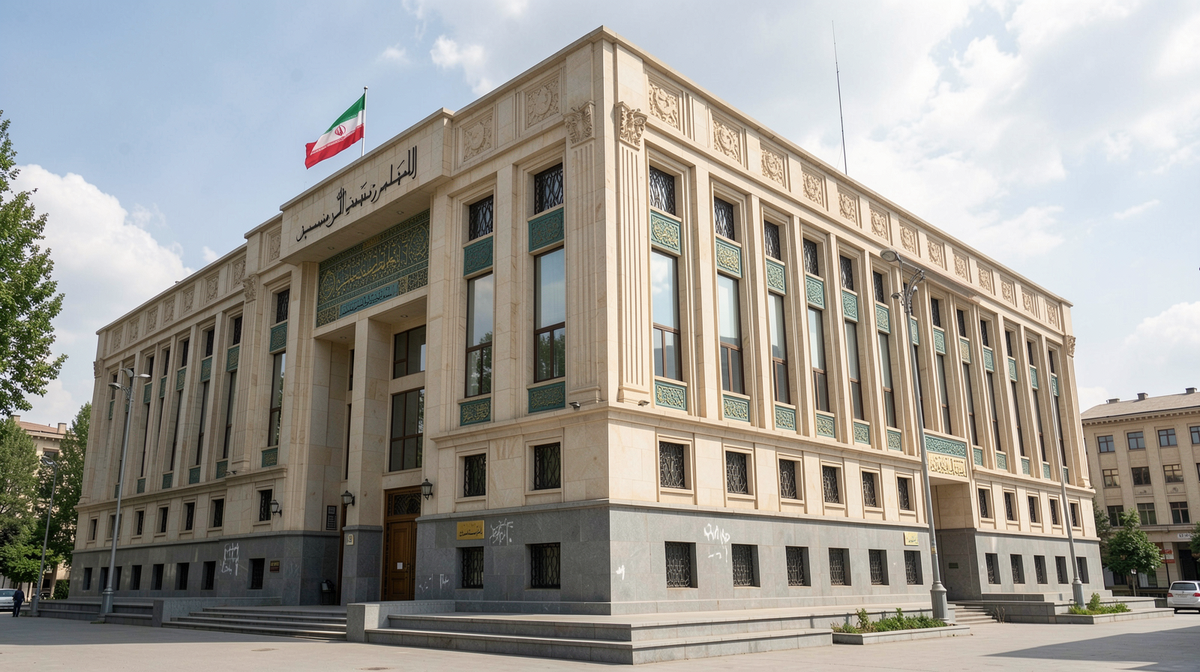
In January 2019, the Rouhani administration withdrew approximately $4.8 billion from the National Development Fund (NDF), Iran's sovereign wealth fund, to amend the budget allocated to the Islamic Revolutionary Guard Corps (IRGC) and the Islamic Republic of Iran Broadcasting (IRIB), with the Central Bank facilitating multi-billion dollar transfers to the IRGC-Quds Force, as documented by Congress.gov and the U.S. Naval War College. IJHSSM and International Journals SSRG estimate that Iran provides $700 million annually to Hezbollah and over $100 million annually to Hamas, while Syrian brigades supported by Iran receive monthly stipends between $450 and $700. A March 2020 Supreme Leader's decree, following parliamentary rejection of the budget bill, increased the IRGC's budget by one-third to 243 trillion rials and more than doubled Basij militia funding to 22 trillion rials, INSS reported. IranSTO revealed that the government quietly raised the armed forces' share of oil export revenues within the 2023-2024 budget without public disclosure. The proposed 2025/26 military budget anticipates a 200% increase in military spending, quadrupling the armed forces' share of oil export revenues and directing roughly $12.6 billion, or 47% of projected oil resources, to sustain regional proxies, IranSTO further projected. The Washington Institute observed that these outlays exacerbate Iran's domestic economic crisis, marked by high inflation, unemployment, and youth unrest. Public consumption metrics directly correlate with these outflows, including subsidy cuts and widespread protests following an abrupt November 2019 fuel price hike, as documented by INSS. The Belfer Center highlighted the fiscal limits, noting that the World Bank estimated southern Lebanon's reconstruction costs at approximately $11 billion, an amount that exceeded the combined financing capacity of Iran and Hezbollah.
December 2024 Fall of Assad Regime
The Belfer Center and INSS found that the loss of strategic depth, such as the fall of the Assad regime in Syria in December 2024, dismantled critical logistical backbones for groups like Hezbollah. The institutionalization of Iran’s proxy networks has fundamentally restructured regional power by creating hybrid parallel governance systems that often eclipse central states, according to the Middle East Forum and IJHSSM. IJHSSM explains that groups like Hezbollah in Lebanon, the Houthis in Yemen, Hamas in Gaza, and Iraqi Shia militias operate outside or parallel to state institutions, collecting taxes, providing public services, and maintaining independent military commands that rival or exceed those of their respective central governments. This institutionalization erodes the traditional Westphalian model of state sovereignty, which posits states as the primary actors in international relations; it also hollows out state institutions and normalizes continuous low-intensity confrontation, the Middle East Forum and IJHSSM contend. IJHSSM notes that this asymmetric approach forces adversaries to divert substantial defense resources; for instance, Israel spends an estimated $18 billion annually on defense largely due to proxy threats. Post-October 2023 attrition rates and ineffectiveness are eroding these benefits, forcing Tehran to divert domestic resources to maintain diminishing regional influence and creating a governance deficit, the Belfer Center observes. INSS cited an assessment which stated, "For the first time, the military capabilities of Iran and all its partners had been degraded at once."
Proxy Army Becomes Systemic Liability
Iran's strategic reliance on its proxy army, while initially providing plausible deniability, has become a systemic liability. The continuous diversion of resources to sustain a less effective and less controllable network directly compromises Tehran's capacity for effective long-term domestic governance, exacerbating internal economic and social pressures. This dynamic suggests a future Middle East where Iran's influence may become more unpredictable and less strategically coherent, potentially leading to increased regional instability and more fragile state-centered security conditions.

Comments ()