Nvidia's Dominance Fragments U.S. Geopolitical Power
Taiwan HBM Packaging Creates Single Point of Failure
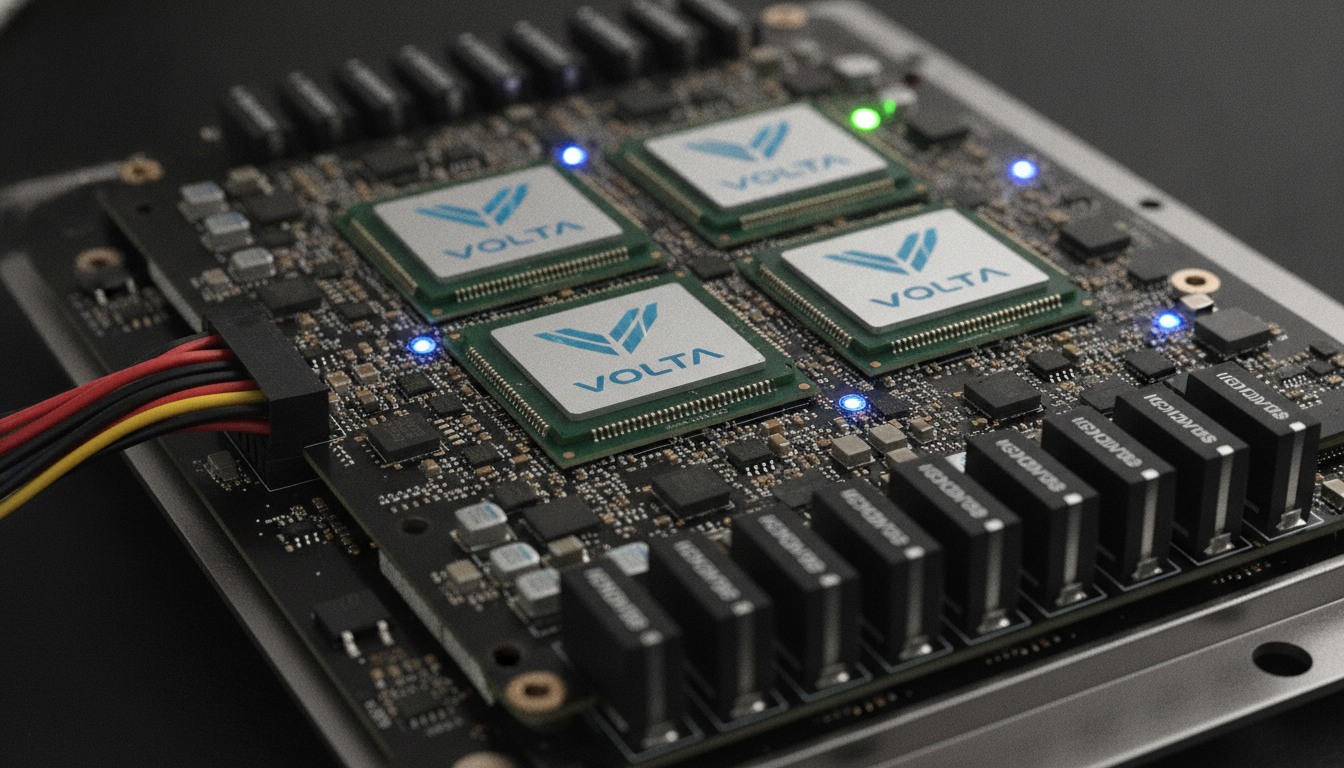
Although TSMC's Arizona Fab 21 began full Blackwell wafer production in October 2025, these wafers must still be shipped to Taiwan for advanced High Bandwidth Memory (HBM) packaging. Klover.ai observed that this geographic concentration creates a single point of failure, making U.S. strategic autonomy vulnerable to regional geopolitical shocks. Nvidia's centralized design architecture exacerbates this dependency by funneling global demand through a single packaging hub. The U.S.-UAE AI Acceleration Partnership in May 2025 allowed the export of up to 500,000 Nvidia Blackwell GPUs annually to the UAE, contingent on a $1.4 trillion U.S. investment pledge and strict anti-diversion restrictions. Brookings and CSIS documented that to manage tariff uncertainty, Nvidia expanded server assembly in Mexico, increasing U.S. GPU imports from Mexico by $40 billion in 2025 compared to 2024, which simultaneously increased Mexico's imports from Taiwan by $24 billion, reinforcing the trans-Pacific supply chain reliance.
Broadcom's $20 Billion ASIC Revenue
SiliconAnalysts determined that Broadcom's AI application-specific integrated circuit (ASIC) revenue surpassed $20 billion in fiscal year 2025, demonstrating the tangible threat of custom silicon. WindowsForum explained that major U.S. hyperscalers are shifting toward custom silicon, significantly diluting Nvidia's architectural lock-in by diversifying the hardware base and reducing reliance on a single vendor. Major cloud providers and AI platform owners are investing heavily in custom accelerators to reduce marginal spend and gain negotiating leverage. Amazon, for instance, committed to using its AWS-developed Trainium chips for training in 2024, and Google's Tensor Processing Unit (TPU) program reached its seventh generation, Ironwood. WindowsForum, Klover.ai, and SiliconAnalysts observed that this transition fragments domestic economic governance into competing corporate ecosystems while fostering a more resilient, multi-polar AI market structure. However, Klover.ai asserted that Nvidia's architectural lock-in remains strong due to the CUDA software stack's maturity advantage and optimized libraries for open-source models.
Nvidia's $4.9 Million Lobbying Budget
Brookings and the Council on Foreign Relations indicate that the CHIPS and Science Act aims to strengthen the domestic supply chain, supported by $450 billion in private investment to increase U.S. semiconductor output from 15% in 2024 to 23% by 2030. DeepLearning.ai revealed that the concentration of AI compute capacity has driven a shift in U.S. economic governance from passive market regulation to active industrial policy and corporate lobbying, with Nvidia's lobbying budget ballooning to $4.9 million in 2025, seven times its 2024 size, directly influencing government decisions such as the reversal of advanced chip export bans to China. Brookings, WindowsForum, Klover.ai, CSIS, SiliconAnalysts, and DeepLearning.ai explain that this has led to both centralized state-corporate alignment, through direct executive influence and regulatory streamlining, and fragmented, subsidy-driven market distortions, as competing corporate ecosystems emerge and supply chains fragment.
FTC Blocked Nvidia's $40 Billion Arm Acquisition
The Committee on Foreign Investment in the United States (CFIUS) confirmed that the Federal Trade Commission (FTC) blocked Nvidia's $40 billion acquisition of Arm Ltd. in 2022. In direct response to Nvidia’s compute concentration, several U.S. economic governance bodies and regulatory frameworks have been created or restructured. The American Action Forum and the Nvidia Blog detailed that the Department of Justice (DOJ) initiated investigations into Nvidia for potential antitrust violations, specifically focusing on "price control and tie-in products." The World Bank, Goldman Sachs, IFP, SiliconAnalysts, and RAND published findings indicating that the Department of Commerce (DOC) and its Bureau of Industry and Security (BIS) implemented and expanded export controls on advanced AI chips, including the U.S. Framework for Artificial Intelligence Diffusion in January 2025, which established country tiers for AI chip access and model weight controls. The Butte Valley Water District, TechPolicy, the Federal Register, and Berkeley outlined that the National Institute of Standards and Technology (NIST) and its Center for AI Standards and Innovation (CAISI) serve as federal AI standards coordinators, revising frameworks and developing hardware security standards.
Saudi Arabia Purchases 600,000 GPUs
Chosun reported that a similar strategic partnership with Saudi Arabia in November 2025 involved the purchase of up to 600,000 GPUs over three years. U.S. geopolitical leverage has been explicitly tied to Nvidia GPU allocation and architectural standard adoption through specific diplomatic agreements and trade negotiations. The Internet Society highlighted that the Pax Silica Summit in late 2025 brought together allies like Singapore, Israel, Japan, South Korea, Australia, and the UK to secure the global silicon supply chain and treat compute as a shared strategic asset.
Nvidia's Dominance: Fragile U.S. Autonomy
The reliance on specific corporate deals and a single point of failure in the supply chain means U.S. strategic autonomy remains vulnerable to external shocks. Nvidia's GPU dominance centralizes global AI standards, yet evidence suggests this power is inherently fragile and fragments U.S. geopolitical influence. This dynamic implies a future where U.S. economic governance must work through a complex interplay of corporate interests, industrial policy, and fragmented global dependencies to maintain its technological edge.


Comments ()