Palantir's Lock-in Shifts Algorithmic Control

The "Neutral Software" Shield
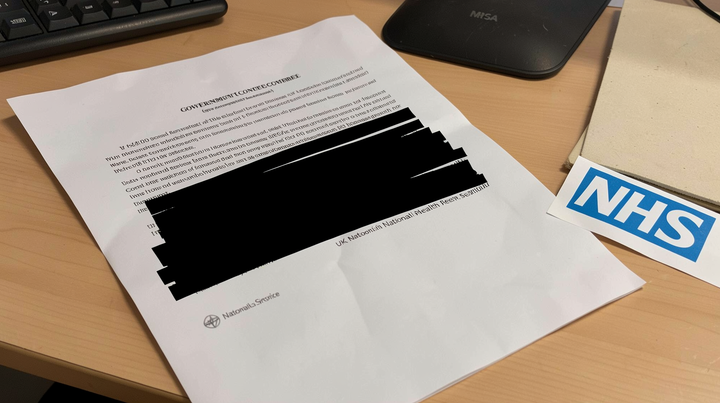
Palantir consistently positions itself as a politically neutral "software company" and "data processor," a stance that implies government agencies retain full control and legal liability for how the technology is deployed, according to The Guardian, New York Xanee, Mitrovic, Wikipedia, Journals.sagepub, Lowdownnhs, and Kosmos Systems Auditor Report Palantir. The Guardian, Journals.sagepub, Lowdownnhs, New York Xanee, Mitrovic, and Kosmos Systems Auditor Report Palantir document that by emphasizing its role as a processor rather than a data controller, Palantir deflects operational accountability for controversial deployments (such as ICE's mass deportation operations or NHS data aggregation) onto the public sector entities that control the data. The company points to ICE contracts dating back to 2011, which span multiple US presidencies, to illustrate its "enduring mission that transcends political shifts and administrations" and its reliance on routine government utility rather than partisan alignment, as observed by The Guardian, Lowdownnhs, New York Xanee, and Mitrovic. The NHS Federated Data Platform agreement had 200 pages blacked out, obscuring operational details from public view.
FOIA Exemption (b)(4) Blocks Oversight
The U.S. Court of Federal Claims, Researchgate, The Hill, and FOIA explain that FOIA Exemption (b)(4) (a provision allowing federal agencies to withhold "trade secrets and commercial or financial information") is routinely cited by federal agencies to withhold confidential commercial information related to AI systems, thereby structurally blocking public oversight. Privacy International, The Conversation, Scholarship.libraries.rutgers, Campaignzero, and Sexyboomershow contend that the proprietary nature of Palantir's algorithms creates a "black box" that impedes democratic oversight. The Conversation and Scholarship.libraries.rutgers highlight that this opacity prevents elected officials and the public from scrutinizing how data points are weighed or conclusions are generated, making it difficult to assess the fairness or political implications of specific deployments. Privacy International, Thesmallbusinesscybersecurityguy, Scholarship.libraries.rutgers, and Campaignzero report that governments frequently deny Freedom of Information (FOI) requests regarding Palantir's algorithms by citing trade secrets or national security exemptions. Thesmallbusinesscybersecurityguy found that, for example, UK police forces largely refused to answer FOI requests about their involvement with the company. Privacy International, Lowdownnhs, Thesmallbusinesscybersecurityguy, Scholarship.libraries.rutgers, Campaignzero, and Sexyboomershow detail how heavily redacted contracts further obscure operational details from public view.
Palantir's Ontology Embeds Policy
New York Xanee, Mitrovic, and Kosmos Systems Auditor Report Palantir indicate that Palantir's platforms, such as Foundry, integrate disparate datasets across federal agencies, enabling rapid cross-agency data fusion. Campaignzero demonstrates that this allows surveillance tools and algorithmic governance to proliferate beyond traditional democratic mechanisms and public scrutiny. The operational trade-off between accelerated cross-agency data fusion and diminished transparency fundamentally shifts algorithmic governance from a publicly contestable democratic process to a technocratic one controlled by private infrastructure providers. Palantir's platforms, including Foundry, integrate disparate datasets across federal agencies, enabling rapid cross-agency data fusion, as documented by New York Xanee, Mitrovic, and Kosmos Systems Auditor Report Palantir. However, Privacy International, Thesmallbusinesscybersecurityguy, Scholarship.libraries.rutgers, and Campaignzero observe that this integration is coupled with significant opacity due to proprietary algorithms and trade-secret exemptions.
Palantir's Land and Expand Strategy
Privacy International, Lowdownnhs, Thesmallbusinesscybersecurityguy, Scholarship.libraries.rutgers, Campaignzero, and Sexyboomershow explain that, unlike earlier defense IT monopolies that relied primarily on national security classifications, a dual shield of trade secrets and national security exemptions is used to deny FOI requests and heavily redact contracts. Privacy International, Lowdownnhs, and Thesmallbusinesscybersecurityguy argue that Palantir's model proves more effective at entrenching opacity than historical precedents like earlier predictive policing contracts or defense IT monopolies, primarily by combining structural vendor lock-in with aggressive use of trade secrecy exemptions. While past predictive policing deployments also operated with limited public knowledge, this strategy creates deeper structural dependencies that are harder to reverse. Palantir, unlike earlier defense IT monopolies, employs a dual shield of trade secrets and national security exemptions to deny FOI requests and heavily redact contracts, a strategy documented by Privacy International, Lowdownnhs, Thesmallbusinesscybersecurityguy, Scholarship.libraries.rutgers, Campaignzero, and Sexyboomershow. The Conversation, Thesmallbusinesscybersecurityguy, Campaignzero, and Saipien document that lessons from past accountability failures reveal vulnerabilities in current oversight frameworks, including the erosion of traditional legal safeguards, the proliferation of private policing infrastructure beyond democratic reach, and the failure to anticipate data sovereignty risks, such as those posed by the US CLOUD Act.
Vendor Lock-in Shifts Power
Vendor lock-in, combined with algorithmic opacity and the strategic use of trade-secret exemptions, shifts decision-making power from elected officials and public discourse to technocratic processes controlled by private infrastructure providers. Consequently, the ability of citizens to understand, contest, or influence the algorithmic systems that govern their lives is severely diminished, leading to an accountability gap that current legal frameworks are ill-equipped to address. This trajectory risks normalizing community-wide surveillance and algorithmic decision-making based on opaque patterns, rather than publicly debated policy or individualized suspicion.


Comments ()