Palantir's NHS Contract: A Blackout on Accountability
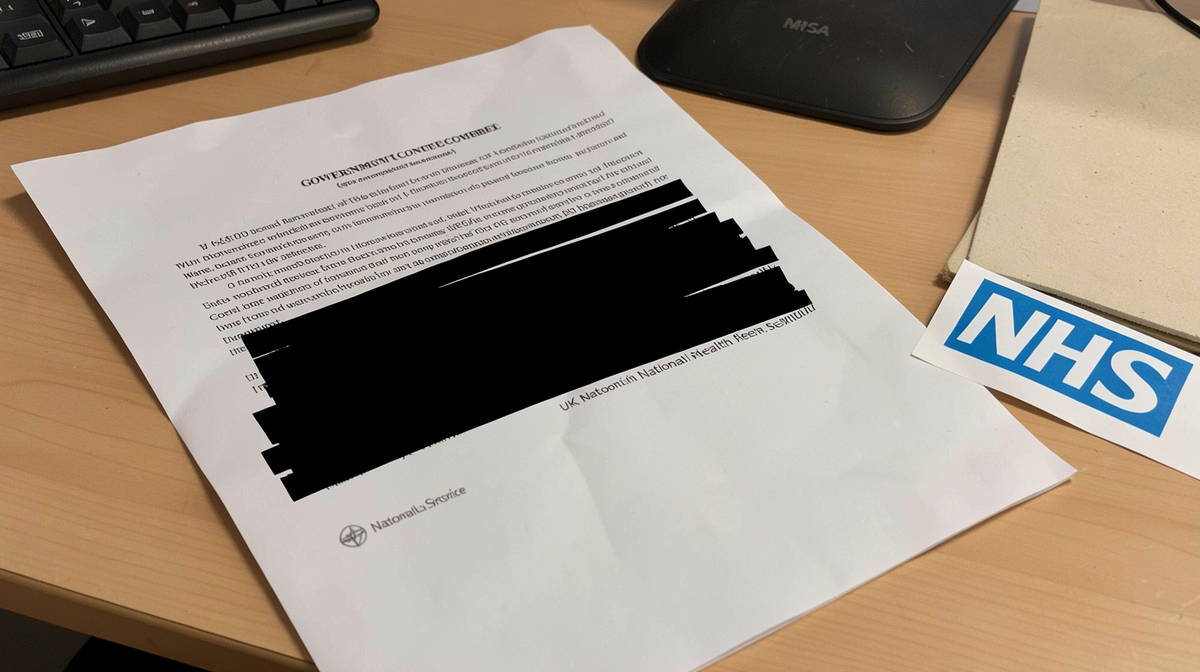
Palantir's Unlimited Access to Patient Data
The International Risk Podcast and Financial Times reported that internal NHS briefing notes describe "unlimited access" for Palantir personnel to identifiable patient information within the National Data Integration Tenant, challenging the notion of strict contractual limits on data access and control. In July 2026, the Office for Statistics Regulation (OSR) issued a warning to NHS England regarding its claims, leading to a disclaimer that cause-and-effect conclusions could not be definitively drawn. The Small Business Cybersecurity Guy found that a 2024 Swiss military risk assessment flagged the risk of external access to UK patient data as "unquantified." This potential for external access conflicts with UK data protection laws and raises questions about data sovereignty. Michael Geist, Mari Teitelbaum, and Kumanan Wilson, writing in the CMAJ: Canadian Medical Association Journal, discussed these concerns, as did Kiteworks.
£1 Billion Palantir Whole-Life Cost
The Guardian, BMJ, Democracy for Sale, and Gov.uk reported that the contract, initially valued at £330 million over seven years, has seen capital commitments escalate, with some reports indicating potential whole-life costs exceeding £1 billion if fully deployed. The Register and Yahoo Finance documented that the House of Commons Science, Innovation and Technology Committee has labeled Palantir's expanding presence an "unacceptable point of weakness" for critical national infrastructure. The Committee recommended the government consider using the February 2027 break clause to develop an in-house or UK-based alternative, The Register and Yahoo Finance noted. The International Risk Podcast and NHS For Sale explained that critics warn of severe vendor lock-in, where the NHS becomes institutionally reliant on Palantir's proprietary Foundry software, making future transitions financially prohibitive and operationally disruptive. Democracy for Sale highlighted that this financial scale, combined with an £8 million Department of Health and Social Care contract with KPMG to promote FDP adoption, indicates significant investment and potential for entrenched operational dependencies.
2016 Data Initiative's 1.6 Million Opt-Outs
A PubMed study found that this concern is amplified by a previous UK data initiative in 2016, which was abandoned after accumulating between 1.5 million and 1.6 million patient opt-outs. Al Jazeera, The Guardian, Good Law Project, and Lowdown NHS have revealed that Palantir’s controversial history, including its work with US Immigration and Customs Enforcement (ICE) and the Israeli Ministry of Defense, raises ethical concerns and reputational risks that could erode patient trust over time. There is also a risk that the FDP's interoperable architecture could facilitate access to confidential patient information by other government departments, such as the Home Office or police, potentially shifting healthcare data into broader state surveillance frameworks, Lowdown NHS and NHS For Sale warned.
54 Trusts Not Logging Into Palantir
Democracy for Sale and Medact found that 54 of 139 'live' trusts are not logging into the platform, indicating low adoption rates that contradict claims of widespread systemic success and point to ongoing internal governance challenges and resistance. An April 2026 BMJ investigation identified flaws in the data used to promote FDP successes, suggesting that reported improvements were correlational rather than causally linked to the platform, NHS For Sale reported. The Guardian, The International Risk Podcast, and Palantir cite reported benefits from NHS England and Palantir, including 117,000 additional operations and a 14.3% reduction in discharge delays for long-stay patients.
February 2027 Break Clause Review
The February 2027 break clause review will test whether the UK government can reassert control over its critical health infrastructure. The extensive redactions and operational autonomy embedded in Palantir’s NHS contract imply a continued struggle for transparency and control over UK health data. This structural dependency on a proprietary US vendor, coupled with unresolved jurisdictional risks and ethical concerns, positions the NHS for ongoing legal challenges and public distrust.



Comments ()