Palantir's UK Contracts Consolidate Power, Obscure Accountability

Ministry of Defence's £240.6 Million Palantir Deal
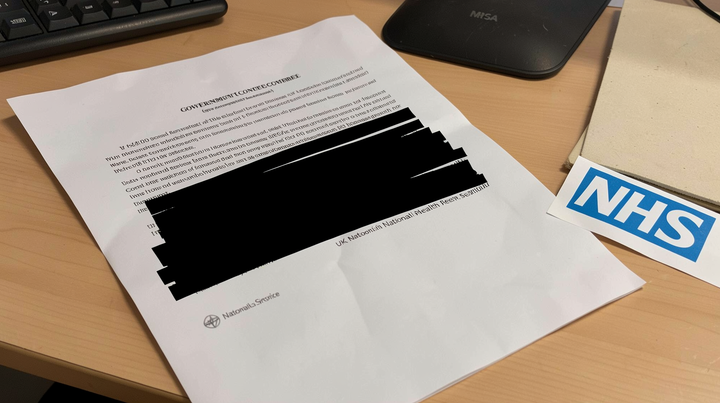
In December 2025, the Ministry of Defence awarded Palantir a £240.6 million three-year Enterprise Agreement without competitive procurement, using a defense and security exemption. The NHS Federated Data Platform (FDP) contract, valued at £330 million, demonstrates the opacity of Palantir's operations; 259 of its 272 pages were heavily redacted, hindering public scrutiny. The Small Business Cybersecurity Guy and CAAT documented this. Independent verification confirms that the FDP contract was heavily redacted. NHS England has granted external staff from companies including Palantir "unlimited access" to identifiable patient data while working on the FDP, The Guardian disclosed. Medact and Tech Policy Press warn that this consolidation of sensitive data—including health records, political opinions, and financial information—into interoperable systems introduces significant surveillance risks and can reverse pseudonymization safeguards. UK data processed by Palantir remains subject to the US CLOUD Act, creating potential legal conflicts with UK GDPR, The Small Business Cybersecurity Guy observed.
Home Office Replaces Palantir, Saves Millions
However, millions of pounds were saved when the UK Home Office successfully replaced a Palantir system used for refugee case management with an in-house alternative, BBC News reported. Medact and a London School of Economics blog argue that the proprietary nature of Palantir's software creates vendor lock-in, making it difficult for public institutions to switch providers and maintain autonomy. This instance demonstrates that vendor lock-in is not absolute, allowing public institutions to regain control and flexibility in some cases. Nevertheless, this single example does not negate broader concerns about structural dependency and the difficulty of transitioning away from deeply embedded, complex systems across multiple critical sectors.
Palantir's Gaza and US Immigration Surveillance
Medact and CAAT found that Palantir's involvement in controversial operations, including complicity in the Gaza conflict and US immigration surveillance, has eroded public trust in the shift towards algorithmic governance. Medact and CAAT's research indicates that the non-competitive process of awarding contracts, alongside extensive lobbying efforts and a "revolving door" phenomenon between government officials and Palantir, compromises democratic oversight. Widespread opposition from medical associations, patients, and local councils further highlights the strain on democratic legitimacy, Medact, Novara Media, and Tech Policy Press observed. As the UK transitions into a fully digitized state, democratic influence may shrink, replacing broad public consent with fragmented opt-out mechanisms and leaving future governments with capabilities that are "agnostic about motive," a Substack post warned.
UK's Shift to Algorithmic Governance
The evidence suggests a fundamental shift in the UK's governance model, moving towards a more technocratic and algorithmically driven state, which implies a potential erosion of traditional democratic checks and balances as decision-making processes become less transparent and more reliant on proprietary systems. Future governments may find their policy options constrained by existing technological infrastructure and vendor dependencies, impacting their ability to respond to public will or adapt to evolving societal values.


Comments ()