Tesla's 2028 Roadster Date Is a Target, Not a Commitment
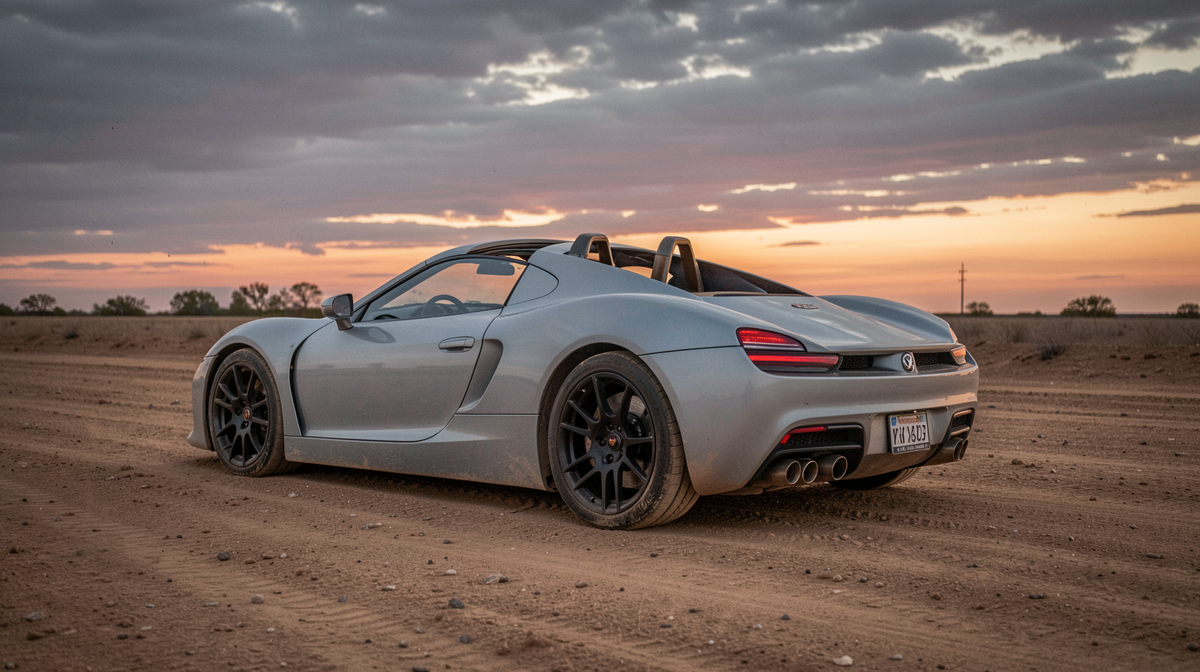
The Car Being Promised Is Not the Car Sold
Wikipedia's account of the program puts the 2017 concept at four seats, roughly 620 miles of range and a 1.9-second 0-60 mph time. Jalopnik described the 2026 car as a redesigned two-seater with thrusters developed with SpaceX, available in three trim levels based on how much you want it to fly. Reuters published specs that cut range roughly in half. The performance claims from the reveal are Tesla's own, and the 0-60 figure has not been independently verified.
So the 2028 date is not the 2020 date pushed back. It is a date for a different vehicle. Each redesign resets the engineering clock, which is one reason a pile of slips tells you less about the next one than it seems to.
Electrek and Wikipedia both document that reservation holders who paid $50,000 deposits in 2017 have waited nine years for a product that has since changed shape.
What Musk's Dates Have Been Worth
Electrek counted "at least six production slips and seven unveil dates." The unveil itself moved from April 1 to late April, then May or June, August, October 1 (cancelled over weather) and finally October 15.
Musk has been candid about how to read his calendar. Of the April 1 date he said it gave him "deniability" because "I can say I was just kidding," a remark Electrek and others carried. Electrek documented that in May 2023 he said production would "hopefully" start in 2024 and added that "this is not a commitment." Business Insider recorded his 2018 admission that his expectations can be unrealistic, which he attributed to optimism.
"Actually, for real" is a stronger phrase than any of those. It is also the first time the phrase has come attached to a car that exists.
The Best Case for 2028
That last point is the real argument for the date. It is the first one set after a physical vehicle was shown, and Wikipedia says Tesla reopened reservations the same day.
The arithmetic is also not aggressive. Wikipedia and Tech Insider reported Musk's November 2025 guidance as production 12 to 18 months after the unveil. Counted from an October 2026 reveal, that lands between late 2027 and spring 2028, so a 2028 start sits at the edge of the range, not outside it. And the move from "2027 or 2028" to "2028" narrows a window instead of clearly slipping it.
This is a fair case. It addresses one question, whether the novel parts can work at all.
What a Working Demo Cannot Test
Wikipedia records that the Cybertruck, scheduled for late 2021, reached customers in November 2023. Its history shows where the trouble tends to hide. Reuters and CBT News tied the delays to supply-chain and chip constraints and to 4680 battery cell development, which Musk said moved only as fast as the slowest part of the supply chain. The Wall Street Journal wrote that its ultrahard stainless steel was too hard for a stamping press. All of that surfaced at the production-engineering stage, years after the concept was shown.
The Roadster is at the stage before that. According to Reuters, it is still in design development, with manufacturing region listed as TBD and no capacity disclosed, and Musk gave no price. The battery cell is undisclosed. The thrusters use SpaceX-derived pressure vessels with no automotive supply precedent, and Musk told Reuters he is "not sure it's necessarily legal in all jurisdictions."
Regulation is the lesser worry. The Federal Register explains that NHTSA does not type-approve vehicles; manufacturers self-certify, so a missing filing in October 2026 means little. Tesla could also restrict the thruster trims' road use instead of delaying the base car.
A Small Potato With No Checkpoint
HeyGoTrade reported that Musk called the Roadster a "small potato situation" that would not "move the needle in a major way financially." A program that small competes for factory space and engineers with work that does matter.
Nothing public can test the date before 2028 arrives. Wikipedia and Electrek both indicate that Tesla's earlier interim targets, a drivable prototype by 2021, design finalization and production in 2024, were missed or redefined. No named factory, price, cell supplier or ramp rate exists to check. Even Kalshi's number covers deliveries before 2029, not a production start, so Tesla could start building in 2028 and ship nothing until later.
What Would Change the Odds
The weight of evidence leans modestly toward slippage, with low confidence: the demo retired the question of whether the car can fly, not whether it can be built on a schedule. A named factory, tooling orders, a published price and a cell supplier would each move that. Silence on price and capacity through 2027, or a return to "hopefully," would move it the other way. Until then, "Actually, for real" is a target said with conviction, which is what the 2020 date was too.

Comments ()