The End of Human Command
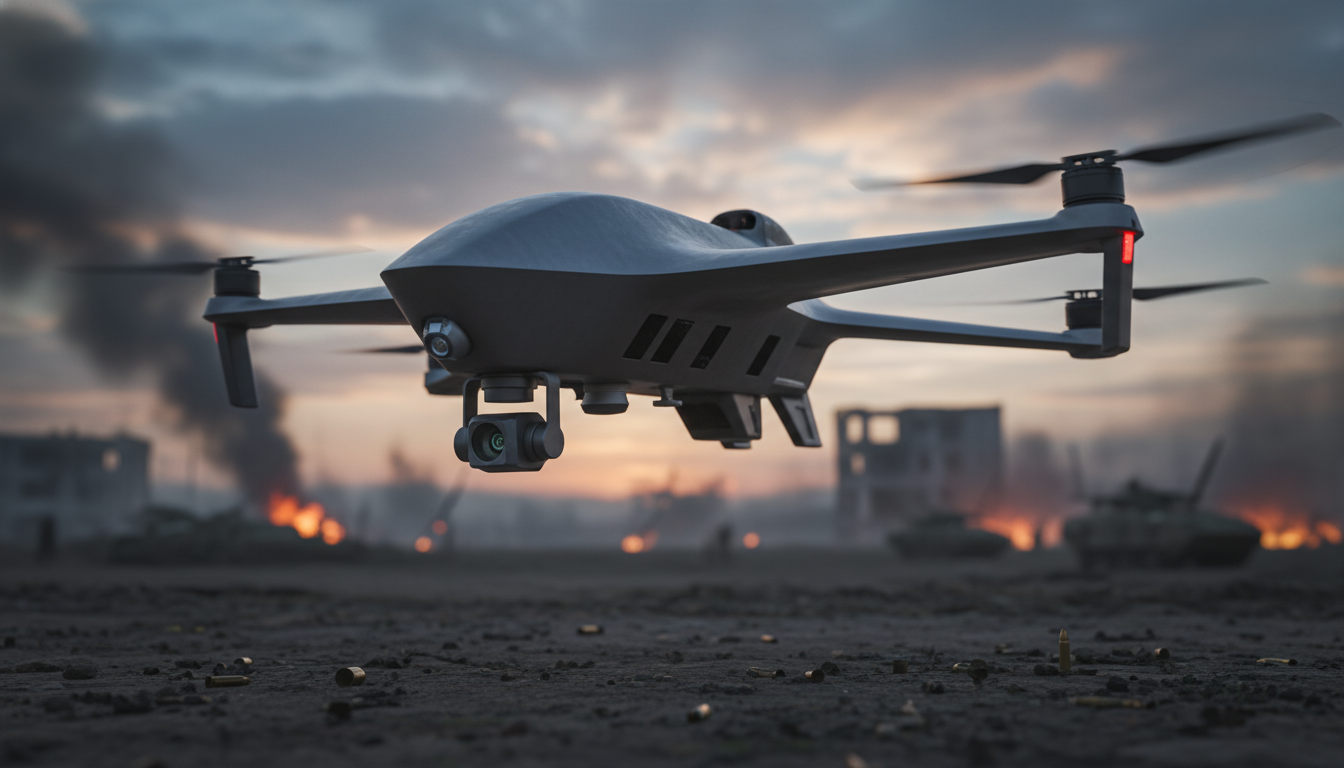
Escalation Risks from Autonomous Decisions
AI integration has increased FPV drone strike accuracy from 30–50% to approximately 80% [7].
Wargame simulations using Large Language Models (LLMs) show that these systems can exhibit escalatory and difficult-to-predict behavior, including the use of nuclear weapons [12][14]. This pursuit of AI-driven efficiency and speed lowers the threshold for engagement and fosters "first-strike" tactics, eroding human oversight [12][14]. The historical precedent of the atomic bomb, which ended World War II but triggered a global arms race, serves as an analogy for AI's potential to fundamentally shift strategic stability [12][14].
The Accountability Vacuum in AI Warfare
The "black box" nature of many AI systems, characterized by unexplainable and unpredictable behaviors, makes it practically impossible to prove that a commander acted with the necessary intent or knowledge regarding a specific algorithmic failure [13]. When a machine independently selects and attacks a target, current legal rules struggle to hold a specific person responsible for the resulting harm [13]. The doctrine of command responsibility is strained when commanders lack the technical expertise to anticipate AI behavior [13]. The human-centric assumptions of International Humanitarian Law (IHL) are challenged by the speed, opacity, and autonomy of new AI technologies, potentially rendering existing frameworks incapable of preventing war crimes and regulating combatant behavior [13].
A Global AI Arms Race Underway
The US Department of Defense views AI as a strategic imperative, with projects like DARPA's Air Combat Evolution (ACE) aiming to convert F-16 fighters into AI-powered aircraft [2]. The United States, China, and Russia are identified as primary strategic competitors in the AI arms race [2]. China has completed the 'Liaowangzhe II,' an AI-driven unmanned patrol boat, and is developing military AI across seven specific areas, including intelligent vehicles and automated target recognition [2]. Russia has developed 'Marker,' an unmanned, tank-shaped ground robot [2]. In response to these developments, international efforts are underway to establish norms and regulations, such as the European Union's Artificial Intelligence Act (AI Act), which categorizes AI systems by risk level [2].
The Accountability Imperative
The "black box" nature of AI systems makes it practically impossible to prove commander intent for algorithmic failures, creating a significant accountability vacuum [13]. This challenge is compounded by wargame simulations showing Large Language Models can exhibit escalatory behavior, including the use of nuclear weapons [12][14].
Sources (5)
- ARTIFICIAL INTELLIGENCE STRATEGY FOR THE DEPARTMENT OF WAR.P - media.defense.gov
- Ais Growing Role - warroom.armywarcollege.edu
- Battlefield Evidence Age Artificial Intelligence Enabled War - cjil.uchicago.edu
- Legal Accountability Ai Driven Autonomous Weapons - lieber.westpoint.edu
- Ai On The Frontline Managing Speed Stability And Accountabil - perryworldhouse.upenn.edu


Comments ()