Ukraine's 737 Billion UAH Defense Shortfall

Procurement Shifts Favor Direct Contracts
Bukvy documented that the move away from cost-efficient online auctions towards direct contracts reduced competition, leading the government to pay more for goods and services by prioritizing speed over cost-effectiveness and creating opportunities for patronage networks to capture funds. A March 2026 USAID audit found duplicate payments and ineligible support within the $25.9 billion PEACE fund, intended for reconstruction and displaced persons, indicating broader inefficiencies in direct budget support. Transparency International Ukraine documented a leadership change at the Defense Procurement Agency in early 2025, with Arsen Zhumadilov replacing Maryna Bezrukova, a shift also noted in the European Commission’s enlargement report. While general oligarchic power diminished due to conflict and de-oligarchization laws, aligned entities maintained influence through these targeted procurement mechanisms, the BTI Project observed.
Patronage Networks as "Institutional Architects"
The FIR Journal found that these networks act as "institutional architects" to exclude SMEs from procurement processes through specific tactics, including "tender committee stacking," "overly complex bid criteria," and "strategic ambiguity." This preemptive rigging results in a win-rate multiplier of 4.3 for corporations linked to patronage, the FIR Journal found. Local amalgamated hromadas, which are local administrative units, also frequently bypass competition by using direct selection for contracts below 50,000 UAH to favor local companies and build informal loyalty, the FIR Journal observed. A December 2025 Government Accountability Office report further identified widespread procurement contracts containing unlawful requirements and stringent conditions designed to secure specific awards.
4.9 Billion UAH in 2013-2014 Irregularities
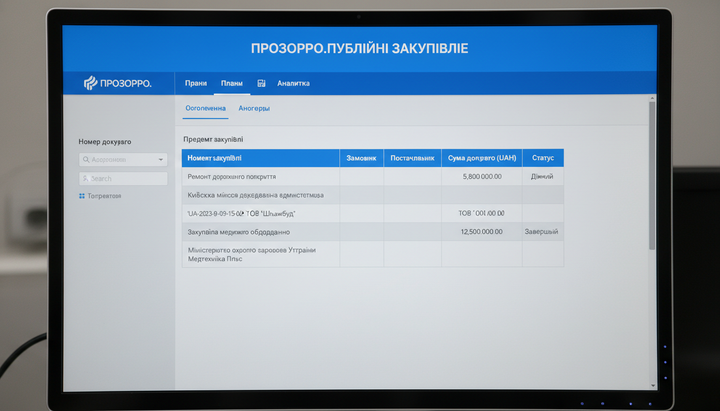
Historically, EUROSAI documented that public procurement irregularities totaled 4 billion 964 million UAH in 2013-2014. The estimated financial cost of these patronage networks and associated procurement inefficiencies materially strains Ukraine's budgets beyond defense. In 2024, competitive procedures on the Prozorro online public procurement platform accounted for 77.9% of the total estimated value of all procurement transactions, the Atlantic Council reported.
2024-2026 Audits Lack Oligarch Market Share Data
The BTI Project found that audit reports from 2024-2026 do not provide granular market share data that disaggregates contract winners by specific political alignments, such as named Zelensky-aligned oligarchs or regional governors. No specific oligarchs or governors are identified as primary beneficiaries of direct contracts, nor are their estimated market share percentages quantified, the BTI Project stated. Instead, a study published on PubMed Central observed that the market share of winning contracts is inferred from aggregate shifts in procurement methods, particularly the early-war transition away from competitive online auctions.
737 Billion UAH Defense Spending Shortfall
The 737 billion UAH shortfall in defense spending, driven by these systemic procurement shifts, directly undermines Ukraine's wartime resilience and its long-term economic recovery. These mechanisms, which inflate costs and reduce fair competition, complicate efforts to efficiently allocate Ukraine's own budget revenues and international financial assistance, posing a direct threat to strategic outcomes.
Comments ()