Ukraine's Digital Shield Against Centralization
Hromada Amalgamation and New Social Contract
The voluntary amalgamation of 1,070 hromadas between 2015 and 2020 enhanced local capacity by broadening competencies and expanding access to financial resources. Military commanders made direct procurement decisions based on personal preferences, rewarding loyalists rather than using meritocratic criteria, as seen with the DOT-Chain Defence System in July 2025. The share of personal income tax received by village and town settlements increased from 25% to 60%, then to 64% in 2022. This financial autonomy fosters mutual trust, as local residents and businesses, by paying taxes into municipal budgets, become "principals" demanding quality public services from their "agents" (local administrators). A George Washington University study found that this "new social contract," where residents demanded quality public services, increased voter turnout and enhanced trust in government during the full-scale invasion.
Resolutions 169, 1178 Suspend Tenders
Ukraine's Cabinet Resolution No. 169, issued in February 2022, suspended competitive tenders and allowed direct contracts, a move that reduced transparency, as documented by the Canadian Global Affairs Institute. Freedom House observed that the postponement of national elections under martial law shifts accountability away from regular electoral cycles, creating conditions where officials may prioritize central government loyalty over local resident needs. Research from Sabanci University showed that in Turkey, centrally appointed "trustee mayors" were 24 percentage points more likely to abuse unforeseen event clauses and reduced competitive sealed-bid auctions by 32 percentage points. This practice inflated contract prices by 23% and reduced value for money by 40%, draining municipal resources and centralizing administrative control. Resolution No. 1178, enacted in October 2022, codified military procurement rules, maintaining direct agreements for critical needs while allowing sensitive information concealment. European Relations reported that over 20 amendments to the 2010 Public Procurement Law introduced exemptions from competitive tendering, thereby increasing discretionary contract awards. An Open Contracting Partnership report found that associated party procurement, where companies controlled by a single owner "compete" to win predetermined contracts at inflated prices, channels public funds to political proxies. Vertical shadow funding schemes have also supported political parties through discretionary contract awards. The Open Government Partnership documented that the government suspended Naftogaz's board and fired its CEO in 2021, demonstrating direct political control over appointees overseeing procurement. A year-plus vacancy on Ukrenergo's supervisory board also indicated political influence undermining procurement oversight. The UNCAC Coalition observed that the merger of the Defence Procurement Agency and Defence Logistics Operator in January 2026 created a single point of control susceptible to political influence. A CMI report explained that the 2021 De-oligarchization Law, which classifies oligarchs via the National Security and Defense Council, allows political loyalty to influence enforcement and exempt connected firms from scrutiny.
ProZorro and Decentralization Prevent Trust Erosion
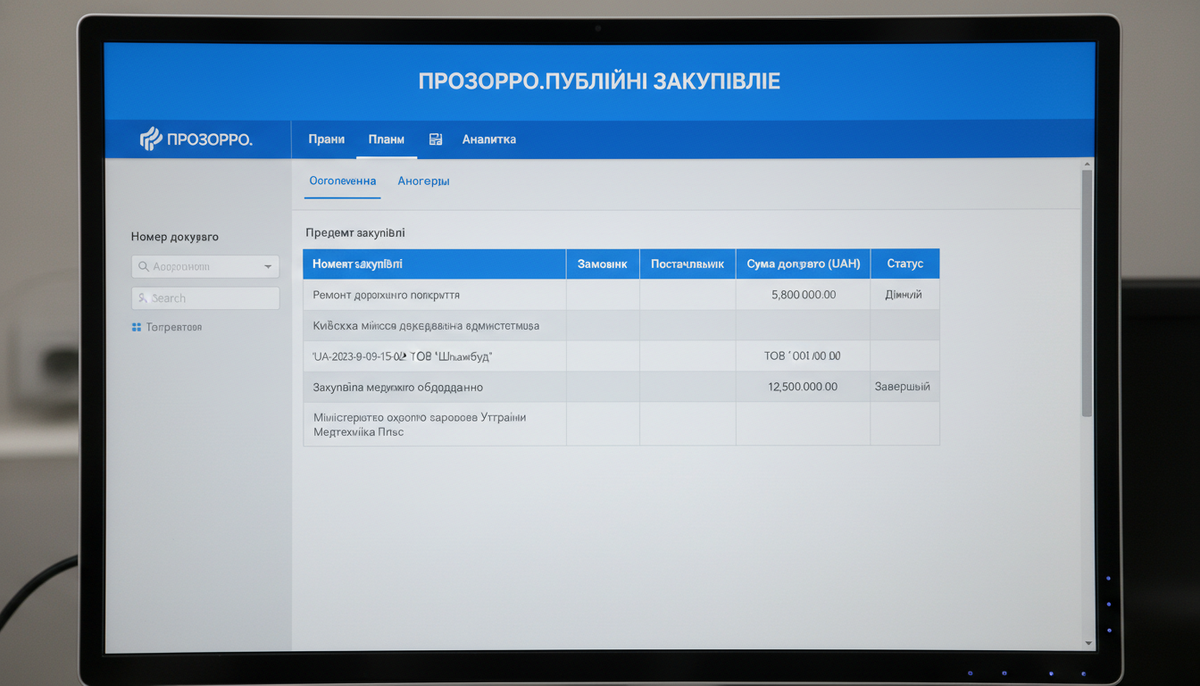
Sabanci University research illustrates that replacing electoral accountability with appointment-driven procurement typically erodes institutional trust and entrenches clientelism, as seen in the Turkish precedent where centrally appointed mayors led to reduced competitive bidding and inflated contract prices. Despite these risks, Ukraine's well-tested decentralized institutions and digital oversight mechanisms prevent a complete breakdown of institutional stability. A PONARS Eurasia analysis indicates that Ukraine's post-2014 decentralization track record demonstrates strengthened local governance capacity when electoral accountability and fiscal autonomy are combined. The ProZorro e-procurement system provides real-time public access to government contracts and maintains transparency even during wartime.
Hromadas and ProZorro Anchor Stability
Ongoing risks of clientelism and power concentration, particularly in defense procurement and state-owned enterprise management, necessitate continuous performance verification and real-time accountability to prevent the erosion of gains. Ukraine's governance model adapts to wartime conditions by anchoring stability in these mechanisms.


Comments ()