Ukraine's Election Delay Preserves Stability
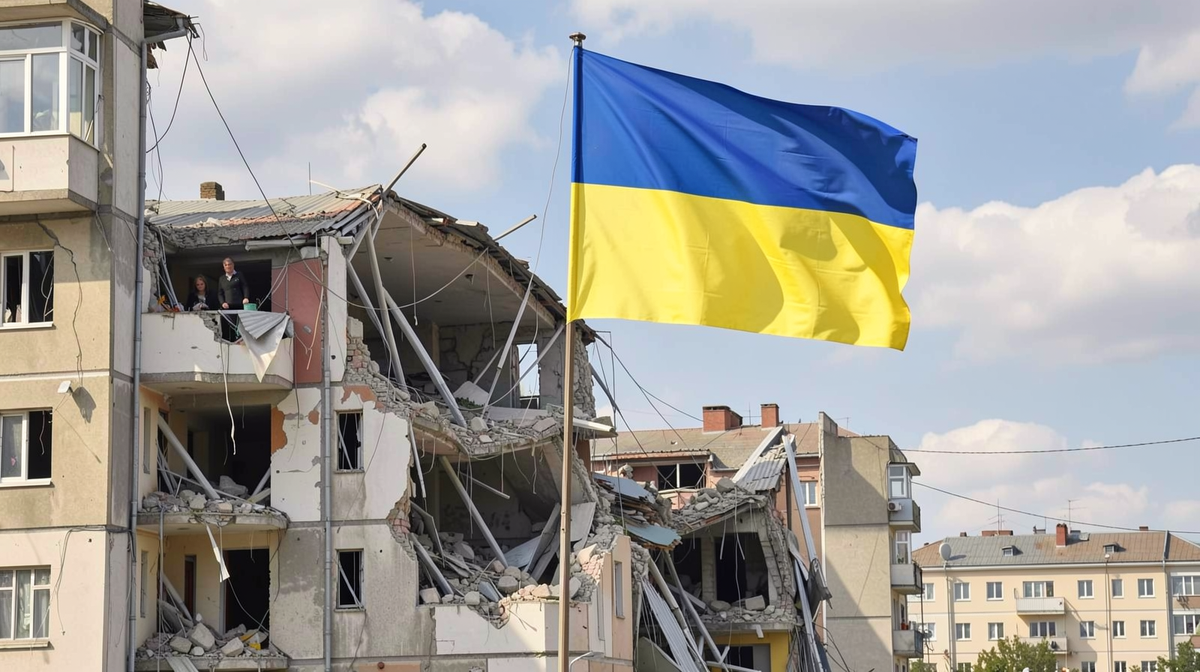
Zelenskyy's Trust and Extended Mandates
President Zelenskyy's trust rating stood at 90% in May 2022 before declining to 77% by December 2023. The "Diia" app, a digital democracy tool, boasts over 20 million users and has been documented as maintaining public satisfaction, according to a Claremont McKenna College analysis, the BTI Project, and the Westminster Foundation for Democracy. A single source documented that a successful petition in July 2023 led to the dismissal of the Minister of Culture; however, a Claremont McKenna College analysis concluded that the evidence gathered here does not establish whether this was a general mechanism or an isolated incident. Freedom House, the Wilson Center, and the Columbia University Law Review documented that parliamentary mandates are extended under constitutional provisions if their term expires during martial law. Taras Ivanec, writing in Frontiers in Political Science and for the European Platform for Democratic Elections, argued that this legal framework, while maintaining continuity, creates a democratic deficit where citizens cannot regulate representatives through voting.
Election Postponement Centralizes Executive Power
Taras Ivanec and the Wilson Center observed that this shift is legally permissible under martial law, yet it shows a growing democratic deficit where formal electoral accountability is absent. The postponement of elections has led to a concentration of power in the executive branch, impacting public trust in democratic institutions. The Harvard Davis Center, the Wilson Center, and the Africa Center for Strategic Studies documented that comparative historical cases demonstrate that active combat often drives the expansion and centralization of executive authority, as seen in nations like Mali and Chad, where military juntas have postponed elections to entrench control. However, JSTOR and the National WWII Museum pointed out that the UK's 1945 election, held after wartime, saw a decisive shift in power, indicating that wartime leadership does not guarantee permanent political immunity.
Ukraine's 2014-2020 Electoral Adaptations
International IDEA documented that Ukraine's electoral adaptation record between 2014 and 2020 demonstrated resilience and strengthened state legitimacy by modifying voting logistics for internally displaced persons (IDPs) and military personnel. International IDEA also emphasizes that the current scale of displacement and occupation presents a far greater challenge than the conditions faced between 2014 and 2020. This historical experience suggests that adaptive measures can preserve the social contract and institutional stability. The current situation makes it nearly impossible to replicate past successes in maintaining democratic continuity through wartime elections.
Flawed Wartime Vote Risks Instability
"A flawed wartime vote, with millions disenfranchised, risks intensifying societal dissatisfaction and creating new political cleavages," warned a Claremont McKenna College analysis and the Wilson Center. Holding elections during active conflict would likely undermine post-war stability by fracturing national consensus rather than consolidating power. Wikipedia indicated that Russia would likely exploit these procedural imperfections and geographic exclusions to sow internal discord and delegitimize Ukraine's democratic credibility internationally. Understanding War and Wikipedia contended that, ultimately, without a comprehensive ceasefire and verifiable security guarantees, the procedural flaws of a wartime vote would likely outweigh the benefits of renewing the executive mandate, making post-war elections a more viable path for durable democratic consolidation.
Postponing Elections Preserves National Unity
While this creates a democratic deficit, the reliance on digital and civil society mechanisms mitigates immediate governance gaps. Ukraine's current strategy of postponing national elections during active conflict is a pragmatic approach to preserving national unity and long-term post-war stability. For durable post-war stability, prioritizing full territorial integrity and the safe return of displaced populations before holding elections is crucial to ensure a truly inclusive and legitimate mandate. Rushing elections under current conditions would likely lead to a fragmented political landscape, vulnerable to external manipulation and internal dissent.

Comments ()