Martial Law Postponement Entrenches Executive Power

Wartime Elections Dampen Military Strategy, Not Paralysis
President George W. Bush delayed the Iraq troop surge by at least six months due to political risks associated with the 2006 midterms. Electoral pressures incentivize leaders to act cautiously in war due to the fear of voter reprisal. West Point's Modern War Institute documented, for example, that "The deployment of almost thirty thousand additional troops and the embrace of a new population-centric counterinsurgency strategy was delayed by at least six months due to concerns about the political risks of shifting course in the lead-up to the 2006 midterms." President Barack Obama's decision to withdraw all troops from Iraq in 2011 also underwent a political screening process to align with his campaign pledge before the 2012 election. Military coherence is maintained through adaptation, as military leaders understand political constraints and offer a wider range of options to suit various end states, reducing civil-military friction and increasing the likelihood of sound plans being adopted within the president's decision space.
Ukraine's 2014 and 2019 Wartime Elections
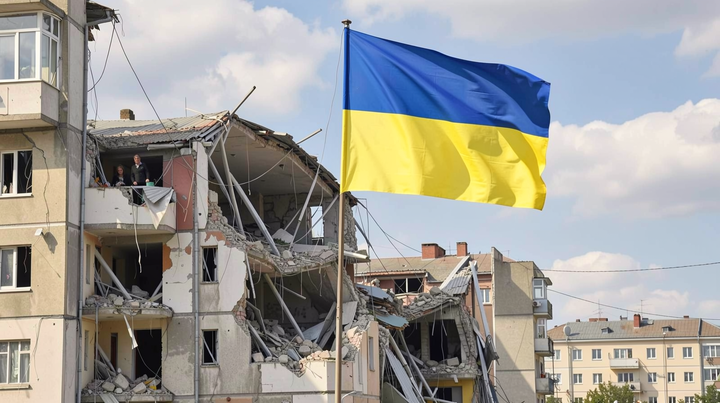
Congress.gov documented that Ukraine successfully held internationally recognized presidential and parliamentary elections in 2014 and 2019 during the Donbas conflict by mixing martial law elements with peacetime electoral procedures. Wartime elections inherently risk legitimacy-driven fragmentation by excluding displaced populations or curtailing civil liberties. The Cato Institute and Facing South reported that in Ukraine, over 6 million citizens fled abroad, more than 3 million are internally displaced, and roughly 4 million reside in occupied territories. Organizing an inclusive apparatus under these conditions raises doubts about democratic legitimacy; Opora reported that only 15% of Ukrainian citizens supported holding elections before the war ends, citing insecurity and the impossibility of meeting democratic standards under martial law. Civil society groups argue that conducting elections under martial law violates Ukraine's constitution and international commitments. Despite these challenges, adaptive electoral mechanisms can maintain sufficient inclusivity and procedural integrity. Heliyon documented that during the COVID-19 pandemic, countries like Indonesia successfully conducted elections by implementing blended campaign approaches, online voting, and limiting face-to-face meetings to 50 participants with health protocols. SIPRI's research found that holding elections during or immediately after conflict can also solidify short-term democracy and incentivize insurgents to step away from violence, as observed in Colombia and Afghanistan.
Indefinite Postponement Concentrates Executive Power
The indefinite postponement of elections under martial law generally triggers more severe and structurally difficult-to-reverse constitutional damage than the immediate operational risks of holding elections during active conflict. Heliyon argues that suspending electoral accountability reliably initiates a self-reinforcing cycle of executive power concentration, whereas wartime elections introduce manageable political fragmentation rather than systemic paralysis. The U.S. Department of State, GPO, and Seattle University School of Law have documented historical cases where indefinitely postponing elections creates a democratic crisis and structural power shifts, allowing executives to enact constitutional amendments and dissolve legislative bodies, ensuring democratic oversight remains permanently weakened. While wartime elections introduce risks like military-political fragmentation, security constraints, and restricted freedoms, these challenges do not inherently paralyze critical wartime decision-making. Heliyon and Congress.gov suggest that adaptive legal frameworks and administrative strategies can preserve procedural integrity, preventing elections from becoming a primary source of internal division.
Executives Entrench Authoritarian Rule via Delay
Historical evidence demonstrates that indefinite postponement creates a dangerous power vacuum that executives consistently exploit to entrench authoritarian rule, making a return to democratic governance significantly more difficult. Policymakers facing crises must weigh the immediate, often temporary, operational and political challenges of holding elections against the profound, long-term constitutional erosion caused by indefinite postponement. Prioritizing the preservation of electoral accountability, even with adaptive measures, appears to be a more thorough strategy for maintaining democratic checks and balances during conflict.
Comments ()