Wartime Elections Paralyze Military Strategy
Political Survival Overrides Military Strategy
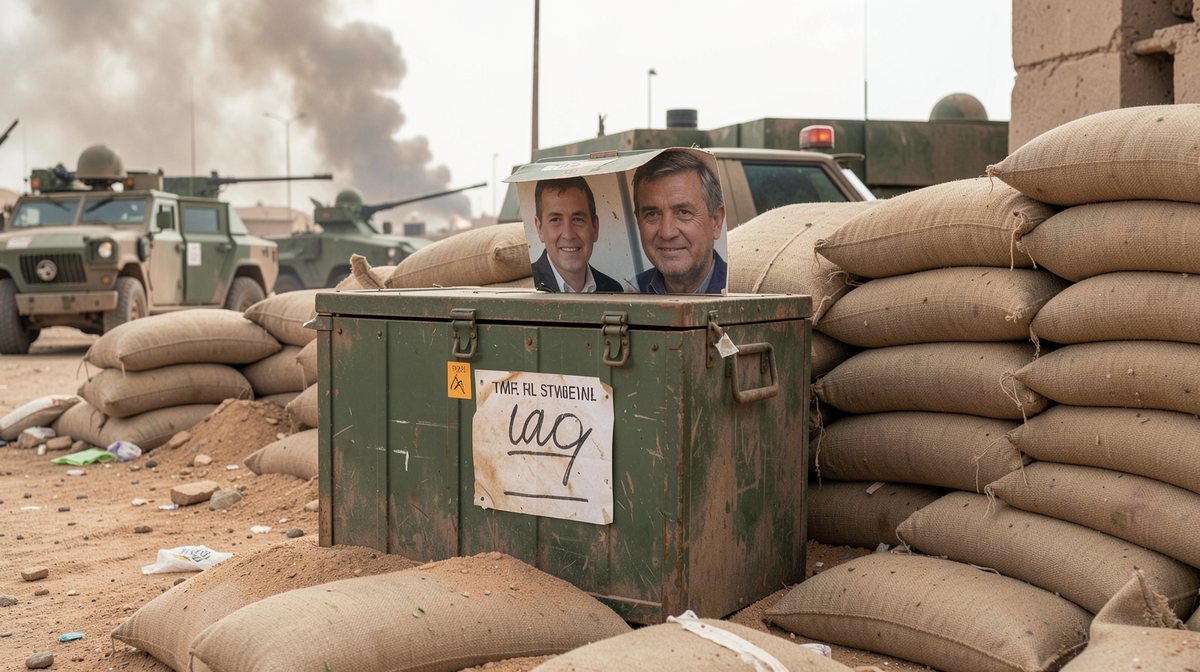
Political considerations for electoral survival frequently override purely military strategic optimality, leading to delays and alterations despite a President's constitutional authority, as found by the Modern War Institute at West Point and Rutgers University Libraries. The Modern War Institute at West Point observed, "Electoral cycles during active conflict undeniably introduce military-political fragmentation, compelling leaders to integrate political survival into military strategy." Founding elections in South Africa (1994), Mozambique (1994), and El Salvador (1994) successfully advanced peace and democracy, diminishing violence and granting legitimacy to new governments. Citizens bear the human and financial costs of war, leading to a natural aversion to conflict and the ability to punish leaders at the ballot box, according to the Modern War Institute at West Point and Stanford University's Martin Luther King, Jr. Research and Education Institute. This accountability incentivizes democratic leaders to act with caution, avoid entering wars as elections approach, and adopt strategies that minimize troop exposure or shift fighting burdens to coalition allies, as documented by the Modern War Institute at West Point and Rutgers University Libraries. Rutgers University Libraries explained that elections allow citizens to judge military objectives, costs, and prospects for success, demanding political accountability for decisions.
President Bush Delayed Iraq Surge
The Modern War Institute at West Point found that President Bush delayed the Iraq surge when only 6% of Americans favored an increase and senior Republicans urged withdrawals. Democratic accountability can shift to outright strategic paralysis at specific thresholds related to casualty tolerance, institutional strength, and adversary flexibility. In post-conflict environments, studies by GSDRC and Dawn Brancati demonstrate that early elections substantially increase the likelihood of renewed fighting. Ukraine, for instance, faces challenges with approximately 3.7 million internally displaced persons and nearly 6 million citizens abroad, requiring 18 to 24 months for adequate preparation to avoid contested results and destabilization, a Riley Sentinel special report highlighted. Foreign election meddling, characterized as a hostile violation of sovereignty by Philosophy Now and a Riley Sentinel special report, can exploit rushed or poorly managed elections to substitute foreign leadership preferences, turning the electoral cycle into an external military-political vulnerability.
Elections 'Too Soon' Increase Renewed Fighting
Research by GSDRC and Dawn Brancati indicates that holding national elections "too soon" after a civil war substantially increases the likelihood of renewed fighting, as former combatants may reject unfavorable results or govern in an exclusionary manner. Conducting electoral cycles during or immediately following active combat tends to fracture governing coalitions and introduce military-political fragmentation, often undermining the endurance of long-term war efforts. Rather than consolidating a political mandate, premature elections frequently destabilize ongoing operations and increase the risk of renewed conflict, according to the Modern War Institute at West Point, GSDRC, Dawn Brancati, and SciSpace. The Modern War Institute at West Point found that electoral pressures force democratic leaders to prioritize political survival over strategic necessity, leading to delays in deployments or scaling back commitments to avoid unpopular casualties.
Northern Ireland, South Sudan Referendums Succeeded
Conciliation Resources noted that referendums in Northern Ireland (1998) and South Sudan (2011) provided strong legitimacy to peace agreements or independence. Conciliation Resources also reported that Nepal's elections in 2008 and 2013 facilitated the inclusion of minority groups and were mostly peaceful. Despite the risks, these specific historical instances show that elections during or immediately following active conflict can provide a net strategic benefit by reinforcing domestic legitimacy and war endurance.
Elections Force Leaders to Alter War Aims
Electoral cycles during active conflict consistently introduce military-political fragmentation, forcing leaders to delay strategic deployments or alter war aims for political survival. This dynamic creates strategic paralysis and net military vulnerability, particularly when public patience is low or institutional safeguards are insufficient. The imperative of political survival often constrains strategic decision-making, leading to suboptimal military outcomes and altered war aims, a reality that will continue to shape conflict responses as long as democratic leaders face the ballot box during wartime.

Comments ()