Who Owns AI Art?
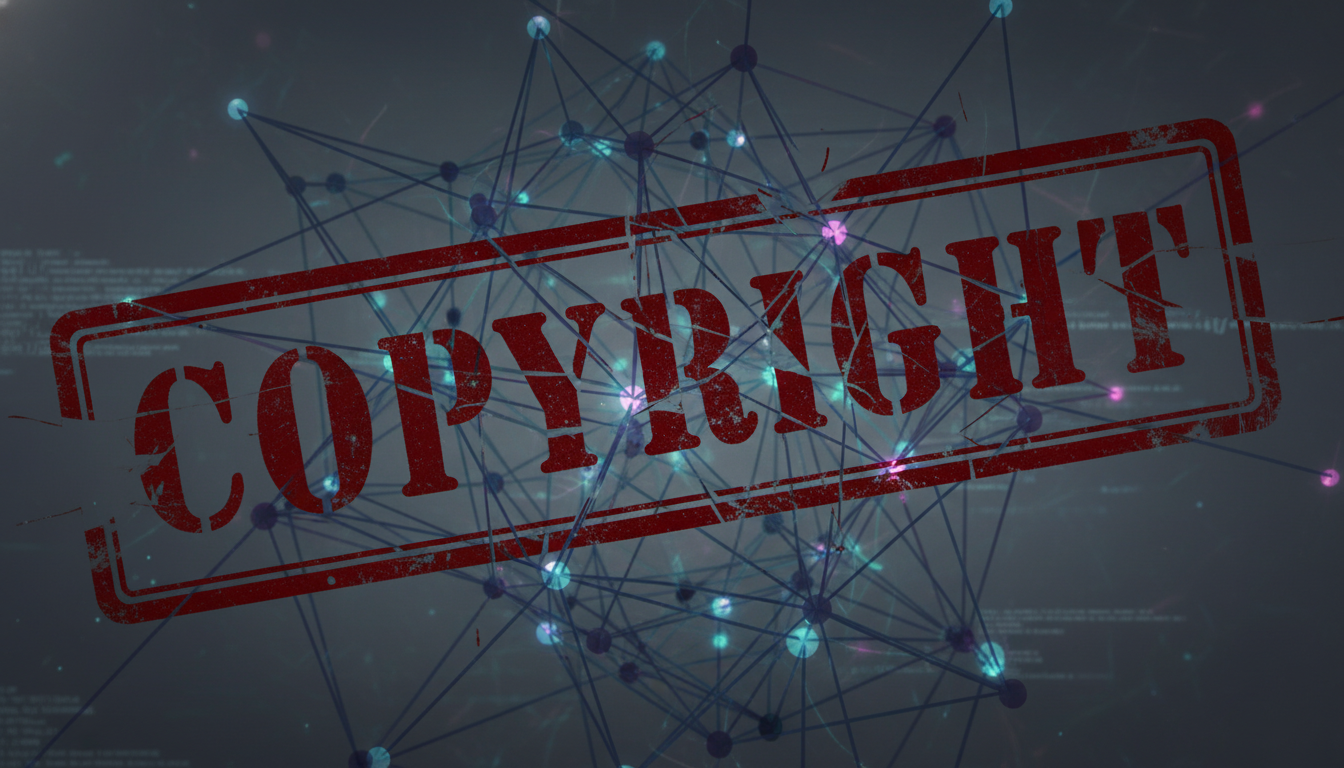
AI art faces a fundamental legal paradox: its creations often lack copyright protection, even as the models generating them are built on copyrighted material. This situation creates deep uncertainty for artists and AI developers alike. The established legal system struggles to keep pace with technological advancement.
The Human Hand Problem
The U.S. Copyright Office maintains that only human creativity can secure copyright. This stance stems from a long-held principle: authorship requires a human mind. The Thaler v. Perlmutter case affirmed this. It concluded that AI cannot be an author.
Outputs from generative AI systems, created merely from a human prompt, generally do not qualify for protection. The AI, not the person, controls the output. Works with sufficient human creative input may receive limited protection. Only the human-authored elements are covered.
In the Kashtanova graphic novel case, for example, copyright was granted only for the human arrangement and selection of AI-generated images. The AI-generated images themselves were not covered. This creates a sort of legal ghost in the machine. What constitutes "sufficient" human control remains ambiguous, decided case by case.
Such limitations mean creators cannot fully commercialize purely AI-generated elements. They cannot exclusively license or monetize these outputs. This impacts revenue potential. Some artists conceal AI's role in their process. They do this to secure full copyright protection, but it undermines transparency.
Other nations approach this differently. The UK allows copyright protection for computer-generated works with designated authorship. Chinese courts have shown more openness to assigning copyright to human operators.
Training on Borrowed Works
The rules change for the data used to train AI models. A legal consensus is forming: using copyrighted data for AI training generally falls under fair use doctrine. This is considered a transformative use.
The Bartz v. Anthropic ruling supported this. It found AI training to be fundamentally different from direct competition with original works. The financial implications are vast. Anthropic faced a $1.5 billion class-action settlement concerning its use of copyrighted material in training datasets.
Fair use, however, is not a blanket exemption. It has limits. The Thomson Reuters v. Ross Intelligence case found commercial use of copyrighted material for AI training could be infringing. This was particularly true when the AI's output directly competed with the original.
The U.S. Copyright Office has clarified this. Mass commercial use for training without a license is not permissible, though training for research may be different. As of March 2026, more than 87 copyright infringement lawsuits related to AI have been filed. Many concern training data.
AI companies claim their training data use promotes innovation. Artists and copyright holders disagree. They say it devalues their work and enables AI to replicate artistic styles.
The Price of Uncertainty
AI's rapid evolution has disrupted creative markets. It also increases financial risk for human creators. UNESCO projects audiovisual creators could lose 21% of their income by 2028 due to AI competition.
Legal uncertainty compounds this. Businesses investing in purely AI-generated art cannot secure copyright. They cannot prevent unauthorized reproduction. The global generative AI art market is projected to reach over $2.5 billion by 2029, according to Artmarket.com. This growth is shadowed by legal concerns. Devaluation of AI-generated assets remains a risk if copyright protection is denied.
Current regulatory frameworks are proving inadequate. The numerous ongoing lawsuits attest to this. New regulatory proposals are emerging in the US and EU. They focus on establishing licensing models where AI developers would pay fees for training data. The Tennessee "ELVIS Act" represents one such legislative response, addressing the unauthorized use of names, likenesses, and voices.
Collective rights organizations could manage and distribute these payments. They would ensure original creators receive fair compensation for their work.
Double Bind, Double Trouble
The system presents a fundamental paradox. U.S. copyright law increasingly accepts AI training on copyrighted material as fair use. Yet, it denies copyright protection to works solely generated by AI. This is due to the human authorship rule.
This creates a "creative double bind." AI developers can freely use copyrighted content for training. The resulting AI art often lacks the legal protection necessary for full commercialization. This legal limbo disincentivizes purely AI-driven creativity. It collides directly with a rapidly growing market.
The strict application of the human authorship rule aims to protect human creativity. It also limits truly novel artistic expressions. Many of these are uniquely possible only with AI. This tension between protecting existing human creators and fostering new AI-driven art is a significant hurdle. It impedes innovation within the creative economy.
Legal ambiguity encourages creators to obscure AI involvement. They do it to gain copyright protection. This hinders transparency and clear attribution.
Uncharted Waters
The legal framework for AI art is a maze of conflicting principles. It provides clarity on training data while withholding protection for AI-only output.

Comments ()