Your Brain is Being Rewired for Politics
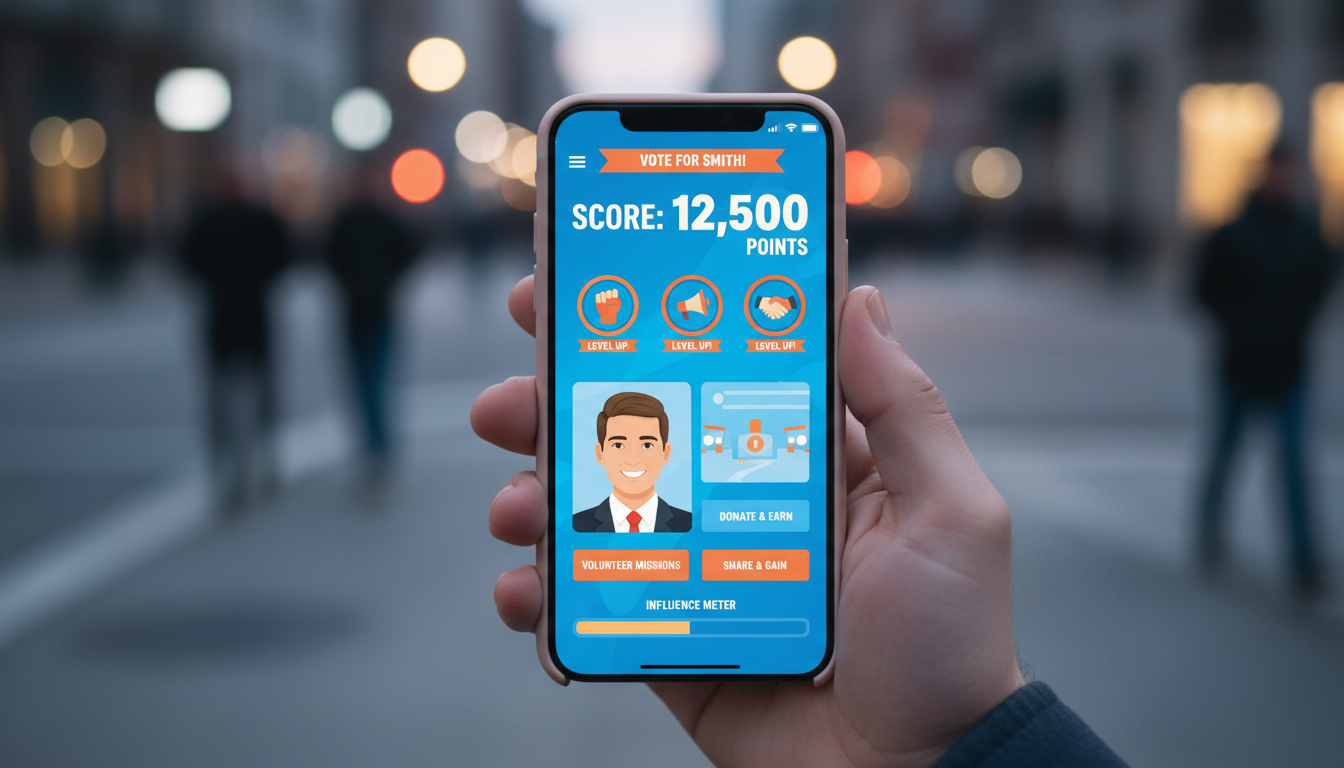
Rewiring the Voter Brain
Targeted Facebook advertising during the 2016 US election made certain communities 1.9% less likely to vote (a small but measurable effect) [2].
Social media algorithms create "echo chambers" by primarily exposing users to aligned viewpoints and amplifying emotionally charged, out-group hostile content [5][13]. Engagement-based ranking algorithms, such as those on X (formerly Twitter), prioritize content exhibiting greater partisanship and out-group animosity, making users feel worse about opposing political groups [13]. Users are strongly driven to voice outrage even toward content that challenges their views, suggesting an emotional rather than purely rational engagement with digital political content [10]. This engagement, driven by emotional responses, exploits inherent human psychological vulnerabilities to outrage and emotional triggers [10][13]. The "realism heuristic," a tendency to trust visual and audio information more than text, is exploited by synthetic media, making it harder for voters to distinguish authentic from fabricated content [14]. Continuous exposure to disinformation can lead to permanent psychological adaptations, such as "blanket skepticism," where individuals lose trust in all information [1]. Gamified campaign mechanics can induce structural neuroplasticity and habituation in voter behavior [10]. Dopamine-driven reward loops, akin to addiction, can create fixed neural pathways, fundamentally altering voter psychology through neurological transformation [10].
Campaigns Embrace Gamification
The uCampaign mobile application, featuring a gamification engine, has been used by right-wing campaigns, including those of Donald Trump and Ted Cruz, as well as the Vote Leave campaign during the 2016 Brexit referendum [15][23]. The Hillary Clinton campaign in 2016 also used an app offering badges and prizes for completing quizzes [25]. Extremist organizations use gamification, including closed online spaces and financial incentives, to attract supporters and normalize extremist beliefs [16]. These gamified approaches are linked to increased motivation, civic learning, and enjoyment [22]. For instance, the "Vote Joe" app in the 2020 Biden for President campaign enabled over 200,000 volunteers to connect with more than 50 million potential voters [24]. Competition within video game play is positively linked to political efficacy [11].
The Unseen Neurological Shift
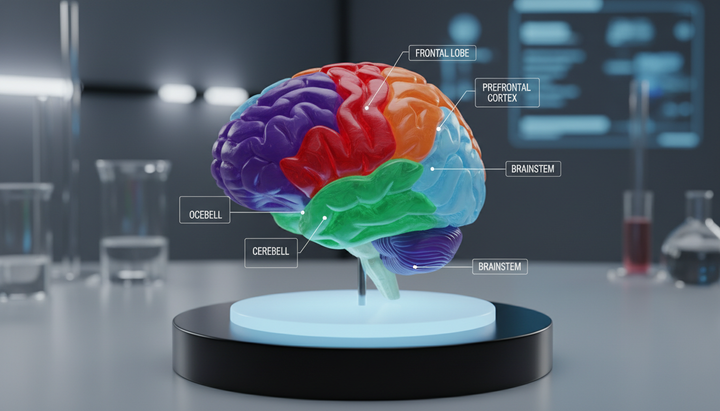
Prolonged engagement with digital technologies can reshape neural pathways, leading to structural and functional changes in areas involved in reward processing and impulse control [17][20]. The brain processes political information in specific ways [9][18][19]. However, direct empirical evidence specifically linking gamified campaign mechanics to permanent structural neuroplasticity in humans is limited, and methodological debate exists on the permanence and mitigability of such changes [16].
The Unmeasured Transformation
Despite the widespread adoption of gamified political strategies by campaigns like uCampaign and Vote Joe, direct empirical evidence specifically linking gamified campaign mechanics to permanent structural neuroplasticity in humans is limited [16]. However, the deep integration of social media into daily life, the evolution of campaign strategies leveraging game design elements, and observed shifts in information consumption and political engagement collectively point to an enduring transformation in how voters process political information [4][7][12].
Sources (21)
- Articles - pmc.ncbi.nlm.nih.gov - AUTHORS UNAVAILABLE
- Research Shows Social Media Advertising Suppresses Voting In - news.wisc.edu
- Social Media Influencers May Affect More Voter Opinions - psu.edu
- Behind Blue Experts Discuss Social Media S Growing Influence - uknow.uky.edu
- Experts Discuss How Campaigns Are Engaging Voters Ahead Nove - gwtoday.gwu.edu
- Minimalpersuasive 2021 - berinsky.mit.edu
- Rage Clicks Study Shows How Political Outrage Fuels Social M - news.tulane.edu
- Dalisay Kushin Kim Forbes David Somera - gamestudies.org
- 42 Of Social Media Users Say The Sites Are Important For The - pewresearch.org
- Engagement User Satisfaction And The Amplification Of Divisi - knightcolumbia.org
- Document - ssoar.info
- Gamification In Politics Bossetta Pre Print Final - michaelbossetta.com
- Quarterly Research Review Gamification And Online Hate Speec - home-affairs.ec.europa.eu
- Videogame training increases clinical well-being, attention and hippocampal-prefrontal functional connectivity in patients with schizophrenia - Authors: Becker, Maxi; Fischer, Djo J.; Kühn, Simone; Gallinat, Jürgen - Journal: Translational Psychiatry
- Hardwired The Brains Circuitry For Political Belief - today.usc.edu
- Unraveling neural pathways of political engagement: bridging neuromarketing and political science for understanding voter behavior and political leader perception - Authors: Çakar, Tuna; Filiz, Gözde - Journal: Frontiers in Human Neuroscience
- games.jmir.org
- Digital governance and civic inclusion to enhance public participation in political decision-making processes - Authors: Sadat, Anwar - Journal: Frontiers in Political Science
- Article - sciencedirect.com - AUTHORS UNAVAILABLE
- Gamification In Politics Bossetta Pre Print Final - lup.lub.lu.se
- 365500000 Gamification In Politics - researchgate.net - AUTHORS UNAVAILABLE


Comments ()