Iran Pivot Accelerates East Asia's Existing Trajectories

US and Israeli military strikes against Iran began on February 28, 2026, leading to the decapitation of Iranian leadership and the establishment of a garrison state under the Islamic Revolutionary Guard Corps (IRGC) and Mojtaba Khamenei. A Johns Hopkins University analysis revealed that approximately 89% of crude oil and condensate moving through the Strait of Hormuz went to Asian markets in the first half of 2025, directly impacting East Asia. CSIS and The Tricontinental documented that 80-90% of Japan's oil and 70-75% of South Korea's oil passes through the strait. Brookings, CSIS, Populism Studies, GMFUS, The Tricontinental, and the Atlantic Council all noted that Brent crude peaked at $119.50 in March 2026 after Iranian retaliation closed the Strait of Hormuz, a critical chokepoint for roughly 20% of global oil. The conflict triggered stagflationary shocks, with CSIS finding that Very Large Crude Carrier (VLCC) chartering costs rose to over six times their five-year average.
The International Energy Agency warned that the current oil shock will be of greater magnitude than the oil shocks of the 1970s, a sentiment echoed by East Asia Forum and The Cipher Brief. The Cipher Brief affirmed that the Dallas Federal Reserve projected the Strait of Hormuz closure alone could reduce global GDP growth by an annualized 2.9 percentage points in Q2 2026. East Asia Forum and The Cipher Brief highlighted that these disruptions also caused fertilizer shortages, threatening food security across the region.
Japan's 2025 JJOC and Missile Purchases
The US-China Economic and Security Review Commission and Brookings detailed that Japan upgraded command structures with the US, establishing the Japan Self-Defense Forces Joint Operations Command (JJOC) in March 2025 as a counterpart to the reconstituted U.S. Forces Japan joint force headquarters. CSIS observed that Japan operated 15 nuclear reactors by March 2026, accelerating its use of nuclear energy to enhance energy security against Middle Eastern disruptions. The Tricontinental argued that Japan remains in a "double bind" of military dependence on the US and vital economic reliance on China. CSIS disclosed that Prime Minister Sanae Takaichi proposed a joint project to stockpile US crude oil in Japan during a March 2026 meeting with President Trump. Japan also lifted its ban on lethal weapons exports in April 2026 to support broader military needs, The Tricontinental found. The Asia Society Policy Institute documented that Japan has strengthened regional cooperation with countries like India, Indonesia, and Australia, launching new trilateral maritime military exercises in 2026. Sources including the US-China Economic and Security Review Commission, Brookings, the Atlantic Council, The Cipher Brief, and Recorded Future confirmed that Japan purchased 400 Tomahawk missiles and 50 JASSM-ER (Joint Air-to-Surface Standoff Missile - Extended Range) air-launched missiles for US$2.35 billion each, and is accelerating co-production of Standard Missile 3 Block IIA missiles with the US. The Asia Society Policy Institute concluded that these actions show Japan's efforts to ensure resilience within the broader US alliance framework.
US Redeploys 2,200 Marines from Okinawa
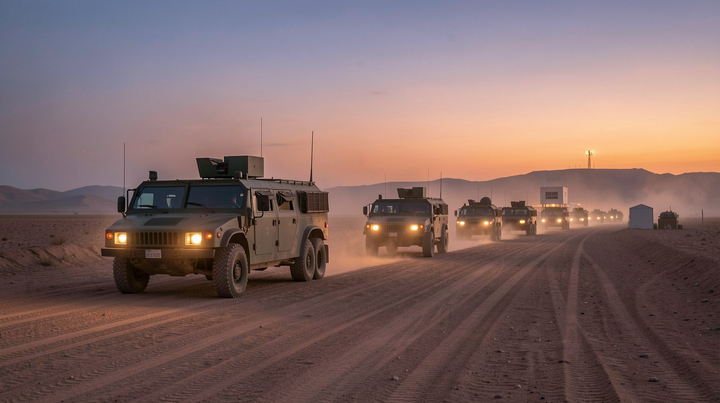
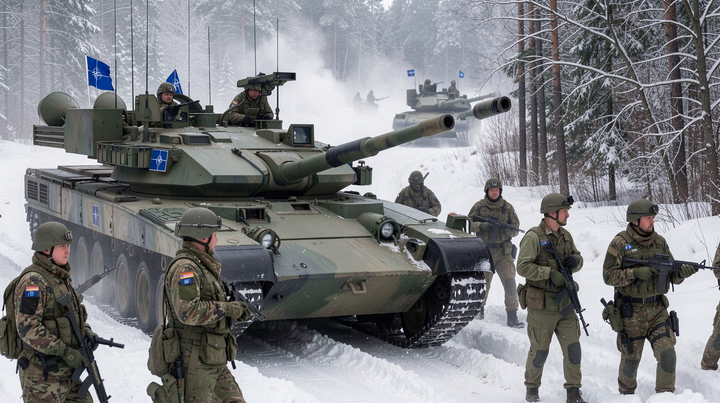
CSIS, East Asia Forum, the Atlantic Council, and Mick Ryan reported that the US redeployed over 2,200 Marines from Okinawa, along with Terminal High Altitude Area Defense (THAAD) batteries from South Korea and carrier strike groups. East Asia Forum contended that this withdrawal created a strategic vacuum, turning Washington's "pivot to Asia" into an "empty promise." Mick Ryan and the Atlantic Council observed that the current military diversion, which includes two US carrier strike groups, mirrors the reallocation of naval power seen with the 2003 Iraq War. Brookings, Mick Ryan, the Atlantic Council, and The Cipher Brief warned that this provides tactical opportunities for regional powers to test US commitments, signaling that American alliances are hostage to Middle Eastern contingencies.
The Middle East Institute observed that the US and Israeli military conflict against Iran has been characterized by "strategic drift" and a lack of a clearly stated end goal for US policy.
Alphabet Drives Middle East Data Centers
The US-China Economic and Security Review Commission and Brandeis found that US corporations like Alphabet primarily drove the expansion of digital infrastructure and data centers in the Middle East. This development reframes East Asia's economic reshaping as an acceleration of pre-existing trends, such as Belt and Road Initiative investments, rather than a new qualitative structural transformation. Consequently, East Asia's strategic agency is better understood as using and expanding existing economic integration frameworks rather than constructing entirely new digital dominance in the region.
China's Middle East Ties and Japan's Alliance
The US strategic pivot toward Iran has shown adaptations within established frameworks, as seen in China's deepening economic ties and diplomatic influence in the Middle East, alongside Japan's reinforcement of its US alliance and energy diversification. The US strategic pivot toward Iran has primarily accelerated existing geopolitical and economic trends in East Asia, rather than fundamentally restructuring its power dynamics; this dynamic suggests that while the US distraction creates tactical opportunities, East Asian powers are largely reinforcing pre-existing linkages, ensuring resilience within the current global order.

Comments ()