Russia's Threat: NATO Consolidates, Trust Fractures
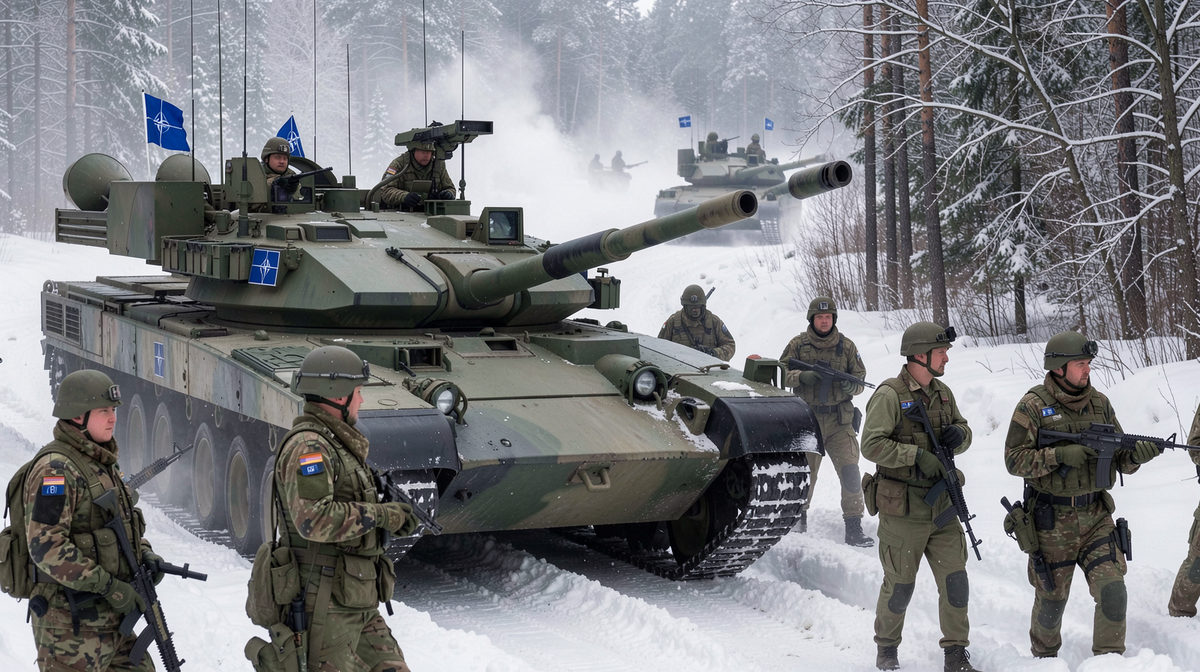
Russia failed to prevent Azerbaijan's 2023 offensive in Nagorno-Karabakh or protect Armenia despite CSTO commitments, leading Armenia to freeze its participation. The Council on Foreign Relations documented that during recent Russian airspace incursions, Polish Prime Minister Donald Tusk advocated shooting down aircraft, while German Defense Minister Boris Pistorius urged prudence. Brookings observes that domestic political shifts, such as the rise of the pro-Russian Alternative for Germany (AfD) party and Hungary and Slovakia's refusal to cut ties with Moscow, reveal growing divergences in threat assessments within the alliance. The Belfer Center and RAND highlight that these internal fractures are exacerbated by a perceived structural shift in US reliability, with the Trump administration's 2025 National Security Strategy ranking Europe below other regional priorities and describing it as facing "civilizational erasure." The Belfer Center determined that a majority of Republicans now believe the US does not benefit from NATO membership.
Europe's 78% Foreign Defense Procurement
Scott G Feinstein and Ellen B Pirro reported that a significant portion of EU member states' defense procurement, 78%, goes to foreign suppliers, with 63% of that spending flowing directly to US defense firms. Europe is not yet structurally capable of defending itself against Russian coercion without reliable US enablers, the Council on Foreign Relations warns. Scott G Feinstein and Ellen B Pirro, writing in International Politics and for the Belfer Center, contend that persistent gaps in unified defense industry scale and military command mean European geopolitical stability remains largely dependent on Washington's political will. The Council on Foreign Relations asserts that European governments lack credible independent planning for various escalation levels of Russian aggression. Scott G Feinstein and Ellen B Pirro observed that the European Defense Industrial Base (EDIB) remains fragmented, producing low volumes without economies of scale. This dependency extends to nuclear deterrence, as British and French capabilities would struggle to offer credible extended deterrence against Russia without US backing, RAND notes.
China, Iran, North Korea Enable Russia
Brookings and the Center for European Policy Analysis (CEPA) illustrate how Russia uses asymmetric alliances with countries like China, Iran, and North Korea to maintain its systemic threat status, noting that North Korea has deployed over 10,000 soldiers to fight in Russia's Kursk region and supplies artillery. These partnerships provide critical material support, bypassing Russia's industrial limitations. CEPA documented that Iran cooperates with Russia to mass-produce lethal drones for use in Ukraine. CEPA determined that China serves as the indispensable economic and logistical linchpin, accounting for over a third of Russia's foreign goods purchases by 2023 and enabling Moscow to sustain its war effort despite sanctions. Bilateral trade between China and Russia grew by roughly 70% over the five-year period beginning in 2021, CEPA reports.
Russia's Systemic Spoiler Role
The Pulaski Foundation describes Russia as transitioning from an indispensable stabilizer into a "systemic spoiler" that outsources coercion rather than constructing durable global order. Russia's deepening asymmetrical interdependence with China structurally limits its capacity to act as an independent pole of power, cementing its role as a secondary economic player, CEPA argues. This dynamic reinforces Russia's reliance on exporting raw materials, with 75% of its exports to China being petrochemicals, and importing manufactured goods, accelerating deindustrialization, CEPA observes. China's controlled capital markets also restrict Moscow's ability to raise debt independently, with Russia's National Wealth Fund liquid assets falling to about 4% of GDP by 2025, CEPA reports. The BTI Project indicates that Russia's domestic defense spending reached 17.4 trillion rubles, accounting for nearly 40% of its 2025 national budget.
China Brokered Iran-Saudi Normalization
In the Middle East, China, not Russia, brokered the normalization of relations between Iran and Saudi Arabia, the Pulaski Foundation highlights. Russia's expansion of BRICS and other diplomatic frameworks represents an increasingly hollow theater of disruption rather than a durable alternative economic and security architecture for the Global South, the Pulaski Foundation argues. The Pulaski Foundation concluded that Russia's ability to guarantee security or mediate conflicts in its traditional spheres of influence has significantly diminished.
The Systemic Spoiler's Future
As US commitment remains conditional, the imperative for Europe to accelerate independent defense capabilities is immediate, and Russia's sustained role as a systemic spoiler, enabled by asymmetric alliances, will continue to test the cohesion of Western alliances.


Comments ()