SpaceX's Million Satellite Gambit: A Decade Away
Deployment into the 2030s
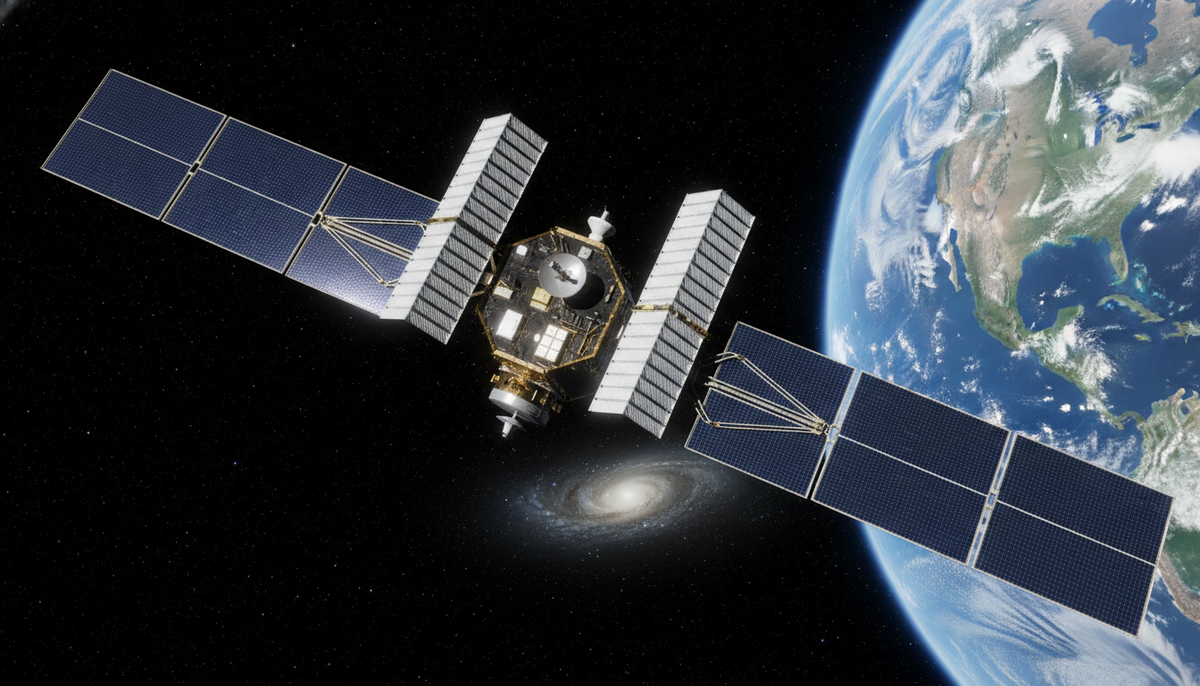
ByteIota calculated that an economic analysis indicates a 1 GW orbital facility costs approximately $51 billion over five years, compared to $16 billion for terrestrial combined-cycle gas turbine power, representing roughly 3.2 times the cost. Analysts, however, project that commercial viability and full deployment will take a decade or more, extending well into the 2030s, according to Introl, Marc Bara Iniesta, ByteIota, DatacenterDynamics, and Endtropy. Sky & Telescope and New Scientist explained that the deployment plan relies on Starship achieving an hourly launch tempo, with each launch carrying 200 tons. To deploy one million metric tonnes of satellites, 5,000 launches would be required, they calculated. They also observed that over three years, this translates to roughly 4.6 launches per day, or one every 5.3 hours, which is mathematically feasible with a single launchpad operating at a fraction of the targeted hourly cadence. DatacenterDynamics and Endtropy, however, caution that Starship has only completed a handful of test flights and has not yet demonstrated the full two-stage reusability required to sustain such a high cadence.
Gallium's 320-Ton Production Limit
The U.S. Geological Survey reports that global high-purity refined gallium production was approximately 320 metric tons in 2023. Marc Bara Iniesta and DatacenterDynamics indicate that deploying a constellation of one million satellites, each averaging one tonne, would require a total initial mass of one million metric tonnes. Sky & Telescope, Introl, GeekWire, ScienceDaily, DatacenterDynamics, and Endtropy specified that the bulk of this mass would consist of solar arrays, machine-learning accelerators, and heavy radiators. For instance, Endtropy described the AI Sat Mini concept as featuring a 70-meter wingspan for a 150 kW solar array and 110-square-meter liquid radiator blocks. According to Tom's Hardware, Introl, DatacenterDynamics, and Star-Catcher, specific estimated raw material requirements for one million one-tonne satellites include approximately 320,000 metric tons of aluminum for structural components and propellant tanks. Wikipedia and Star-Catcher estimated copper demand would reach approximately 75,000 metric tons for wiring and cables. Star-Catcher calculated silicon requirements for solar array mass, incorporating silicon cells, at 288,500 metric tons. New Scientist and CBC warned that even small, unquantified percentages of gallium within one million satellites could quickly approach or exceed this annual output. The U.S. Geological Survey documented global mine production of rare earths reaching approximately 390,000 metric tons of rare-earth oxide equivalent in 2025, providing a larger buffer; however, EveryCRSReport cautioned that specific heavy rare earth elements could still face shortfalls.
AI Chip's 2-Year Refresh Cycle
Marc Bara Iniesta, ScienceDaily, and Endtropy indicate that while orbital hardware typically has a 5-7 year operational lifespan, AI chip performance roughly doubles every two years. They explained that to remain competitive with terrestrial data centers, the orbital compute would need refreshing every 2-3 years. Marc Bara Iniesta reported that "This accelerated refresh cycle necessitates launching 333,000 to 500,000 tonnes of satellites annually to maintain a steady 100 GW of competitive compute capacity." Ultimately, Marc Bara Iniesta, ScienceDaily, and Endtropy concluded that this continuous manufacturing and launch demand places a heavy strain on ground infrastructure and raw material supply chains, effectively multiplying the annual material and launch burden by over two times compared to a standard hardware lifespan.
Cost Parity Not Until 2030s
Introl, Marc Bara Iniesta, DatacenterDynamics, and Endtropy forecast that while SpaceX projects cost parity within two to three years, analysts and Google anticipate space-based compute will not become cheaper than terrestrial operations until the 2030s or 2035. Introl and DatacenterDynamics highlighted that orbital data centers use passive radiative cooling and abundant solar power, thereby avoiding the water, air, and grid constraints of terrestrial facilities. Introl, Marc Bara Iniesta, ScienceDaily, and Endtropy explained that in terms of latency, low Earth orbit positioning enables sub-10 millisecond latency to ground stations, sufficient for parallelized AI inference workloads. However, Marc Bara Iniesta and Endtropy concluded that space-based centers cannot match the sub-microsecond latencies and 400 to 800 Gbps bandwidth per GPU required for tightly synchronized AI training, meaning terrestrial infrastructure will remain necessary for those tasks. SpaceNews, GeekWire, and SesameDisk documented that the space economy, valued at $613 billion in 2024, is largely driven by commercial activities, accounting for approximately 78% of the total. SesameDisk and ScienceDaily observed that investment in space technologies has exceeded $70 billion in recent years.
Decade-Long Deployment Reality
SpaceX's ambition for a million orbital data centers, while framed as an immediate goal, faces a decade-long deployment reality driven by material demands and rapid AI chip obsolescence. The continuous manufacturing and launch burden, multiplied by the need for frequent refreshes, means the true challenge lies in sustained industrial output, rather than solely initial deployment. This extended timeline, coupled with the significant cost disparity compared to terrestrial alternatives, suggests that the one-million-unit target functions primarily as a regulatory anchor. It sets a high bar for future negotiations rather than reflecting an achievable short-term deployment.

Comments ()