The Private Commander of Our Skies
Here is the revised article with only the specified patterns fixed:
The Regulatory Tightrope
Elon Musk used geofencing to restrict Starlink access near Ukrainian front lines in 2022 to prevent the service from being used for offensive military operations [3]. The Brazilian government issued a court order in September 2024 to suspend X (formerly Twitter) accounts, leading to the freezing of Starlink's assets in Brazil [10]. These accounts were later unfrozen after fines were paid [10]. All commercial space activities are legally beholden to the authorization and supervision of the launching state, which can enforce national security objectives and regulate dual-use technologies [6][12]. Musk, for instance, cited U.S. sanctions when denying Ukraine's request for Starlink near Crimea [3][4][6]. SpaceX executives have stated the company's intent to ensure Starlink remains a civilian network, not for offensive military purposes [4][7]. The 1967 Outer Space Treaty (OST) mandates that states supervise non-governmental entities [3][8][9]. Despite these frameworks, the illegal use of Starlink terminals by Russian forces in occupied Ukrainian territories shows the difficulty of enforcing restrictions when a country is not under direct sanctions [6].
The Sovereign Space Race
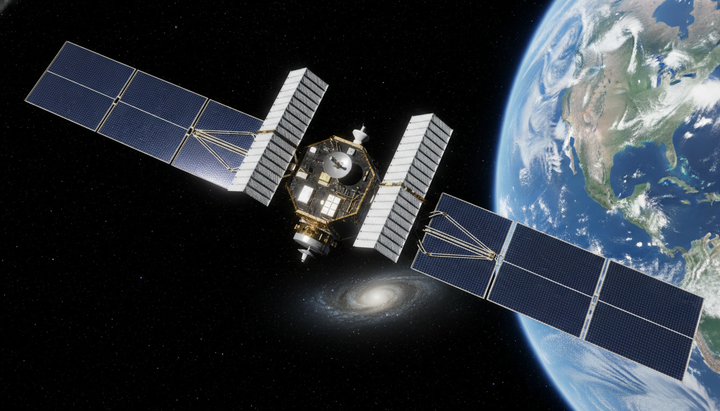
China's state-led Guowang project plans up to 13,000 satellites, while its Qianfan project aims for 12,000 [12]. Initial launches for these projects began in late 2024 and continued into 2025, with mass launches planned for 2026 [12]. The EU's IRIS² constellation is specifically designed to provide a state-controlled alternative for both civilian and military use, directly addressing sovereignty concerns [3][12]. This network will consist of approximately 264 LEO (low Earth orbit) and 18 MEO (medium Earth orbit) satellites [13]. An initial version of IRIS² is expected in 2029, with full governmental services by 2030 [12]. The EU allocated €2.4 billion ($2.6 billion) in 2022 to develop this infrastructure [3]. While China's constellations offer the greatest scale to compete with Starlink, sovereign alternatives currently lack the mass-scale capacity of Starlink [13]. Amazon's Project Kuiper, a commercial competitor, plans a network of over 3,200 LEO satellites and is expected to roll out services in several regions later in 2026 [1][5][12].
The Cost of Autonomy
The U.S. Department of Defense (DoD) committed an estimated $120 million for Starlink service in Ukraine for the remainder of 2022 [7]. The DoD committed nearly $400 million for the following 12 months [7]. Transitioning from a single-vendor dependency to a multi-vendor ecosystem involves significant taxpayer burdens. This high cost creates a tension between the necessity of sovereign infrastructure and the economic burden of funding it [13]. A multi-vendor approach increases complexity, but it mitigates the economic and strategic risks of being "completely beholden" to a single private entity [3][7]. The EU's IRIS² program, for example, requires an estimated €10.5 billion, with €6.5 billion sourced from public EU funds [13].
The Cost of Sovereignty
The billions committed to state-led projects like the EU's IRIS² and China's Guowang reveal the steep price nations are willing to pay for independent space infrastructure. Yet, until these costly alternatives achieve Starlink's mass-scale capacity, nation-states remain strategically vulnerable to the geopolitical influence of a single private entity.
Sources (12)
- JET Nils Pachler 04192022 - nitrd.gov
- Starlink - nytimes.com
- Starlink In The Russo Ukrainian War - en.wikipedia.org
- Starlink And Sovereignty - newamerica.org
- Research - instituteofgeoeconomics.org
- Starlink And Russia Ukraine War Case Commercial Technology A - belfercenter.org
- Resrep47384 - jstor.org - AUTHORS UNAVAILABLE
- Research Briefs - rand.org
- Elon Musk And The Geopolitical Power Shift How One Mans Tech - medium.com
- journals.sagepub.com
- Starlink How Elon Musks Company Influences Geopolitics - dw.com
- arxiv.org - AUTHORS UNAVAILABLE
Comments ()