February 28: A War Unfolds
February 28: The First Punch
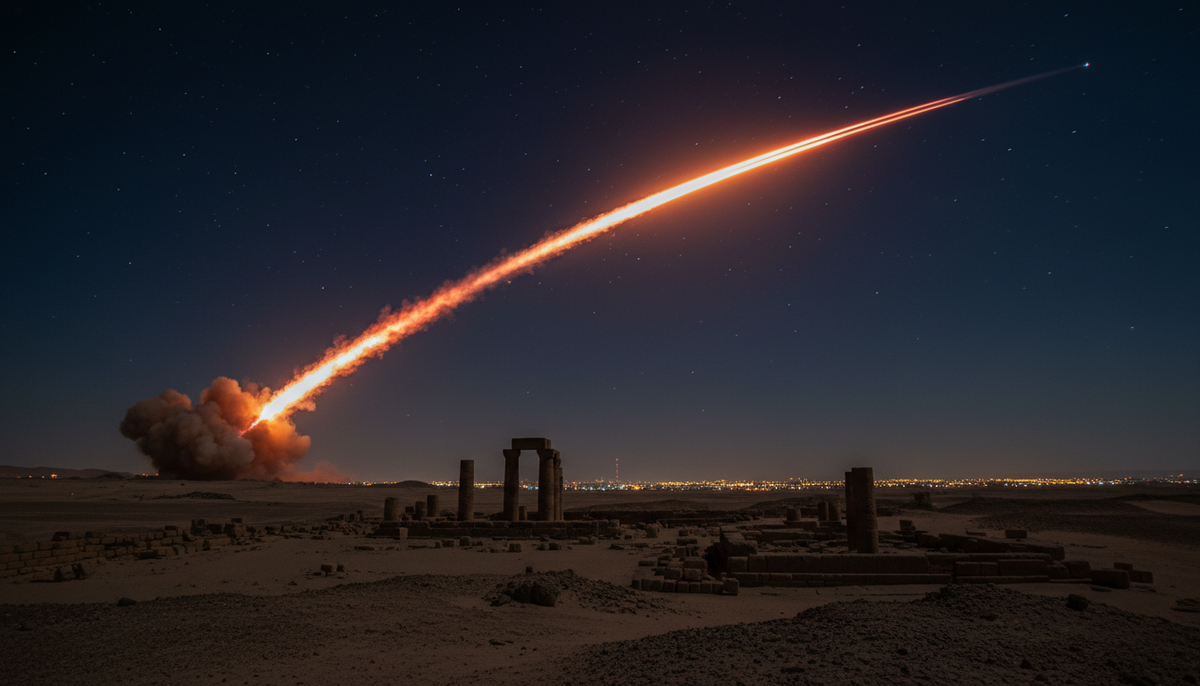
Coordinated U.S. and Israeli airstrikes began on February 28, 2026. Operations "Lion’s Roar" by Israel and "Epic Fury" by the United States hit targets across Iranian territory. This was not an isolated incident. It was the culmination of decades of rising tensions between the nations.
The targeting expanded beyond military sites. Energy infrastructure and steel factories were on the list. U.S. aircraft carriers and fighter jets had already deployed to the region, signaling intent.
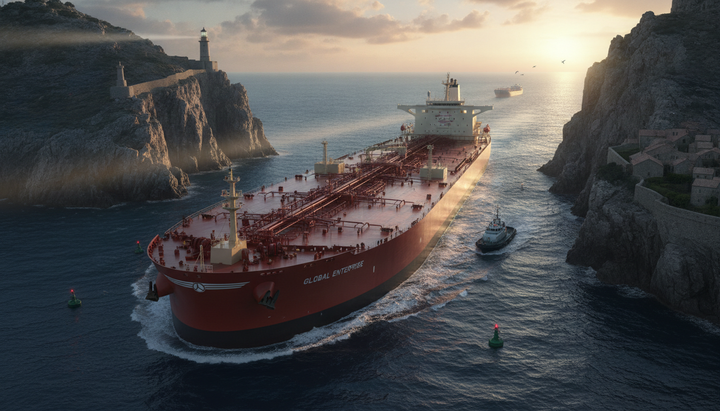
Iran escalated too. It disrupted shipping in the Strait of Hormuz, driving up global oil prices and supply chain concerns. Weeks before the open hostilities, Iranian missile strikes reportedly reached Diego Garcia. U.S. bases in Kuwait sustained casualties.
Then came the immediate trigger. Supreme Leader Ali Khamenei was assassinated on February 28. This action, intended to disrupt Iranian leadership, had the opposite effect. Iran responded.
Missiles and drones struck Israel, U.S. bases, and regional allies like Kuwait, Bahrain, and Iraq. A strike reportedly hit the Shajareh Tayyebeh girls’ elementary school in Minab, Iran, killing over 160 people. The conflict had ignited.
It was like setting off a carefully placed tripwire. The explosion was immediate, and far larger than anticipated.
The first punch landed hard.
Nuclear Ambitions: The Justification
The United States and Israel cited Iran's nuclear program and escalating regional instability as the primary justifications for their preemptive actions. Israel consistently viewed Iran’s nuclear capabilities as an existential threat. They had signaled a willingness to act.
Intelligence suggested Iran continued its nuclear program despite stalled negotiations. The International Atomic Energy Agency (IAEA) acknowledged a "loss of continuity of knowledge" regarding Iran's nuclear materials. Verification became impossible.
Key facilities like the Isfahan Nuclear Technology Center and the Natanz Fuel Enrichment Plant were reportedly active. Both had already sustained damage from prior strikes in June 2025 and March 2026. The IAEA could not verify the extent of this damage due to limited access. Enrichment facilities at Natanz and Fordow continued operation, unmonitored by international inspectors.
Iran held substantial enriched uranium stockpiles. Before the June 2025 strikes, its 60% purity uranium reached 440.9 kilograms. By May 17, 2025, it held 408.6 kilograms of 60% HEU and 274.5 kilograms of 20% enriched uranium. Satellite imagery suggested a potential transfer of up to 540 kilograms of 60% enriched uranium to the Isfahan Nuclear Technology Center in early June 2025.
Iran maintained the capability to produce weapons-grade materials due to its existing highly enriched uranium stockpiles and operational facilities. Reports indicated Iran could produce 233 kilograms of weapons-grade uranium in three weeks at the Fordow Fuel Enrichment Plant, enough for nine nuclear weapons. It could produce its first 25 kilograms of weapons-grade uranium in Fordow in as little as two to three days.
Iran had built a loaded gun. Whether it was aimed remained the question.
The nuclear threat was real.
The Digital Frontline
Iran's cyber warfare capabilities factored heavily into the decision for preemptive strikes. U.S. infrastructure showed a high concentration of exploitable vulnerabilities. Scan telemetry identified over 15.5 million affected assets across the United States.
A single Microsoft Word vulnerability, identified as CVE-2026-21514, accounted for nearly 14 million of those exposures. Healthcare and government sectors were particularly exposed. They were soft targets.
This intelligence, combined with reports of Iran’s hybrid warfare strategy, contributed to the rationale for striking first.
Invisible digital shrapnel was already flying. The threat felt immediate.
Cyber risk altered the calculation.
Politics, Pressure, and the "Imminent" Threat
Internal political dynamics in Washington, Jerusalem, and Tehran constrained diplomatic options. They incentivized military action. In the U.S., an upcoming presidential election created an environment. Demonstrating strength against Iran was perceived as politically advantageous.
Israel faced its own internal pressures. Its perceived existential threat from Iran’s nuclear program made a preemptive strike seem necessary. In Iran, regime survival remained paramount. Leadership may have calculated confrontation could rally national support. It might divert attention from domestic problems.
These internal pressures limited diplomatic engagement. The U.S. administration showed less inclination for concessions. Israel prioritized its security. Iran was unwilling to compromise its power or nuclear ambitions. American national pride reached a historically low point of 58% in 2026, driven by economic anxieties. This likely influenced the domestic political calculus for conflict.
Washington framed the February 28 strikes as a response to an imminent Iranian threat. The intelligence supporting this claim was contested internally. Preliminary assessments suggested the intelligence gathered did not sufficiently substantiate an imminent attack on U.S. homeland assets requiring preemptive military action.
Dissenting opinions within intelligence communities questioned the necessity of preemptive action. They cited a lack of sufficient intelligence backing for the claim of immediacy. These counterarguments emphasized the distinction between Iranian capabilities and intent, and between routine intelligence activity and an imminent plot. Some analysts concluded diplomatic resolutions would have been less costly than prolonged conflict.
It was a high-stakes poker game played with national security. Everyone held cards, but some bluffed harder.
Politics often trumps prudence.
The Cost of Miscalculation
The coordinated U.S. and Israeli airstrikes on February 28, 2026, were intended to address Iran’s nuclear ambitions and neutralize a perceived threat. Yet, the assassination of Supreme Leader Ali Khamenei, meant to cripple Tehran’s command, instead triggered a cascade of immediate and widespread retaliation, transforming a targeted operation into a prolonged regional war. The debate about the actual imminence of the threat, largely overshadowed by political pressures, now looms over a conflict whose economic costs and human toll continue to mount.
A single, smoldering crater sits where diplomacy once stood.
Comments ()