Iran's Proxy Vulnerability: A Strategic Reversal
Assad Regime's 2024 Fall and Hezbollah's Losses
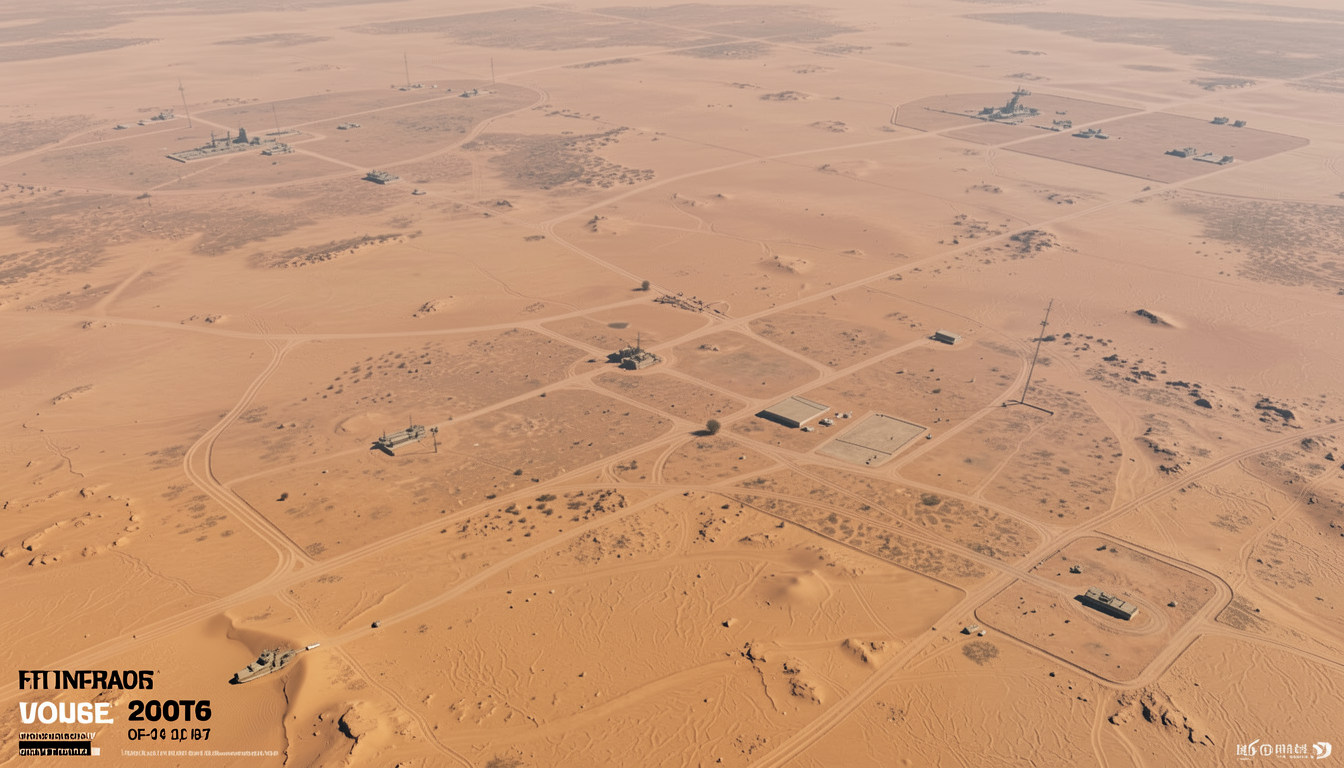
Wikipedia documented the fall of the Assad regime in Syria in December 2024, after Iran spent an estimated $50 billion supporting the civil war. In Lebanon, Hezbollah operates as a parallel military authority, capable of instigating conflict independently of the Lebanese state, the Middle East Forum explains. The International Institute for Strategic Studies detailed how the Islamic Revolutionary Guard Corps (IRGC) and its Quds Force (QF) serve as the primary institutional mechanisms for this, bypassing conventional military chains of command and maintaining centralized oversight over proxy networks. In Syria, California State University found that the Quds Force established approximately 82 fighting units comprising roughly 70,000 armed men and mobilized the National Defense Forces (NDF) of about 100,000 Syrian fighters, embedding Iranian influence directly within civil society. Similarly, California State University highlighted that in Iraq, the QF funded and trained groups like Kata'ib Hezbollah and Asa'ib Ahl al-Haq, integrating them into Iraq's security apparatus, with approximately 80,000 Popular Mobilization Forces (PMF) fighters considered Iranian-supported. Hezbollah also suffered severe military attrition, leadership losses including Hassan Nasrallah's assassination in September 2024, and declining domestic legitimacy, eventually ceding most southern Lebanese positions to the state by April 2025, according to the Belfer Center. The Middle East Forum concluded that this chronic overextension creates systemic fragility, ultimately triggering host-state collapse rather than ensuring durable regional stability.
Axis of Resistance Fragmentation
Wikipedia documented the fragmentation of the Axis of Resistance due to setbacks starting in October 2023, including Hezbollah's military attrition and leadership losses, and the exposure of Houthi capacity limits by mid-2025. Prioritizing asymmetric proxy investment over nuclear diplomacy successfully shielded the Iranian regime from immediate conventional threats by shifting accountability away from state-level deterrence, according to Wikipedia. The National Defense University Press explained that, rooted in a "forward defense" doctrine, Iran projects power across the region using gray zone tactics that keep conflicts below traditional thresholds for decisive state-level responses, mitigating its conventional disadvantages with decentralized networks of ballistic missiles and unmanned aerial vehicles (UAVs). This decoupling preserved a durable long-term deterrent posture during Operation Epic Fury, despite joint U.S.-Israeli strikes that killed Supreme Leader Ali Khamenei and degraded military installations, according to Brookings. The Century Foundation observed that cost asymmetry sustained this deterrence, as Iran deployed cheap Shahed-136 drones to evade expensive American missile defenses, imposing greater economic costs on the U.S. than it sustained. However, tying regional security guarantees to non-state actors increasingly degrades Iran’s strategic flexibility as these proxies suffer structural degradation and political attrition, according to Populism Studies. The Belfer Center found that these cumulative losses forced Tehran into "strategic patience" by 2025, implicitly acknowledging its inability to sustain direct warfare with the U.S. or Israel despite maintaining a long-term deterrent posture.
Biden's $6 Billion Transfer and FATF Blacklist
The Los Angeles Times documented that in 2023, the Biden administration bypassed congressional review under the Iran Nuclear Agreement Review Act during informal diplomatic negotiations, enabling $6 billion in transfers to Qatari accounts and access to $10 billion via Omani banks following a hostage deal, raising concerns about fungibility and diversion to terror proxies. The Quds Force historically allocated an estimated $700 million to $1 billion annually across its proxy networks overall, though this funding began dwindling after 2019 due to international sanctions, according to the Washington Institute. The Georgetown Journal of International Affairs documented that several diplomatic negotiations, treaty withdrawals, and multilateral channels were sacrificed or circumvented between 2018 and early 2026 to facilitate resource reallocation toward Iranian proxy networks. The U.S. withdrawal from the Joint Comprehensive Plan of Action (JCPOA) in May 2018 rescinded U.S. obligations and reimposed sanctions, incentivizing Iran to prioritize asymmetric warfare, according to CESPI. The Los Angeles Times observed that Iran was also placed on the Financial Action Task Force (FATF) blacklist in 2020, deliberately sacrificing participation in international financial transparency channels to maintain hidden funding mechanisms.
February 28, 2026, Decapitation Strike
The Georgetown Journal of International Affairs highlighted that Operation Epic Fury on February 28, 2026, acted as an accelerant, precipitating this accelerated structural degradation by targeting leadership, military installations, and missile production sites. The Middle East Forum found that Iran’s historical track record of calibrated gray-zone proxy warfare from 2019 to early 2026 projected asymmetric influence but created systemic fragility that ultimately outweighed its multipolar buffer resilience. The incremental accumulation of network vulnerabilities systematically undermined state-level deterrence, according to the Belfer Center. Clingendael explained that by early 2026, these vulnerabilities had already pushed the proxy model into a phase of "structural degradation," making it harder for Tehran to instrumentalize its networks coherently without triggering full-scale interstate war. Brookings found that while Iran’s deeply embedded networks retained resilience, the decapitation strike exposed Tehran's inability to sustain direct conventional warfare against a coordinated adversary. The War Against Iran And Global Risks Tell Me How This Ends, published by the Georgetown Journal of International Affairs, argues that "because nuclear ambitions, missile capacity, and proxy warfare function as integrated instruments of power," Operation Epic Fury eroded trust in diplomatic agreements and intensified regional proliferation pressures.
Host-State Structural Degradation
Iran's proxy strategy, while offering short-term deniability, has tethered its security guarantees to volatile non-state actors, ultimately constraining its strategic flexibility and creating long-term vulnerability. The Middle East Forum warned that the structural degradation of host states and the fragmentation of Iran's proxy networks suggest a future of increased regional instability, as weakened states become more susceptible to internal collapse and external intervention. This shift in accountability mechanisms away from state-level deterrence means Iran faces the risk of overwhelming, preemptive strikes from adversaries who view its integrated threat matrix as an existential challenge, according to the Middle East Forum. Iran's reliance on volatile non-state actors limits its strategic flexibility and exposes it to significant setbacks, according to the Belfer Center.

Comments ()