U.S. Chip Investments Won't Stop Taiwan Fallout
China's 2023-2025 Mineral Restrictions
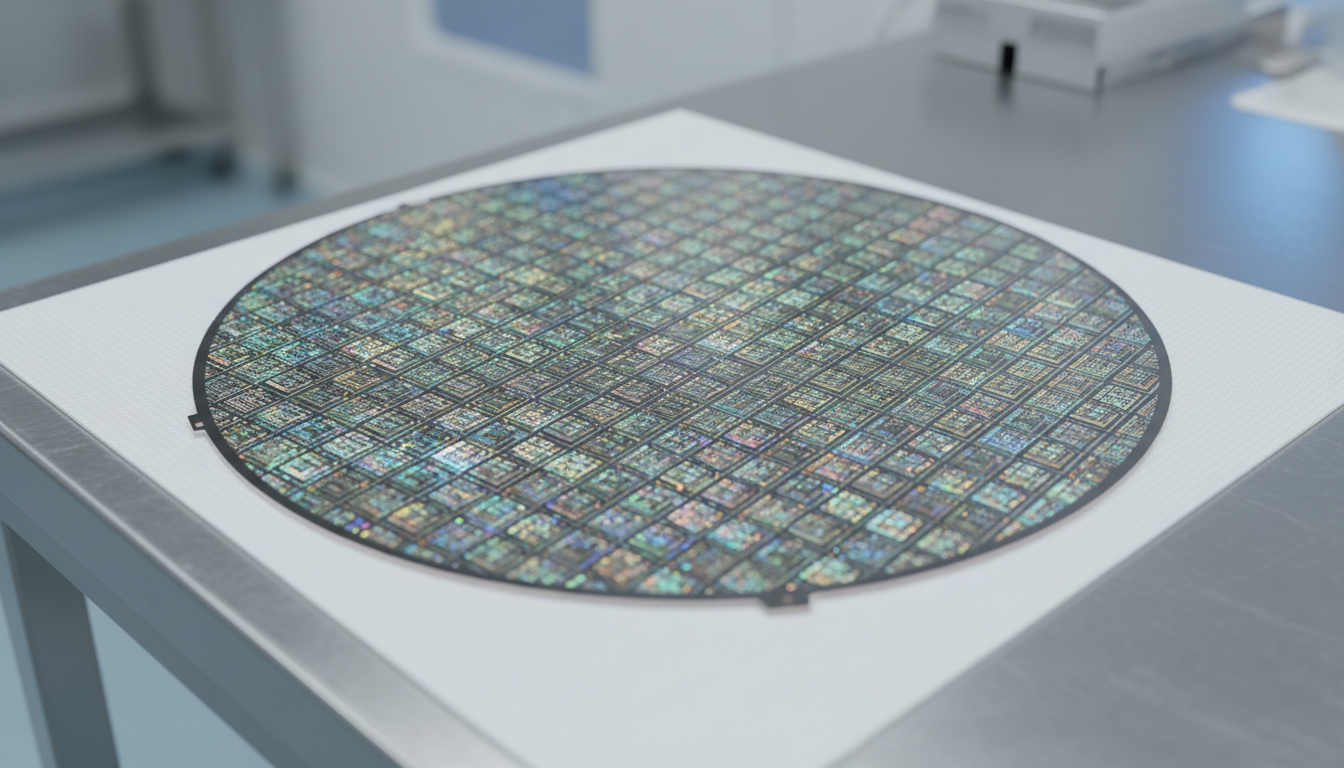
The US-China Economic and Security Review Commission documented that China demonstrated its willingness to weaponize supply chain control, imposing export restrictions on critical minerals such as gallium, germanium, and rare earth magnets between 2023 and 2025. Brookings.edu and Taipei Times reported that while U.S. Commerce Secretary Howard Lutnick forecasted 40% of Taiwan’s semiconductor supply chain could be reshored by the end of 2029, Taiwan’s top trade negotiator publicly characterized this goal as impossible. Harvard Business Review observes that a major dependency remains on foreign nations for back-end factories that package processed silicon wafers into finished chips. This creates a single-point-of-failure risk for raw materials. The Indo-Pacific Studies Center warns that the Taiwan Strait is a vital maritime corridor for over $5.5 trillion in annual trade, and Chinese control of the region would severely disrupt global supply chains beyond just semiconductors.
30-50% Higher U.S. Manufacturing Costs
Paradigmpress.org reports that U.S. manufacturing costs remain 30% to 50% higher than in Asian countries due to elevated expenses for energy, labor, and raw materials. Paradigmpress.org and Harvard Business Review also highlight that the domestic ecosystem suffers from shortages of high-skilled labor and an incomplete value chain, particularly for back-end packaging. However, the feasibility of reshoring 40% of Taiwan’s semiconductor supply chain by the end of 2029 is debated; Reuters and Digitimes suggest it could be achieved by capturing a substantial share of new global value-added production rather than relocating existing capacity.
Eroding Taiwan's "Silicon Shield"
Brookings.edu, Stimson.org, and Defense Priorities explain that the "silicon shield" posits Taiwan's near-monopoly on advanced chips makes a military attack too economically costly for China and compels the U.S. to defend the island. Accelerating U.S.-based advanced chip production does not necessarily strengthen deterrence; instead, it may increase crisis risk by eroding Taiwan's "silicon shield." Stimson.org and Crossdock Insights explain that as the U.S. invests in domestic facilities, it signals a long-term strategy of technological decoupling, which diminishes the economic interdependence that currently restrains Chinese aggression. Stimson.org and Defense Priorities argue that this erosion of the "silicon shield" may embolden Beijing by signaling that the West can survive a conflict without Taiwan's chips, thereby removing a primary deterrent against aggression. The Indo-Pacific Studies Center suggests it could also pressure China to act sooner to capture TSMC's advanced manufacturing technology before U.S. domestic capacity fully matures. Stimson.org and Defense Priorities contend that while many Taiwanese believe their economic indispensability prevents an attack, counterarguments suggest China prioritizes national reunification and is willing to accept severe economic costs. Brookings.edu, Defense Priorities, and DTIC.mil document that the astronomical economic costs of a cross-strait conflict—a limited blockade could cause nearly 9% loss in China's economy and $2 trillion to $5 trillion in global losses—serve as a powerful independent deterrent regardless of U.S. supply chain shifts.
TSMC Arizona and Samsung Texas Fabs
Beyond Intel and AMD, several allied partners and U.S.-based firms are expanding semiconductor manufacturing capacity under the CHIPS Act. Brookings.edu, Stimson.org, the Indo-Pacific Studies Center, and Crossdock Insights report that TSMC's $165 billion Arizona compound is adding capacity beyond 3nm, including 2nm-class logic. Crossdock Insights affirms that Samsung is investing $40 billion in Texas, and Semiconductors.org reports that Micron is expanding its Manassas, Virginia facility for 1-alpha node DRAM technology. Stimson.org and Defense Priorities observe that GlobalFoundries completed a new Malta, New York fab in 2025 and is constructing an advanced packaging facility. Congress.gov and the Indo-Pacific Studies Center indicate that the National Advanced Packaging Manufacturing Program (NAPMP) is funding domestic packaging ecosystems, with projects including Absolics Inc. in Georgia, Applied Materials in California, and Arizona State University. The Indo-Pacific Studies Center and Tom's Hardware detail that Natcast received $1.1 billion to operate a prototyping and advanced packaging piloting facility by 2028. US-Taiwan.org, Ejournal.uinbukittinggi.ac.id, Sourceability.com, Crossdock Insights, and Reuters reported that TSMC also began construction on an advanced packaging plant in Arizona to introduce CoWoS and 3D-IC technologies by 2029.
Taiwan Chip Reliance Continues
The continued reliance on Taiwan for advanced chips, coupled with persistent vulnerabilities in upstream materials and back-end packaging, means a crisis would still incur substantial economic and military costs. Analysis indicates that U.S. chip investments will not prevent immediate fallout from a Taiwan Strait crisis. This strategy appears to be a long-term play for resilience and technological leadership. It is not a rapid solution to insulate against an imminent crisis.



Comments ()